


Three supplements have real trial data for seasonal mood support, and they work better when the circadian base is in place.
Seasonal affective disorder (SAD) is partly a circadian problem: shorter winter days delay your internal clock, blunting morning cortisol and shifting melatonin timing. Light therapy (10,000 lux, 30 minutes, morning only) is the most-studied intervention and is listed as first-line by the American Academy of Family Physicians. Bright light is an alerting signal: exposure late in the day can shift the clock in the wrong direction and trigger insomnia, so it belongs in the morning, not “preferably” in the morning. That makes supplements more useful when stacked on top of the right base, not useless.
Three supplements have a defensible evidence story:
- Saffron extract, 30 mg/day: the only herbal compound with multiple RCTs showing comparable efficacy to fluoxetine in mild-to-moderate depression, with a clean side-effect profile.
- Melatonin, taken as a chronobiotic: microdoses of 0.3–0.5 mg, 3–5 hours before your desired sleep onset. Not the 5–10 mg “sleeping pill” most people buy, and not at bedtime.
- Vitamin D: if you’re actually deficient. Correcting a deficiency is reasonable medicine. Expecting a mood miracle from vitamin D is not supported by the SAD-specific trials.
Other compounds (omega-3 EPA, St. John’s Wort, magnesium, NAD+ boosters) have real but narrower or mixed evidence. We cover them below with the doses and caveats the typical “winter blues supplements” list skips.
Why most “winter blues supplements” lists undersell the evidence
Search for “supplements for seasonal depression” and the SERP is a wall of identical content. The pattern:
- A listicle of 8–12 supplements.
- Melatonin, vitamin D, magnesium, omega-3, B-complex, ashwagandha, valerian, St. John’s Wort: in every list.
- One sentence per supplement: “supports mood,” “promotes relaxation,” “may help.”
- No trial cited. No dose specified. No mention of circadian timing.
- An affiliate link to a “winter wellness bundle.”
This content undersells what supplements can actually do, and oversells what they can’t.
It ignores chronobiology. Seasonal depression has a circadian component: reduced morning light hits the intrinsically photosensitive retinal ganglion cells (ipRGCs) in your eye, which signal the suprachiasmatic nucleus (SCN), the master clock. The SCN gates melatonin secretion, cortisol rhythm, and serotonin turnover. Supplements that interact with that system (melatonin, done right) are more effective than supplements that don’t. Most lists treat them all the same.
It confuses a sleeping pill with a chronobiotic. Melatonin is an entraining signal, not a sedative: it aligns the circadian clock with the light-dark cycle. The dose and timing that entrain your circadian rhythm are different from the dose and timing that make you drowsy. Most lists recommend the wrong one, then readers conclude “melatonin doesn’t work for me.”
It overstates weak evidence. Vitamin D supplementation for SAD has been tested in at least three randomized trials. All three were null or failed to separate from placebo. The lists still recommend it as a mood fix. The narrow reading that survives scrutiny: correct deficiency if present; don’t expect a mood effect beyond that.
It undersells the strongest supplement evidence. Saffron has multiple double-blind, placebo-controlled and active-comparator RCTs comparing it head-to-head with fluoxetine for mild-to-moderate depression. It is not on most “winter blues” lists at all, because it is less commercially popular than magnesium and vitamin D, not because the evidence is weaker.
Light therapy comes first
The intervention with the strongest evidence for seasonal depression is bright light therapy. The AAFP[5] and CANMAT[6] guidelines both list it as first-line for seasonal pattern depression. Supplements stack on top of this base. They don’t replace it, and they work better when the circadian foundation is set.
Guideline parameters
- 10,000 lux of cool-white fluorescent or LED light.
- 30 minutes daily, morning only: within 30 minutes of waking. Later in the day, the same bright light becomes an alerting signal that can delay sleep onset and provoke insomnia; the therapeutic window is the first hour after waking.
- Distance: 12–24 inches from the device (close enough to hit 10,000 lux at the eye).
- Eyes open, but not staring directly at the light. Reading or eating breakfast during exposure is fine.
- Continue through winter until natural light exposure increases.
Improvement is typically seen within 1–4 weeks. Side effects are minor: headache, eyestrain, jitteriness, usually resolved by reducing duration or moving the light slightly farther away.
People who should get ophthalmology clearance first: anyone with retinal disease, diabetic retinopathy, macular degeneration, or taking photosensitizing medications (lithium, certain antibiotics, St. John’s Wort).
A 10,000-lux light box costs $30–80. No supplement on this page comes close to its evidence base for seasonal mood. If you skip light therapy and go straight to supplements, you are working with a weaker tool for a problem that has a stronger one.
Why timing matters more than the bottle
A short, non-mystical tour of the system you are trying to support.
Specialized ipRGC cells in your retina contain melanopsin, a photopigment maximally sensitive to blue-wavelength light (~480 nm). These cells project directly to the SCN. Morning light is the primary synchronizer of the human circadian system. Without it, your clock drifts.
The SCN is a small cluster of ~20,000 neurons in the hypothalamus. It is the master clock. It gates melatonin secretion from the pineal gland, the cortisol awakening response, body temperature rhythm, and the timing of sleep pressure accumulation.
The pineal gland secretes melatonin starting about 2 hours before your habitual sleep time: dim light melatonin onset (DLMO). Melatonin is the chemical signal of darkness. It tells peripheral clocks throughout the body that it is night. It is not, in physiological doses, a sedative.
In winter, reduced morning light delays the SCN phase. DLMO shifts later. The cortisol awakening response blunts. The result, in susceptible people, is winter-pattern depression: hypersomnia, afternoon fatigue, carbohydrate craving, weight gain, social withdrawal. Winter-pattern depression is a phase-shift problem, not a character flaw.
The right intervention moves the clock earlier. Morning light does it. Melatonin, taken early enough in the evening, does it by entrainment: it tunes the circadian system to the day-night cycle, rather than shoving the clock in an arbitrary direction. A “sleeping pill” dose of melatonin at bedtime does not entrain the clock; it only sedates.
Melatonin: chronobiotic, not sleeping pill
This is the single most useful section of this guide for most readers.
What it is, and what people get wrong
Melatonin is a chronobiotic: a compound that tunes the circadian clock to the light-dark cycle. In physiological doses (0.3–0.5 mg), taken in the early evening before endogenous DLMO, it entrains timing to the day-night pattern. The phase response curve is well-characterized: melatonin taken ~5 hours before DLMO produces the strongest entrainment effect toward an earlier schedule. Melatonin taken at bedtime does little to set the clock; it mainly adds a mild hypnotic effect.
What most people do instead:
- Buy melatonin 5 mg or 10 mg.
- Take it 30 minutes before bed.
- Wake up groggy.
- Conclude “melatonin doesn’t work for me.”
That is the equivalent of taking ibuprofen at the wrong time and concluding ibuprofen doesn’t work for a headache.
Melatonin is not a “natural sleeping pill.” It is not more effective at higher doses. It is not a substitute for morning light. It is not a long-term solution without addressing the underlying phase and light environment.
Trials, dose, and timing
The Mundey 2005 phase-dependent treatment study[1] found that 0.3 mg of melatonin, administered 1.5 to 6.5 hours before DLMO, produced favorable phase advances in delayed sleep phase patients. The correlation between timing and phase shift was strong (r² = 0.94). Larger doses (3 mg) did not produce larger phase shifts; they produced more next-day sedation.
The PLOS Medicine 2018 randomized trial (Sletten et al.)[3] tested 0.5 mg melatonin combined with behavioral sleep-wake scheduling in delayed sleep-wake phase disorder. The dose was chosen because prior work showed similar phase-shifting effects between 0.3–0.5 mg and 3 mg, with smaller doses minimizing daytime sleepiness.
Rahman 2010[2] separately reported antidepressant effects of melatonin in delayed sleep phase syndrome, which is why the chronobiotic framing matters for winter mood and not only for sleep timing.
A meta-analysis of melatonin for primary adult sleep disorders confirmed the chronobiotic pattern[4]: low-dose melatonin (0.3–0.5 mg) administered in the biological evening, several hours before DLMO, advances sleep timing. Melatonin taken 30–60 minutes before bedtime may not effectively shift the circadian rhythm, and may only provide a sedative effect.
For someone trying to advance a delayed winter clock:
- Dose: 0.3–0.5 mg (not 3 mg, not 10 mg).
- Timing: 3–5 hours before your desired sleep onset. Not at bedtime.
- Format: immediate-release, not extended-release. You want a brief signal, not a sustained one.
- Duration: 2–4 weeks to establish the new phase.
- Pair with morning light. The combination is more effective than either alone.
If your winter pattern is hypersomnia (sleeping 10+ hours, waking unrefreshed), this is the supplement-timing schedule most likely to help. If your pattern is insomnia with early waking, the timing is different (melatonin earlier still, light therapy earlier still), and you should work with a sleep clinician rather than self-directing.
Retail melatonin often overshoots trial doses — the melatonin registry page runs label-vs-floor math.
Saffron: the strongest mood RCT story on this page
If there is one supplement on this page that surprises readers, it is saffron. Not because the evidence is overwhelming (it is not), but because it has more relevant RCTs than any other compound on the typical “winter blues” list.
What the trials show
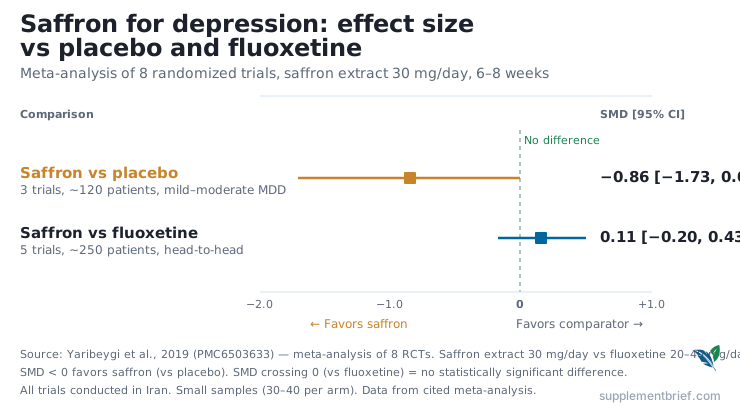
Multiple double-blind, placebo-controlled and active-comparator randomized trials have compared saffron extract 30 mg/day (typically as 15 mg twice daily) against fluoxetine 20–40 mg/day for mild-to-moderate depression. A meta-analysis of 8 trials found no statistically significant difference between saffron and fluoxetine (SMD 0.11, 95% CI −0.20 to 0.43). Against placebo, saffron showed a moderate effect (SMD −0.86, 95% CI −1.73 to 0.00).[14] An earlier meta-analysis (Hausenblas 2013)[13] likewise found saffron superior to placebo for major depressive disorder.
- Noorbala 2005: saffron 30 mg vs fluoxetine 40 mg, 6 weeks, comparable efficacy.
- Akhondzadeh Basti 2007: saffron 30 mg vs fluoxetine 20 mg, 8 weeks, comparable efficacy.
- Shahmansouri 2014: saffron 30 mg vs fluoxetine 40 mg, 6 weeks, comparable efficacy.
- Kashani 2016: saffron 30 mg vs fluoxetine 40 mg, 6 weeks, comparable efficacy.
- Kashani 2017 (postpartum depression): saffron 30 mg vs fluoxetine 20 mg, 6 weeks, comparable efficacy. Remission: 40.6% saffron vs 50% fluoxetine. Absolute difference about 9 percentage points favoring fluoxetine, not statistically significant. In this small trial that gap is compatible with chance; NNT is not meaningful when the difference is non-significant.[15]
Safety flag
These trials tested saffron as monotherapy under medical supervision, not as an add-on to your existing antidepressant.
If you are currently taking an SSRI, SNRI, or any serotonergic medication, do not add saffron without clearance from your prescribing clinician. The serotonergic mechanism makes unpredictable pharmacodynamic effects possible. "Comparable to fluoxetine in a trial" is not the same as "safe to combine with your fluoxetine."
Caveats that survive scrutiny
This evidence is real but not as clean as the bullet points suggest:
- Almost all trials were conducted in Iran, the country that produces ~90% of the world’s saffron. Sponsor and publication bias are plausible. Independent replication from US or European centers is limited.
- Sample sizes are small: typically 30–40 patients per arm.
- Trial durations are short: 6–8 weeks. Long-term safety and efficacy are not established.
- The comparison is to fluoxetine, not to light therapy. For seasonal depression specifically, the first-line comparison should be light. No trial has done that.
- “Comparable to fluoxetine” is not the same as “effective.” Fluoxetine itself has a modest effect size in mild depression, where placebo response is high. A compound matching a weak active control is not a strong claim.
What saffron is and is not
- It is a standardized extract story. The trials used hydroalcoholic extracts of Crocus sativus stigma, typically standardized to crocin and safranal. “Saffron powder from the spice aisle” is not the same material. Commercial standardized extracts (e.g., Affron) exist but have less direct trial overlap; the depression trials used Iranian research extracts.
- It is not an SSRI replacement. “Comparable to fluoxetine in mild depression” is a real claim. “Replace your SSRI with saffron” is not.
- It is not a SAD-specific treatment. The trials are for mild-to-moderate major depression, not seasonal pattern depression. The mechanism (serotonergic and anti-inflammatory modulation) is plausibly relevant to SAD, but no trial has tested it.
Depression trials used 30 mg/day extract; the saffron dose reference shows how typical labels compare.
The defensible use
For someone with mild winter-pattern low mood who has already established light therapy and sleep-rhythm basics, saffron extract 30 mg/day for 6–8 weeks is a reasonable supplement to try. It has more RCT support than any other compound on the typical list. It is not a replacement for light therapy, CBT, or medication in moderate-to-severe depression.
Vitamin D: commonly recommended, weakly supported for SAD
Vitamin D is the supplement most commonly recommended for seasonal depression, and the one with the weakest SAD-specific evidence.
What the trials show
The SAD-specific randomized trials have been consistently null or failed to separate from placebo:
- Dumville 2006[8]: 2,117 older women, daily vitamin D vs placebo over winter. No significant difference in mental health scores (p = 0.262).
- Kjaergaard 2012[9]: vitamin D vs placebo in depressed patients with low vitamin D. No significant difference in depressive symptoms (p = 0.734).
- Frandsen 2014[10]: 34 healthcare professionals with seasonal affective symptoms, 70 µg/day vitamin D vs placebo for 3 months. No significant between-group difference in SIGH-SAD scores.
One small 1999 study (Gloth, n = 15) found vitamin D superior to phototherapy, but with 15 participants this is hypothesis-generating at best, not confirmatory.
The NCCIH summary[7]: “At present, vitamin D supplementation by itself is not considered an effective SAD treatment. Low blood levels of vitamin D are often found in people with SAD; however, the evidence for its use has been mixed.”
What the data actually support
- Low vitamin D is common in winter and worth correcting for general health (bone, immune function).
- Correcting a deficiency is reasonable medicine. If your 25(OH)D is below 30 ng/mL, supplementing to bring it into the 30–50 ng/mL range is defensible.
- Expecting a mood effect from vitamin D supplementation is not supported by the SAD trials. Most people who feel better on vitamin D in winter either (a) were genuinely deficient and corrected it, or (b) are experiencing the natural seasonal remission that happens as days lengthen.
The defensible use
Get a 25(OH)D blood test. If deficient (<30 ng/mL), supplement with 1,000–2,000 IU/day (or per clinician guidance) to correct. Do not expect a direct mood effect. If mood symptoms persist after correction, the remaining issue is the circadian phase, light environment, or a depressive disorder that needs a different intervention, not vitamin D.
The lists that recommend “5,000–10,000 IU vitamin D for winter blues” without mentioning testing are recommending a dose for a deficiency they have not confirmed. That is guessing, not evidence-based supplementation.
Narrower options and common skips
Omega-3 EPA: depression signal, not SAD-specific
Omega-3 fatty acids (specifically EPA) have a real research base for depression, but it is not the SAD-specific evidence most lists imply.
The most relevant omega-3 depression trials are from Dr. David Mischoulon’s group at Massachusetts General Hospital:
- Mischoulon 2015 (EPA vs DHA vs placebo, J Clin Psychiatry)[11]: 196 adults with MDD, 8 weeks, EPA-enriched 1,000 mg/day, DHA-enriched 1,000 mg/day, or placebo. Neither omega-3 preparation separated from placebo. All three groups improved significantly, including placebo.
- Mischoulon 2022 (dose-finding, J Clin Psychiatry)[12]: 61 adults with MDD, BMI >25, hs-CRP ≥3.0 mg/L. EPA at 1, 2, or 4 g/day vs placebo, 12 weeks. EPA 4 g/day showed a medium effect size (Cohen’s d = 0.53) for response rate: 64% vs 40% placebo. Absolute risk difference = 24 percentage points. NNT ≈ 5 over 12 weeks (95% CI for NNT not reported; small inflammatory-subtype sample). Plain language: about one additional responder for every five people treated with EPA 4 g/day over 12 weeks, beyond placebo, in this overweight/high-CRP subgroup.
What that supports:
- No SAD-specific RCT exists for omega-3. Every claim about omega-3 for seasonal depression is extrapolated from MDD trials.
- The general MDD evidence is mixed. The 2015 EPA vs DHA trial was null. The 2022 trial showed a signal only in an inflammatory subtype (overweight, elevated CRP).
- The inflammatory subtype angle is real and interesting. If your winter depression comes with systemic inflammation (obesity, metabolic syndrome, elevated CRP), EPA 4 g/day is a more defensible trial than EPA 1 g/day. But this is a subtype, not the general population.
- EPA, not DHA, is the active component for mood. A “fish oil” supplement with a 1:1 EPA:DHA ratio at 1,000 mg total is likely underdosed for the EPA signal.
For someone with winter-pattern depression and an inflammatory phenotype (BMI >25, elevated CRP, metabolic syndrome), EPA 2–4 g/day (with the majority as EPA, not DHA) for 8–12 weeks is a defensible trial. For someone without that phenotype, the evidence is thinner and the expected effect is smaller.
The evidence supports a narrower, subtype-specific claim: EPA for winter-pattern depression with an inflammatory phenotype, not the general-population “take fish oil for winter blues” recommendation on most lists.
At the upper end of that range, 3 g and up of combined EPA+DHA, tell your prescriber if you take warfarin, a DOAC, or an antiplatelet. The interaction rating is low: a large retrospective cohort found no significant change in warfarin control or bleeding events with concurrent fish oil (Pryce 2016, PMID 27657121)[16]. A heads-up and, on warfarin, INR awareness are the proportionate response.
EPA and DHA grams on the label map to several trial floors on the omega-3 registry page.
St. John’s Wort: effective, not safe for self-directed use
St. John’s Wort (Hypericum perforatum) is the most-studied herbal antidepressant, with trial evidence for mild-to-moderate depression comparable to standard antidepressants. We mention it here only to explain why we do not recommend it for self-directed seasonal use.
It is a potent inducer of CYP3A4 and P-glycoprotein. It accelerates the metabolism of a long list of prescription drugs, frequently rendering them ineffective:
- SSRIs and SNRIs: combination can cause serotonin syndrome.
- Oral contraceptives: reduced efficacy, unintended pregnancy.
- Warfarin and other anticoagulants: reduced anticoagulation, clot risk.
- Cyclosporine and tacrolimus: transplant rejection.
- Statins: reduced lipid-lowering effect.
- HIV protease inhibitors: treatment failure.
- Many cancer therapies: reduced efficacy.
St. John’s Wort carries one of the most clinically significant drug-supplement interaction profiles in the pharmacology literature.
St. John’s Wort has real antidepressant evidence for mild-to-moderate major depression. It has no SAD-specific trial that we are aware of. The interaction profile makes it unsafe for self-directed use by anyone taking prescription medication, including anyone on an antidepressant (a meaningful share of people reading a “winter blues supplements” guide). For someone on no prescription medication who has mild depression and has failed light therapy, St. John’s Wort 300 mg three times daily (standardized to 0.3% hypericin) is a clinician-supervised option, not a self-directed one.
We do not recommend St. John’s Wort in this guide. The risk-benefit ratio for self-directed seasonal use is worse than saffron, with no SAD-specific advantage.
Magnesium: sleep support, not seasonal mood
Magnesium appears on every “winter blues” list. The evidence is thinner than the lists suggest.
- For sleep: modest. A 2022 meta-analysis found magnesium supplementation had a small effect on sleep latency and total sleep time, strongest in older adults and those with low baseline intake. The effect is real but small, not the “miracle sleep mineral” of supplement marketing.
- For depression: limited. Some observational studies associate low magnesium intake with depressive symptoms, but RCT evidence is sparse and mixed. There is no SAD-specific trial.
- For seasonal mood specifically: no trial evidence.
If you take magnesium, the form determines what you get:
- Magnesium oxide: ~4% absorbed. The form in most cheap supplements. Effectively useless.
- Magnesium glycinate: well-absorbed, calming for some. A reasonable choice for sleep support.
- Magnesium citrate: well-absorbed, has a laxative effect at higher doses.
- Magnesium threonate: crosses the blood-brain barrier in animal models. Marketed for cognitive support. Human evidence is early. Expensive.
Magnesium is a reasonable supplement if your dietary intake is low (most adult intakes are below the RDA). It is not a seasonal mood treatment. If you sleep better on magnesium glycinate, that may indirectly help winter mood, but the mechanism is “you slept better,” not “magnesium fixed your SAD.”
For more on form selection and label evaluation, see our Foundations guide on reading a supplement label.
NAD+ boosters: frontier, not ready
The newest entrant in “longevity and circadian support” content is NAD+ precursors: nicotinamide mononucleotide (NMN) and nicotinamide riboside (NR).
NAD+ is a cofactor for sirtuins (SIRT1) and PARPs, which interact with circadian clock genes (CLOCK, BMAL1, PER2). NAD+ levels decline with age. SIRT1 activity is gated by NAD+ availability. The theoretical case: restoring NAD+ supports sirtuin-mediated circadian gene regulation, which may improve metabolic and neuronal resilience.
This is a plausible and active research area. It is also almost entirely preclinical. The human trials for NMN and NR have measured safety, NAD+ biomarkers, and metabolic endpoints, not depression, not seasonal mood, not circadian phase in humans.
NMN and NR are commercially available and generally well-tolerated in short-term human trials. They have no human evidence for seasonal affective disorder or circadian phase shift. The dosing used in supplement products (typically 250–500 mg/day) is not the dosing used in most clinical trials. The “circadian support” claim on supplement marketing is a mechanistic extrapolation, not a clinical trial claim.
We do not recommend NAD+ boosters for seasonal mood in this guide. The mechanism is interesting, the human evidence for the specific use case does not exist, and the cost is significant. If you want to experiment with NMN or NR for longevity or metabolic reasons, that is a separate decision; do not bundle it into a “winter blues” stack expecting a mood effect.
What else appears on listicles
A short list of compounds commonly recommended for “winter blues” that we do not recommend based on the evidence:
- Ashwagandha: real trial evidence for stress and cortisol, but no SAD-specific trials. The “adaptogen” framing is marketing, not pharmacology.
- Valerian: modest evidence for sleep latency. No mood evidence. Not a seasonal support compound.
- B-complex vitamins: important for general health. No SAD-specific trial evidence for B-complex supplementation in non-deficient adults. “B vitamins for energy” is mostly marketing.
- L-theanine: modest evidence for acute relaxation. No seasonal mood evidence. Harmless but not a SAD treatment.
- “Adaptogen blends”: marketing category, not a pharmacological one. Most contain underdosed mixtures of ashwagandha, rhodiola, holy basil, and reishi. No trial evidence for the blends as sold.
Safety flag
5-HTP is a direct serotonin precursor with real interaction risk.
Theoretical mood benefit exists. There are no SAD-specific trials. Combined with SSRIs, SNRIs, or other serotonergic drugs, 5-HTP can contribute to serotonin syndrome. Avoid if you take any serotonergic medication, and do not treat it as a casual "winter blues" add-on.
If a supplement is on this skip list, that is because the evidence does not support the specific claim being made for it, not because it is dangerous by default. General wellness supplements are fine; marketing them as seasonal mood treatments is not.
How to stack the evidence
This is the order we recommend for someone with winter-pattern low mood, based on the evidence above. Each layer makes the next one work better.
-
Light therapy as the base. 10,000 lux, 30 minutes, morning only: within 30 minutes of waking. Later exposure is an alerting signal that can provoke insomnia. 1–4 weeks to assess response. This is the first-line treatment with guideline-level evidence and the foundation supplements stack on.
-
Sleep hygiene and circadian basics. Consistent wake time (including weekends), morning outdoor light when available, evening light reduction (dim lights, screen filters, no late-night bright light), consistent meal timing. Free and foundational.
-
Melatonin as a chronobiotic, not a sleeping pill. 0.3–0.5 mg, immediate-release, 3–5 hours before desired sleep onset. 2–4 weeks to establish the new phase. Pair with morning light: the two together entrain the clock faster than either alone.
-
Saffron extract 30 mg/day. The supplement with the most relevant mood RCTs: comparable to fluoxetine in mild-to-moderate depression. 6–8 week trial. Practical ceiling: the effect is modest but real.
-
Correct vitamin D deficiency if present. Test, then supplement to the 30–50 ng/mL range if deficient. Do not expect a direct mood effect beyond deficiency correction.
-
Consider EPA if inflammatory phenotype. If you have BMI >25, elevated CRP, or metabolic syndrome, EPA 2–4 g/day is a defensible add-on. Not the general-population recommendation.
-
See a clinician if moderate-to-severe. If the above does not produce meaningful improvement in 4–6 weeks, or if symptoms are moderate-to-severe from the start (significant impairment, suicidal ideation, weight loss, agitation), the condition has crossed into clinical depression that requires CBT, medication, or both.
Practical takeaway
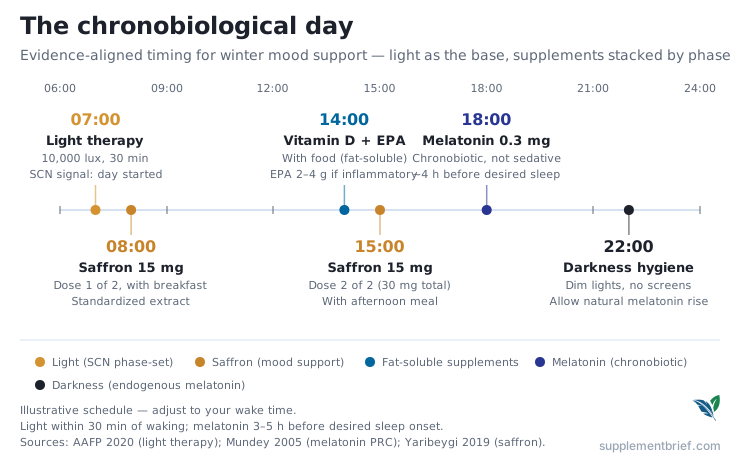
Stack the layers: light as the base, then timing, then the three supplements with trial data.
- Light therapy: 10,000 lux, 30 min, morning only: within 30 min of waking. Later in the day, bright light becomes an alerting signal that can trigger insomnia. The base layer: 1–4 weeks to see response.
- Melatonin: 0.3–0.5 mg (not 5–10 mg), immediate-release, 3–5 hours before desired sleep onset. The dose and timing are the intervention, not the bottle.
- Saffron: 30 mg/day standardized extract, 6–8 week trial. The supplement with the most relevant mood RCTs. Modest but real effect.
- Vitamin D: only if a blood test shows deficiency. Do not supplement blind and expect a mood effect.
- If moderate-to-severe: stop self-directing. See a clinician. Supplements are not the tool for clinical depression.
What to discuss with your clinician
If you are seeing a clinician for seasonal mood, the conversation is more useful if you bring specifics rather than “I want to try supplements.”
A useful framing:
“I’ve been doing 30 minutes of 10,000-lux light therapy every morning for three weeks, and I’m still feeling [specific symptoms]. I’ve read that saffron extract at 30 mg/day has some trial support for mild depression. Is there any reason in my case not to try it for 6–8 weeks alongside what we’re already doing?”
This is a different conversation from “what supplements should I take?”: it shows you have done the first-line work, it names a specific compound and dose, and it gives the clinician something specific to evaluate against your medication list and history.
Mention every supplement you take. St. John’s Wort, 5-HTP, and even high-dose omega-3 can interact with antidepressants, blood thinners, and other medications. A clinician cannot protect you from an interaction they do not know about.
Buying: light box and melatonin
Choosing a light box
A light box is not a supplement, but it is the most important purchase in this guide. What to look for:
- 10,000 lux at a usable distance. Many “light therapy” devices advertise 10,000 lux only at 6 inches: too close to use comfortably. Look for 10,000 lux at 12–24 inches.
- UV filter. The therapeutic wavelength is visible blue (~480 nm), not UV. A UV-filtered white light box is safer and equally effective.
- Size. A small travel light (~5,000 lux) is better than nothing but takes longer. A full-size box (~10,000 lux at 12–24 inches, ~12×8 inch panel) is the standard.
- LED or fluorescent. Both work. LED is more energy-efficient and does not flicker. Fluorescent is the original trial-tested format.
- No “full-spectrum” marketing tax. “Full-spectrum” is a marketing term, not a clinical one. Cool-white fluorescent or LED at 10,000 lux is what the trials used.
Reputable clinical-grade brands include Carex (Day-Light series), Philips (GoLite), Verilux (HappyLight), and Northern Light Technologies. Expect to spend $30–80 for a credible unit. Anything cheaper is likely underpowered; anything over $150 is paying for design, not efficacy.
Choosing a melatonin supplement
The melatonin market is broken in a specific way: most products sell the wrong dose for the wrong use.
- Dose: look for 0.3 mg, 0.5 mg, or 1 mg. Avoid 5 mg and 10 mg products for entrainment use; those are hypnotic doses, not chronobiotic doses.
- Format: immediate-release for entrainment. Extended-release is for sleep maintenance, not circadian advance.
- Third-party testing: look for NSF, USP, or ConsumerLab verification. Melatonin products are notoriously mislabeled; a 2017 analysis found actual melatonin content ranged from −83% to +478% of labeled content.
- No “sleep blend” formulas: melatonin combined with valerian, chamomile, magnesium, L-theanine, and 5-HTP is a marketing product, not a chronobiotic. You want melatonin alone, at a known dose, in immediate-release format.
For label evaluation basics, see our Foundations guide.
FAQ
Can I take melatonin every night through the winter?
Short-term use (4–8 weeks) to establish a new circadian phase is well-supported by the trial evidence. Long-term nightly use is less well-studied. The goal is to use melatonin as an entraining tool (aligning the circadian clock with the day-night cycle) while you fix the underlying light environment, not as a permanent crutch. Once the phase is advanced and morning light is consistent, most people can discontinue melatonin without the phase reverting.
Is 10 mg melatonin safe?
Acute safety is high: melatonin has a wide therapeutic window. But 10 mg is a hypnotic dose, not a chronobiotic dose. It will make you drowsy without effectively entraining your circadian clock, and it frequently causes next-day grogginess. For circadian phase advance, 0.3–0.5 mg is more effective and better tolerated. Reserve higher doses for short-term jet lag or clinician-supervised use.
How long does it take for light therapy to work?
Most people see improvement within 1–4 weeks of daily 10,000-lux exposure. If you see no change after 4 weeks of consistent use (30 min daily, every morning, within 30 min of waking), the issue may be timing (too late in the day: bright light after midday is an alerting signal that can cause insomnia and shift the clock the wrong way), intensity (light too far away), or a depression that needs a different treatment. Don't extend to 60+ minutes without assessing; more is not always better.
Can I use a sunrise alarm or dawn simulator instead of a light box?
Dawn simulators (gradually increasing light before wake time) have some trial support for SAD but the effect is smaller than 10,000-lux post-awakening light. They are a reasonable addition, not a replacement. The strongest evidence is for post-awakening bright light exposure.
Does saffron work for severe depression?
No. The saffron trials are in mild-to-moderate depression. There is no evidence that saffron is effective for severe major depression, and severe depression should not be self-treated with supplements. The comparison in the trials was to fluoxetine at standard doses; for severe depression, fluoxetine and other antidepressants have a larger evidence base and clinician supervision is essential.
Should I take vitamin D even without a blood test?
For general winter health, 1,000–2,000 IU/day is a reasonable dose with low risk. For expecting a mood effect, no: the SAD-specific trials were null. Strip the marketing, keep this: test 25(OH)D, supplement if deficient, and do not expect mood benefit beyond deficiency correction. High-dose vitamin D (5,000–10,000 IU) without monitoring can cause hypercalcemia in a minority of people.
Is omega-3 the same as fish oil?
"Fish oil" is a delivery format. What matters for mood is the EPA content. Most "fish oil" supplements are 1:1 EPA:DHA at 1,000 mg total: that gives you ~300–500 mg EPA, which is below the dose that showed any signal in the depression trials. For the inflammatory-subtype signal, you want EPA-dominant products delivering 2–4 g/day of EPA specifically.
Can I take saffron with my SSRI?
The saffron-vs-fluoxetine trials compared the two as monotherapy; they did not test saffron as an add-on to an existing SSRI. There is no specific evidence that saffron causes serotonin syndrome, but the serotonergic mechanism means the combination should not be self-directed. If you are on an SSRI and considering saffron, discuss it with the prescribing clinician first.
What about sunlight through a window?
Window glass blocks a significant fraction of the blue-wavelength light that synchronizes the circadian system. Sitting near a window is better than nothing but does not deliver the intensity of outdoor light or a 10,000-lux box. For therapeutic effect, you need either direct outdoor morning light (even overcast days deliver 1,000–10,000 lux) or a light box.
Is this guide a substitute for medical advice?
No. This is educational content summarizing the published evidence on supplements and non-pharmacological interventions for seasonal mood. It is not medical advice. If you have moderate or severe depressive symptoms, suicidal thoughts, or a complex medication regimen, see a clinician. Supplements are not the primary tool for clinical depression.
Sources
-
Mundey K, Benloucif S, Harsanyi K, Dubocovich ML, Zee PC. Phase-dependent treatment of delayed sleep phase syndrome with melatonin. Sleep. 2005;28(10):1271-1278. PMID 16295212.
-
Rahman SA, Kayumov L, Shapiro CM. Antidepressant action of melatonin in the treatment of Delayed Sleep Phase Syndrome. Sleep Medicine. 2010;11(2):131-136. PMID 20044310.
-
Sletten TL, Magee M, Murray JM, et al. Efficacy of melatonin with behavioural sleep-wake scheduling for delayed sleep-wake phase disorder: a double-blind, randomised clinical trial. PLOS Medicine. 2018;15(6):e1002587. doi:10.1371/journal.pmed.1002587. PMID 29912983.
-
Auld F, Maschauer EL, Morrison I, Skene DJ, Riha RL. Evidence for the efficacy of melatonin in the treatment of primary adult sleep disorders. Sleep Medicine Reviews. 2017;34:10-22. doi:10.1016/j.smrv.2016.06.005. PMID 28648359.
-
Galima SV, Vogel SR, Kowalski AW. Seasonal Affective Disorder: Common Questions and Answers. American Family Physician. 2020;102(11):668-672. PMID 33252911.
-
CANMAT 2025. Management of Major Depressive Disorder in Adults: Guidelines From CANMAT. American Family Physician. 2025. Light therapy as first-line for seasonal depression.
-
NCCIH. Seasonal Affective Disorder and Complementary Health Approaches: What the Science Says. Summary of vitamin D, omega-3, and other evidence.
-
Dumville JC, Miles JN, Porthouse J, et al. Can vitamin D supplementation prevent winter-time blues? A randomised trial among older women. Journal of Nutrition, Health & Aging. 2006;10(2):151-153. PMID 16554952.
-
Kjærgaard M, Waterloo K, Wang CE, et al. Effect of vitamin D supplement on depression scores in people with low levels of serum 25-hydroxyvitamin D: nested case-control study and randomised clinical trial. British Journal of Psychiatry. 2012;201(5):360-368. PMID 22790678.
-
Frandsen TB, Pareek M, Hansen JP, et al. Vitamin D supplementation for treatment of seasonal affective symptoms in healthcare professionals: a double-blind randomised placebo-controlled trial. BMC Research Notes. 2014;7:528. PMID 25125215.
-
Mischoulon D, Nierenberg AA, Schettler PJ, et al. A double-blind, randomized controlled clinical trial comparing eicosapentaenoic acid versus docosahexaenoic acid for depression. Journal of Clinical Psychiatry. 2015;76(1):54-61. doi:10.4088/JCP.14m08986. PMID 25272149.
-
Mischoulon D, Dunlop BW, Kinkead B, et al. Omega-3 fatty acids for major depressive disorder with high inflammation: a randomized dose-finding clinical trial. Journal of Clinical Psychiatry. 2022;83(5):21m14074. PMID 36005883.
-
Hausenblas HA, Saha D, Dubyak PJ, Anton SD. Saffron (Crocus sativus L.) and major depressive disorder: a meta-analysis of randomized clinical trials. Journal of Integrative Medicine. 2013;11(6):377-383. PMID 24299602.
-
Khaksarian M, Behzadifar M, Behzadifar M, et al. The efficacy of Crocus sativus (saffron) versus placebo and fluoxetine in treating depression: a systematic review and meta-analysis. Psychology Research and Behavior Management. 2019;12:297-305. doi:10.2147/PRBM.S199343. PMID 31118846.
-
Kashani L, Eslatmanesh S, Saedi N, et al. Comparison of saffron versus fluoxetine in treatment of mild to moderate postpartum depression: a double-blind, randomized clinical trial. Pharmacopsychiatry. 2017;50(2):64-68. PMID 27595298.
-
Pryce R, Bernaitis N, Davey AK, et al. The Use of Fish Oil with Warfarin Does Not Significantly Affect either the International Normalised Ratio or Incidence of Adverse Events in Patients with Atrial Fibrillation and Deep Vein Thrombosis: A Retrospective Study. Nutrients. 2016;8(9):578. doi:10.3390/nu8090578. PMID 27657121.
This article is educational and summarizes published research on supplements, light therapy, and circadian interventions for seasonal mood support. It is not medical advice. Seasonal affective disorder is a clinical diagnosis. If you have moderate or severe depressive symptoms, suicidal thoughts, or take prescription medication, consult a qualified healthcare professional before starting any supplement or light therapy routine. Supplements can interact with medications, and the right intervention depends on your individual history, medication list, and symptom severity.
Last medically reviewed by Natallia Kalistratava, MD, on July 15, 2026. Editorial refresh August 23, 2026 (voice pass, interaction severity calibration). This article will be updated as new evidence becomes available. If a clinical trial for any of the compounds above changes the evidence picture, we will revise this guide and note the change.