


Short answer
Collagen will not fix loose skin after Ozempic.
That sentence is the whole article, and the rest is why people keep buying the opposite story anyway.
“Ozempic face” and post-loss sagging are usually about facial fat pads emptying, plus skin that has more surface area than the new body needs. Oral collagen peptide trials do not measure those problems; they measure hydration, elasticity devices, and wrinkle volume in midlife adults who are not on GLP-1 drugs and are not mid-deflation after 30, 50, or 80 pounds lost.
So the aisle pitch (“drink collagen, tighten the face”) is the wrong tool for the reader problem. A tub can still be protein-adjacent, but it is not a volume replacement, not a facelift, and not a published treatment for surplus skin.
If you want peptide literacy for ordinary aging metrics, that lives in our collagen peptides guide. This page is the situation twin to hair loss after weight loss: what the body does under rapid change, and which supplements are selling the wrong fix.
Reader checkpoint
Ask what the trial population was before you trust a "GLP-1 skin" claim.
If the paper enrolled stable-weight women and measured eye wrinkles with a device, it is not evidence that collagen restores hollow cheeks after semaglutide.
The verdict
Buy collagen for Ozempic face only if you accept that you are buying a general aging nutricosmetic, not a treatment for the phenotype you are worried about.
Start here:
- Treat facial hollows as volume loss first, skin quality second.
- Hit protein and calories while appetite is suppressed; collagen powder is not complete protein.
- Give skin months after weight plateaus before judging “permanent” laxity.
- See dermatology or plastics when redundancy or volume loss is the real complaint.
Usually skip:
- “Ozempic face collagen” stacks and beauty gummies pitched as a GLP-1 fix.
- Doubling generic hydrolyzed collagen because a creator said 20 g “rebuilds” facial structure.
- Assuming Verisol-type wrinkle data transfers to surplus skin or fat-pad loss.
Evidence grade
| Claim | Evidence grade | Practical reading |
|---|---|---|
| Oral collagen peptides can move hydration / elasticity / wrinkle devices in aging cohorts | Medium, industry-heavy | Product-specific RCTs exist; pooled signal weakens when funding and quality are cut |
| Oral collagen fixes Ozempic face or surplus skin | None | No published RCT on that endpoint |
| Facial fat-pad / volume loss drives the phenotype after rapid GLP-1 weight loss | Medium (clinical consensus) | Plastics and aesthetic reviews; limited prospective facial imaging cohorts |
| GLP-1 primarily “melts dermal collagen” as the main lesion | Low | Speculative reviews and early mechanism work, not settled |
| Significant post-weight-loss skin redundancy often needs surgery | High (guideline) | ASPS: diet, exercise, RF/ultrasound have minimal effect on folds |
| Topical intact collagen cream rebuilds dermis | Low / false | Molecular weight and barrier physics; cream is not dermal reconstruction |
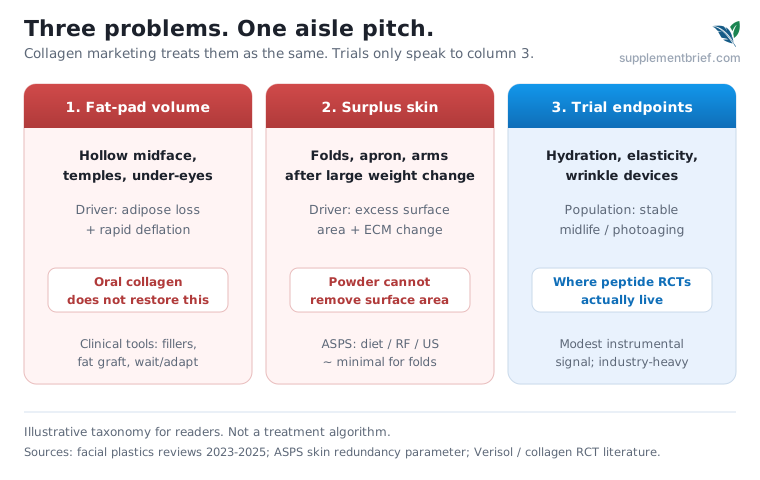
Ozempic face is mostly volume loss
“Ozempic face” is clinic slang rather than a drug-specific disease code, and facial plastics writing in 2023–2026 describes a phenotype of rapid, substantial weight loss: midface and temporal hollows, periorbital deflation, and skin that looks older because the soft-tissue scaffold shrank faster than the envelope can recoil.[1][2][3] A 2026 dermatology practice review likewise flags significant facial volume loss (“Ozempic face”) as a cutaneous and aesthetic monitoring issue in patients on GLP-1 receptor agonists.[20]
That is fat and volume first. Dermal collagen quality can change with age, UV, smoking, menopause, and after massive weight loss, but that is not the same lesion as empty fat compartments. Fillers, biostimulatory injectables, fat grafting, and surgery show up in the clinical literature because they address volume or redundancy, while oral collagen peptides barely appear as a studied intervention in that same literature.[3][4]
Semaglutide trials such as STEP-1 put mean weight loss in the mid-teens of percent body weight for many patients.[5] Scale that onto a face that already had thin soft tissue or photoaging, and the change is visible. Preferential “facial fat targeting” by the drug itself remains unproven, so magnitude and velocity of loss, plus skin reserve, are still the boring drivers clinicians actually counsel on.
Patient-reported data now match the clinic sketch at scale. In an August 2026 survey of 1,226 adults in a virtual weight-management program, respondents who lost more than 20% of body weight most often reported skin sagging (72%; 95% CI 67–76) and decreased facial volume (50%; 95% CI 45–55); both complaints rose with larger weight loss and were more common in GLP-1 regimens than non–GLP-1 therapy in the same cohort (Rao et al.[21]). That is self-report from one program, not a collagen trial, and it still does not move oral peptides into the volume-restoration column. A companion analysis of the same survey, published in the International Journal of Women’s Dermatology, reports that over 60% of respondents flagged concerns spanning skin laxity, facial volume loss, hair shedding, worsened skin quality, and reduced muscle strength (Santiago Mangual et al.[22]). Its management framework is built around nutrition and strength preservation, with aesthetic and regenerative therapies when appropriate, which is the same hierarchy this article already recommends, and it still assigns no role to oral collagen as a treatment.
Narrative reviews sometimes sketch adipose-derived stem cell or inflammatory pathways under GLP-1 exposure.[4][6] Treat those as open science rather than as proof that a collagen scoop reverses the face, because early biopsy signals are not facial RCTs and they do not justify marketing claims that “Ozempic melts collagen” and powder puts it back.
Creams labeled “collagen” are a separate trap. Intact type I collagen is enormous relative to the skin barrier, and as a rule of thumb for passive penetration of intact stratum corneum, molecules much larger than a few hundred daltons do not cross like a drug into deep dermis.[19] A collagen cream can moisturize or leave a film, but it does not install new facial fat or excise an apron. Retinoids and photoprotection matter for photoaging biology, yet they are still not a published substitute for volume restoration after rapid GLP-1 loss, and they are not what this article is selling.
Category check
Volume loss and surplus skin are not wrinkle-score problems.
A 20% drop in eye wrinkle volume on a device is not a restored cheek, and a cream labeled "collagen" is usually a film or humectant story rather than dermal rebuilding. Different category, different conversation.
What collagen trials actually measured
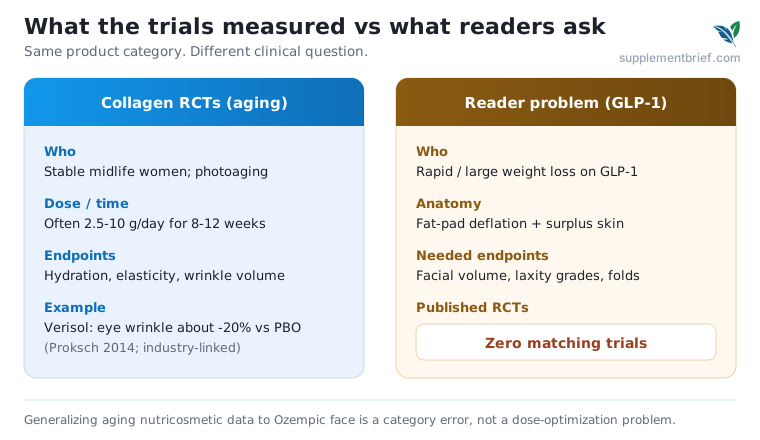
When brands point to “clinical proof” for facial collagen, they are usually pointing at the Verisol program: midlife women, stable weight, eight weeks of a specific bioactive peptide at 2.5 g/day, with device-measured eye wrinkle volume and, in a biopsy subgroup, higher procollagen I markers.[7] Elasticity gains show up in a related Verisol trial at 2.5 or 5 g/day,[8] and the same industry neighborhood (Peptan, low-molecular-weight peptides, multi-ingredient blends) reports hydration or dermal density moves over similar 8–12 week windows.[9][10] None of that is imaginary. It is also not the phenotype people mean by Ozempic face.
The useful reading is the fine print marketing usually strips out. Those populations were photoaged or midlife women at stable weight, and the endpoints were cutometry, corneometry, and wrinkle imaging rather than clinical grades of facial hollowness or body-fold redundancy after 40–60 lb lost. Funding matters here too: Gelita, Rousselot, and related industry ecosystems dominate the positive arms, which does not make every result false, but it does change how hard you should lean on a pooled “collagen works” story.
Once swallowed, peptides are digested, and some di- and tripeptides such as prolyl-hydroxyproline can appear in blood and may signal to fibroblasts.[11] That is a plausible nutricosmetic mechanism, and it is still not the same claim as “ship intact collagen fibers to the cheek fat pads.”
Why the meta-analyses disagree
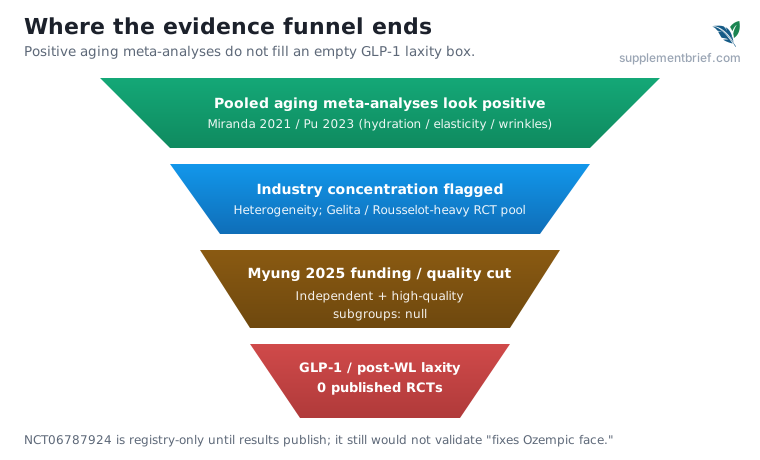
Broad meta-analyses of hydrolyzed collagen look friendly if you stop at the pooled average. Miranda et al. (2021) and Pu et al. (2023) report improvements in hydration, elasticity, and wrinkles across dozens of RCTs,[12][13] and Pu’s effect sizes sit in the small-to-moderate instrumental range (hydration SMD about 0.63; elasticity about 0.72), with high heterogeneity and industry concentration the authors themselves flag.
Myung and Park (2025) cut the same class of evidence by funding source and study quality, and overall positivity collapsed in non-industry and high-quality subgroups. Their conclusion is blunt: once those filters are applied, there is no clinical evidence to support collagen supplements to prevent or treat skin aging.[14]
Industry will argue that independent arms are underpowered or underdosed, and that pushback is fair to note. The onus still stays on manufacturers to run the trials that match the claim. None of those meta-analyses enrolled GLP-1 users for facial volume or surplus skin, so transferring a hydration SMD onto “Ozempic face” is category error even before the funding debate.
Dose check
Label dose vs trial floor — browser-only math.
—
Enter label dose
Trial reference
From your label
Enter your label dose — the gauge updates instantly.
Specific bioactive peptide preparation — generic 20 g powder is not equivalent evidence.
Educational only — not medical advice. Disclaimer.
Skin after big, fast weight loss
Massive weight-loss histology is not a collagen-powder success story. Light et al. described persistent extracellular-matrix damage in post-bariatric skin sampled long after the scale moved,[15] and morphometric work comparing massive-weight-loss abdomen to obese controls found fewer thick collagen fibers and more thin, misaligned fibers, with elastic-system changes as well.[16]
That helps explain a clinical frustration: skin can look and behave differently after large loss even when weight is stable, and that observation still does not imply that oral peptides reverse the architecture.
ASPS practice language on skin redundancy after obesity or massive weight loss is equally blunt. Excess folds are virtually impossible to correct with diet, further weight loss, or exercise, and while radiofrequency and ultrasound have been proposed as alternatives to surgery, the evidence shows minimal effect.[17] Surgery is timed after weight stability for a reason, and a scoop of peptides does not remove surface area.
No collagen trial for this problem
There is no published randomized trial showing that oral collagen (or any dietary supplement) improves post–weight-loss skin laxity, restores facial fat volume, or treats “Ozempic face.”
Aesthetic reviews and systematic looks at the plastics literature discuss fillers, energy devices, fat grafting, and surgery, and they do not hand clinicians a peptide dosing protocol backed by outcome trials.[1][2][3]
One registered study (NCT06787924) tested collagen peptides versus starch around abdominoplasty in a bariatric-adjacent setting.[18] The registry marks it completed (primary completion late 2025), but as of this research pass ClinicalTrials.gov still has no posted results, and no PubMed-linked paper appears under that NCT. The listed endpoints are scar/wound and serum hydroxyproline measures rather than patient-facing facial volume or body laxity as sold on TikTok. A completed trial without posted results is still a pipeline note, not a shopping recommendation. We track the endpoint mismatch as an open prediction before results post.
What actually moves the needle
| Priority | Why it matters | What it does not do |
|---|---|---|
| Magnitude and rate of weight loss | Primary drivers of volume change and redundancy | Collagen does not slow the drug |
| Protein and total intake | Protects lean mass under hypophagia; supports general tissue repair | Not proven to prevent Ozempic face |
| Resistance training | Preserves muscle; reduces global “deflated” look | Not a facial fat-pad graft |
| Time after plateau | Mild cases may remodel over months | Not a guarantee; severe redundancy still surgery |
| UV, smoking, age, genetics | Determine baseline skin reserve | Supplements do not rewrite photoaging overnight |
| Derm / plastics | Volume and excision tools match the anatomy | Oral peptides are not substitutes |
Protein first is the same hierarchy we use in the GLP-1 protein guide and the companion supplements framework, and collagen already sits as optional and low priority there for a reason: it is incomplete as sole protein, and the skin promises outrun the trial populations.
On a slowed stomach, the useful protein is the one you can finish: Greek yogurt, eggs, fish, poultry, tofu, whey concentrate or isolate, milk protein, or a plant blend with a complete amino acid profile. Collagen can sit beside that plan as spare amino acids, but it should not replace the plan. Targets in obesity and bariatric nutrition practice often sit higher than the sedentary RDA, though the exact number still depends on kidney status, age, training, and clinician context, and none of those protein targets were validated as facial-aesthetic endpoints.
If facial change is mild and weight is still moving, waiting for stability is often more rational than panic-buying nutricosmetics. Clinicians often talk about months after plateau for soft-tissue adaptation, and that window is expert judgment rather than a trial that proves “wait twelve months and the face returns.” When hollows dominate, that is a volume conversation; when apron or arm folds dominate after large loss, the problem sits closer to the ASPS redundancy conversation than to a Verisol wrinkle chart.
Money spent on “GLP-1 skin rescue” powders is money not spent on protein you will actually drink, a dermatology consult, or time, and for a trust-first site that tradeoff matters more than affiliate margin on a tub.
Bottom line for the aisle
For an optional aging-metric peptide, maybe, with eyes open, via the collagen guide. As a fix for loose skin after Ozempic, no. For the twin problem after rapid loss (shedding), see hair loss after weight loss.
FAQ
Will collagen prevent Ozempic face if I start it early?
There is no published trial showing prevention of the facial phenotype on GLP-1 therapy, and volume loss tracks weight change and soft-tissue reserve more than powder timing.
Do Verisol trials prove collagen helps after semaglutide?
No. Those trials enrolled stable midlife women and measured wrinkles or elasticity, and they did not enroll GLP-1 users or measure surplus skin or fat-pad volume.
Is collagen at least good protein on Ozempic?
It adds amino acids, but it is not a complete protein replacement, so prioritize whey, dairy, eggs, meat, soy, or a complete powder you can finish. See the protein guide for GLP-1 context.
Can cream collagen rebuild skin after weight loss?
Intact topical collagen is too large to rebuild dermis like an implant, so creams can moisturize or film without reversing post-loss redundancy.
When should I see a dermatologist or plastic surgeon?
When hollows, folds, or functional problems (rashes under aprons, hygiene limits) dominate after weight is stable, or earlier if the change is severe. ASPS guidance treats significant redundancy as a surgical problem, not a supplement problem.
Is Ozempic face permanent?
Some soft-tissue adaptation can continue after weight plateaus, though timelines are clinical judgment rather than a hard RCT, and large volume loss and excess skin often need aesthetic or surgical tools rather than time alone.
Free weekly brief
Want the hype-free supplement brief once a week?
Get one email on evidence changes, safety notes, interaction-base updates, comparison criteria, and tools or dose-registry updates before you buy. No daily sequences, no paid rankings.
Get the free checklistFree. One email a week. Unsubscribe anytime.
How this article was researched
Evidence scan: PubMed, ClinicalTrials.gov, ASPS practice materials, and facial plastics / aesthetic surgery literature through August 2026. Search clusters included hydrolyzed collagen skin RCTs and meta-analyses (Proksch, Pu, Miranda, Myung), massive weight-loss skin histology, “Ozempic face” / GLP-1 facial aging reviews, and registry entries for collagen around post-bariatric contouring.
Priority rule: aging nutricosmetic endpoints are not generalized to facial volume loss or surplus skin, industry funding is disclosed where it dominates the positive RCT pool, and mechanistic GLP-1–skin pathways from narrative reviews are labeled hypothesis rather than settled pathophysiology.
August 2026 refresh: Rao et al.[21] for patient-reported skin sagging and facial volume loss by weight-loss magnitude in a virtual CKM program — survey context only, not a collagen efficacy endpoint.
Research date: August 2026. Updates planned when NCT06787924 publishes or when a GLP-1–specific collagen laxity RCT appears.
Sources
-
Humphrey CD, Lawrence AC. Implications of Ozempic and other GLP-1 receptor agonists for facial plastic surgeons. Facial Plastic Surgery. 2023;39(6):719-721. doi:10.1055/a-2148-6321.
-
Tay JQ. Ozempic face: A new challenge for facial plastic surgeons. Journal of Plastic, Reconstructive & Aesthetic Surgery. 2023;81:1-2. doi:10.1016/j.bjps.2023.04.057.
-
Daneshgaran G, Shauly O, Gould DJ. "Ozempic Face" in Plastic Surgery: A Systematic Review of the Literature on GLP-1 Receptor Agonist Mediated Weight Loss and Analysis of Public Perceptions. Aesthetic Surgery Journal Open Forum. 2025;7:ojaf056. doi:10.1093/asjof/ojaf056. PMID 40626110.
-
Ridha Z, Fabi SG, Zubar R, Dayan SH. Decoding the Implications of Glucagon-like Peptide-1 Receptor Agonists on Accelerated Facial and Skin Aging. Aesthetic Surgery Journal. 2024;44(11):NP809-NP818. doi:10.1093/asj/sjae132. PMID 38874170.
-
Wilding JPH, Batterham RL, Calanna S, et al. Once-weekly semaglutide in adults with overweight or obesity (STEP 1). New England Journal of Medicine. 2021;384:989-1002. doi:10.1056/NEJMoa2032183.
-
Paschou SA, et al. Glucagon-like peptide-1 receptor agonists and the skin: Dual pathways and clinical implications. 2025. PMID:40498168.
-
Proksch E, Schunck M, Zague V, Segger D, Degwert J, Oesser S. Oral intake of specific bioactive collagen peptides reduces skin wrinkles and increases dermal matrix synthesis. Skin Pharmacology and Physiology. 2014;27(3):113-119. doi:10.1159/000355523.
-
Proksch E, Segger D, Degwert J, Schunck M, Zague V, Oesser S. Oral supplementation of specific collagen peptides has beneficial effects on human skin physiology: a double-blind, placebo-controlled study. Skin Pharmacology and Physiology. 2014;27(1):47-55. doi:10.1159/000351376.
-
Asserin J, Lati E, Shioya T, Prawitt J. The effect of oral collagen peptide supplementation on skin moisture and the dermal collagen network: evidence from an ex vivo model and randomized, placebo-controlled clinical trials. Journal of Cosmetic Dermatology. 2015;14(4):291-301. doi:10.1111/jocd.12174.
-
Kim DU, Chung HC, Choi J, Sakai Y, Lee BY. Oral intake of low-molecular-weight collagen peptide improves hydration, elasticity, and wrinkling in human skin: a randomized, double-blind, placebo-controlled study. Nutrients. 2018;10(7):826. doi:10.3390/nu10070826.
-
Iwai K, Hasegawa T, Taguchi Y, et al. Identification of food-derived collagen peptides in human blood after oral ingestion of gelatin hydrolysates. Journal of Agricultural and Food Chemistry. 2005;53(16):6531-6536. doi:10.1021/jf050206p.
-
Miranda RB, Weimer P, Rossi RC. Effects of hydrolyzed collagen supplementation on skin aging: a systematic review and meta-analysis. International Journal of Dermatology. 2021;60(12):1449-1461. doi:10.1111/ijd.15518.
-
Pu S-Y, Huang Y-L, Pu C-M, et al. Effects of oral collagen for skin anti-aging: a systematic review and meta-analysis. Nutrients. 2023;15(9):2080. doi:10.3390/nu15092080.
-
Myung S-K, Park Y. Effects of collagen supplements on skin aging: a systematic review and meta-analysis of randomized controlled trials. The American Journal of Medicine. 2025;138(9):1264-1277. doi:10.1016/j.amjmed.2025.04.034.
-
Light D, Arvanitis GM, Abramson D, Glasberg SB. Effect of weight loss after bariatric surgery on skin and soft tissue histology. Plastic and Reconstructive Surgery. 2010;125(1):343-351. PMID:20048625.
-
Rocha RI, Junior WC, Modolin MLA, et al. Skin changes due to massive weight loss: histological changes and the causes of the limited results of contouring surgeries. Obesity Surgery. 2021. PMID:33145720. doi:10.1007/s11695-020-05100-3.
-
American Society of Plastic Surgeons. Practice Parameter for Surgical Treatment of Skin Redundancy for Obese and Massive Weight Loss Patients. 2017.
-
ClinicalTrials.gov. NCT06787924: Effect of collagen supplements on dermal collagen in plastic and bariatric surgery patients (status COMPLETED; no results posted on ClinicalTrials.gov and no PubMed-linked publication under this NCT as of August 2026).
-
Bos JD, Meinardi MMHM. The 500 Dalton rule for the skin penetration of chemical compounds and drugs. Experimental Dermatology. 2000;9(3):165-169. doi:10.1034/j.1600-0625.2000.009003165.x. PMID:10839713.
-
Narla S, Narla RR. Integrating GLP-1 receptor agonists into dermatology practice: safety and monitoring strategies. Clinics in Dermatology. 2026. doi:10.1016/j.clindermatol.2026.07.030. PMID:42562129.
-
Rao S, Midura I, Mangual KPS, Igel LI, Saunders KH, Carter J, et al. Skin Impacts and Tradeoffs of GLP-1 Therapy: Improved Patient-Reported Outcomes of Inflammatory Skin Disease in the Era of "Ozempic Face". Dermatology and Therapy. 2026. doi:10.1007/s13555-026-01882-z. PMID:42579223.
-
Santiago Mangual KP, Midura I, Patin E, Rao S, Igel LI, Saunders KH, Carter J, Kourosh AS. Aesthetic, muscle, and dermatologic effects of medical weight management: patient-reported outcomes shape a holistic preventive procedural approach. International Journal of Women's Dermatology. 2026;12(3):e283. doi:10.1097/JW9.0000000000000283. PMID:42639588. Companion analysis of the same 1,226-patient survey as source 21.
Evidence watch
Automated PubMed / registry digest for this guide — triaged PMIDs only, not a promise to rewrite on every abstract.
Recent PMIDs in the log
Search queries
- Ozempic face facial volume GLP-1
- collagen peptides skin laxity weight loss
- GLP-1 facial aging aesthetic review