


If you are over 40 and creatine still sounds like a men’s gym product, that is marketing history talking, not the trial record. The useful question is narrower: does monohydrate help women in midlife keep muscle and training capacity as recovery slows, and does the brain-fog pitch survive contact with human data?
The answer is uneven on purpose. For strength and lean mass, creatine is one of the better-studied cheap options in postmenopausal women, and the effect shows up when resistance training is already there. For fog and “energy reboot” claims, the story is thinner and easier to oversell. Kidney damage fears are mostly misplaced in healthy users, but bloodwork can still look confusing if nobody knows you are taking it.
Reader checkpoint
Creatine is an energy buffer, not a hormone replacement.
It helps cells recycle ATP quickly. That can support hard sets and busy days. It does not reverse menopause, and it should not be used to adjust psychiatric medication on your own.
The verdict
Best fit: women 40+ who already lift two or three times a week, or are starting, and want a low-cost add-on with a long safety record. Plain monohydrate is enough.
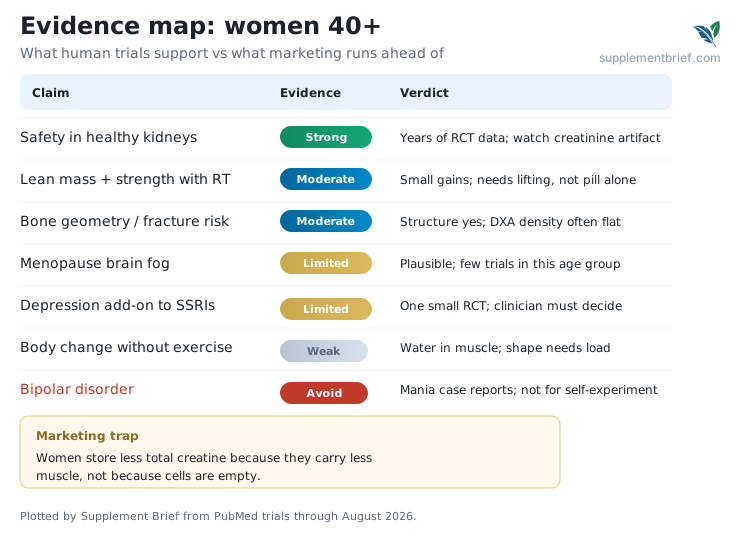
Overrated: menopause brain fog or body recomposition without lifting. Cognition trials here are small and mixed; muscle trials need load.
Real gap: no large long-term RCTs track fractures, dementia, or quality of life specifically in women 40–55. Most clean muscle and bone data sit around ages 55–65.
Skip or get clinician sign-off first: chronic kidney disease, bipolar disorder, lithium, or using creatine to “boost” an antidepressant without psychiatric oversight.
Why creatine shows up after 40
Creatine is not exotic chemistry. Your body makes it from amino acids; meat and fish add more. Women tend to eat less dietary creatine and carry less muscle, so total stores are lower (Smith-Ryan et al.[1][2]). Resting concentration inside muscle can still be slightly higher in women than men: smaller tank, not empty cells.
That distinction matters. Influencer decks often turn “women have 70–80% less creatine” into panic. That figure does not hold as a muscle-store fact in the papers people cite. What holds: less meat plus less lean mass means less total creatine on board.
Brain energy pulls midlife into the conversation. Imaging shows lower glucose use in Alzheimer’s-vulnerable regions: about 8% in perimenopause and about 19% after menopause versus premenopausal baseline (Mosconi et al.[10]). Real story. Not the “30% drop” on social slides, and not a creatine prescription. Fog can be sleep, iron, thyroid, mood, meds, or hormones.
Muscle is the cleaner entry. Lean-mass loss accelerates around menopause when training and protein slip. Creatine is here because postmenopausal RCTs exist, not because powder replaces estrogen.
Muscle and strength: what trials actually show
The claim worth testing is not “creatine builds a new body.” It is “creatine can add a little lean mass and lower-body strength when you already lift.”
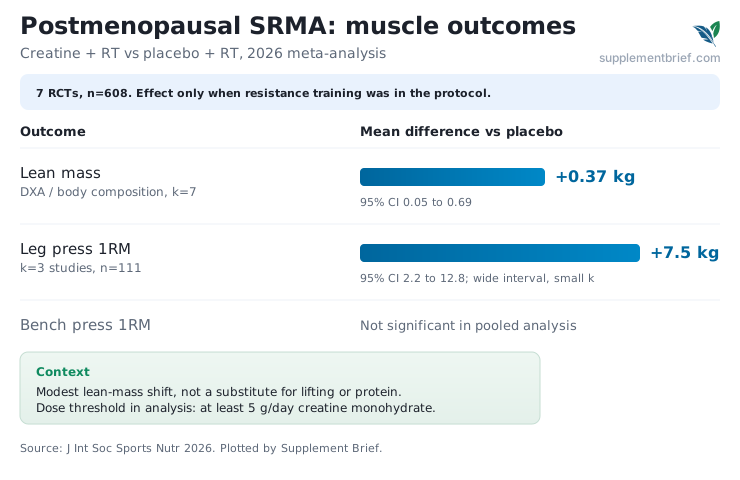
In postmenopausal women, a 2026 review of seven RCTs (n=608) found creatine plus resistance training beat placebo-plus-training by about 0.37 kg lean mass and about 7.5 kg on leg-press 1RM, usually at ≥5 g/day (Naddafha et al.[4]). Bench press did not clearly separate. Not a wardrobe remake. It does clear a bar most longevity powders never clear: consistent direction in this population, with training as the co-intervention.
A two-year trial asks whether that survives outside short gym studies. Women around 59 on 0.14 g/kg/day with structured training gained more lean tissue than placebo completers, but key 1RM lifts did not pull away (Chilibeck et al.[3]). Together: creatine can support tissue retention in a real program; it is not an automatic strength leap. Inconsistent training means the powder has nowhere to land.
An August 2026 Kreider-lab trial sits in the same age band as this page: 64 sedentary adults aged 45–65 completed 12 weeks on 10 g/day creatine monohydrate or placebo, with participants choosing either a non-exercise arm or a supervised exercise-and-diet intervention. GLP-1 users were excluded. In the exercise group, creatine plus training added about 1.3 kg lean mass versus placebo plus training and a slightly larger drop in body-fat percentage; the non-exercise arm still gained lean tissue and strength on creatine alone, which fits the water-and-load story below rather than a recomposition miracle. Self-selected training and industry funding (WoodNext, Alzchem; Kreider on the Alzchem scientific advisory board) limit how hard to lean on any one number (Chun et al.[15]).
Without lifting, you mostly buy intramuscular water (often 1–2 kg on the scale). Companion guides put creatine after protein and training for a reason (see protein on GLP-1). That order tracks a wider shift in GLP-1 prescribing: a 2026 review in Trends in Endocrinology & Metabolism argues that in older adults, treatment success should weigh muscle, nutrition, and independence — not the number on the scale alone (Maltese et al.[14]).
Practical takeaway
Not lifting? Protein and a program first. Already lifting? Monohydrate is a sensible optional layer.
Bones: geometry beats density on the label
Bone marketing loves DEXA. The useful creatine trial here is about structure moving while density barely budges.
Over two years, creatine with exercise preserved section modulus at the proximal femur and improved buckling ratio versus placebo; areal BMD at hip and spine did not significantly change (Chilibeck et al.[3]). Better than “builds bone density,” more limited: no fracture endpoints. With osteopenia or osteoporosis, creatine is an optional training adjunct, not a substitute for clinician-guided care.
Brain fog and mood: where hype runs ahead
The brain pitch is where creatine content usually leaves the evidence. Mechanism is plausible; “fixes menopause fog” is not.
Start with the null people skip: 24 weeks in older women, creatine with or without strength training, no cognitive benefit on that battery (Alves et al.[8]).
The 2026 peri/postmenopausal pilot looked different: ~36 women, eight weeks, creatine HCl 1.5 g/day, some reaction-time improvement (Korovljev et al.[9]). That is not a clean contradiction with Alves. Different salt, much lower dose, shorter window, narrower measures. A small positive there does not overturn a longer null trial, and neither is an MCI program. A 2026 review of the brain side of creatine puts the ceiling on all of this in one line: mechanistic rationale exists, but no controlled clinical trial has tested creatine in dementia or diagnosed cognitive impairment, and the field is still waiting for adequately powered, sex-stratified trials (Dolan et al.[16]). Until one lands, the honest status of the fog claim is plausible-and-unproven.
Sleep-deprivation labs in young adults are further still. A high single dose can blunt some of the hit from staying awake (Gordji-Nejad et al.[13]). Acute stress model, not midlife word-finding. If fog is the main complaint, check sleep, iron, thyroid, mood, meds, and menopause care first.
Mood belongs with a clinician. One eight-week depression trial found 5 g/day creatine added to escitalopram sped early response and raised remission versus placebo augmentation (Lyoo et al.[6]). Small sample, psychiatric setting. Case reports also link creatine to manic switches in bipolar disorder (Roitman et al.[7]). Keep mood use under medical oversight.
Red flag
If you have bipolar disorder or a manic history, do not self-start creatine for mood or "brain energy."
Dose, safety, and labels
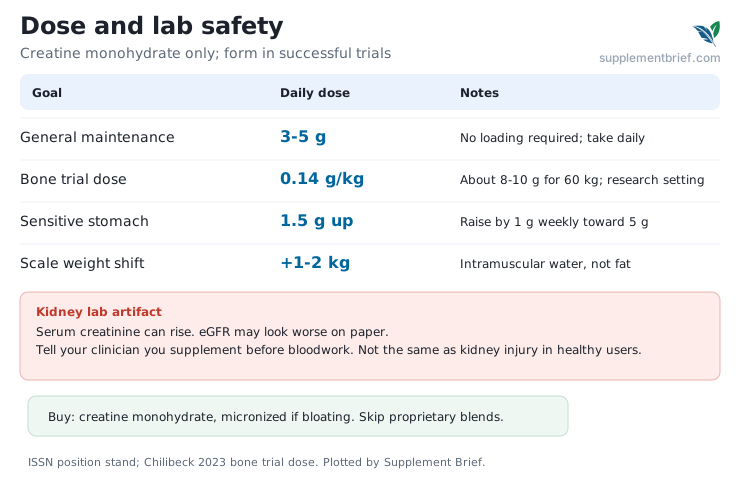
You do not need a pink jar. Trials use creatine monohydrate. Micronized is gut preference, not a different drug. Ethyl ester, buffered blends, and “women’s formulas” usually sell packaging or under-dosing.
| Goal | Daily dose | Notes |
|---|---|---|
| General use with training | 3–5 g monohydrate | Consistency beats perfect timing |
| Bone trial dose | ~0.14 g/kg (~8–10 g at 60 kg) | Research setting, not the default |
| Sensitive GI | Start 1–1.5 g, add ~1 g/week | Titrate toward 5 g |
Dose check
Label dose vs trial floor — browser-only math.
—
Enter label dose
Trial reference
From your label
Enter your label dose — the gauge updates instantly.
Seven-RCT meta-analysis in postmenopausal women found +0.37 kg lean mass (95% CI +0.05 to +0.69). Most included trials used ≥5 g/day with resistance training; 3 g/day is a common maintenance floor.
Educational only — not medical advice. Disclaimer.
Loading (~20 g/day × 5–7 days) saturates faster, then maintenance. Optional. Many skip it for stomach comfort and still get there on daily 3–5 g (Kreider et al.[5]). Chronic high caffeine during loading may blunt some ergogenic benefit; separating coffee by a few hours is a cheap hedge if you notice nothing otherwise (Vandenberghe et al.[12]). Buy third-party tested monohydrate with grams listed. Same rules as our label-reading guide.
Long-term use in healthy people has not shown renal damage at ordinary doses (Kreider et al.[5]; Poortmans & Francaux[11]). The trap is the lab slip: serum creatinine can rise and eGFR can look worse without true filtration injury. Tell your clinician before bloodwork. With CKD or heart failure, ask first. Pregnancy and breastfeeding lack solid supplementation trials; food-first unless a clinician says otherwise (Smith-Ryan et al.[2]).
What you should take away
Known: safe for healthy kidneys long-term; with resistance training, small lean-mass and lower-body strength gains in postmenopausal women; bone geometry may improve when DEXA barely moves.
Unknown: fractures, midlife cognition outside specialty labs, creatine versus protein-plus-lifting alone.
Evidence ends before treating depression, bipolar disorder, osteoporosis, or brain fog solo.
Reasonable trial: lift or start, tolerate powder, 3–5 g/day monohydrate for 8–12 weeks with protein. Judge by training and clothes, not week-one scale drama.
Wrong buy: creatine instead of workup for fog/mood/bone loss; bipolar history; recomposition without load.
Ask a clinician about creatinine lab artifact, bone-density context, and SSRI or lithium safety.
Related: magnesium forms, omega-3, urolithin A vs NMN.
Bottom line
Creatine for women over 40 earns a place as a training supplement. The brain story is still catching up. Buy monohydrate, lift, keep mood and bone red flags medical.
FAQ
Does creatine work for women over 40 without lifting?
Not for useful body-composition change. Lean-mass and strength gains in postmenopausal trials come with resistance training. Without load, you mainly get water inside muscle and a small scale bump (Naddafha et al.[4]).
Will creatine make me bloated or gain fat?
Water moves into muscle cells. That can add about 1–2 kg on the scale without changing fat, and it is not facial puffiness. Split the dose or use micronized monohydrate if your gut complains (Kreider et al.[5]).
Is creatine safe for kidneys?
In healthy adults, long-term studies do not show renal damage at standard doses. Serum creatinine may rise and eGFR may look worse on paper. Tell your clinician, or pause before labs if they prefer (Poortmans & Francaux[11]). Lookup: pause before labs.
Can creatine help menopause brain fog?
Do women need a special creatine formula?
No. Trials use creatine monohydrate. "Women's" products are usually flavor, packaging, or under-dosing. Compare grams and third-party testing, not tub color.
Can I take creatine with antidepressants?
Free weekly brief
Want longevity updates without the hype?
One email a week on evidence shifts, safety notes, interaction-base updates, and tools or dose-registry updates.
Get the free checklistFree. Unsubscribe anytime.
How this article was researched
Evidence scan: PubMed and ISSN, July–August 2026. Priority: postmenopausal RCTs/meta-analyses, Chilibeck[3], Smith-Ryan[1][2], ISSN safety[5]. August 2026 refresh: Maltese et al.[14] for GLP-1/older-adult muscle and nutrition framing only — not creatine efficacy; Chun et al.[15] for 45–65 sedentary RCT with self-selected exercise arms and GLP-1 exclusion noted. Influencer “70–80% lower stores” and “30% glucose drop” checked against primary papers and narrowed or rejected. SSRI augmentation is context only.
Sources
-
Smith-Ryan AE, Cabre HE, Eckerson JM, Candow DG. Creatine Supplementation in Women's Health: A Lifespan Perspective. Nutrients. 2021;13(3):877. doi:10.3390/nu13030877. PMID:33800439.
-
Smith-Ryan AE, DelBiondo GM, Brown AF, et al. Creatine in women's health: bridging the gap from menstruation through pregnancy to menopause. Journal of the International Society of Sports Nutrition. 2025;22(1):2502094. PMID:40371844.
-
Chilibeck PD, Candow DG, Gordon JJ, et al. A 2-yr Randomized Controlled Trial on Creatine Supplementation during Exercise for Postmenopausal Bone Health. Medicine & Science in Sports & Exercise. 2023;55(10):1750-1760. PMID:37144634.
-
Naddafha S, Antonio J, Kreider RB, Stout JR. Creatine monohydrate for lean mass, strength, and bone density in postmenopausal women: a systematic review and meta-analysis of randomized controlled trials. Journal of the International Society of Sports Nutrition. 2026. doi:10.1080/15502783.2026.2668435. PMID:42141930.
-
Kreider RB, Kalman DS, Antonio J, et al. International Society of Sports Nutrition position stand: safety and efficacy of creatine supplementation in exercise, sport, and medicine. Journal of the International Society of Sports Nutrition. 2017;14:18. doi:10.1186/s12970-017-0173-z. PMID:28615996.
-
Lyoo IK, Yoon S, Kim TS, et al. A Randomized, Double-Blind Placebo-Controlled Trial of Oral Creatine Monohydrate Augmentation for Enhanced Response to a Selective Serotonin Reuptake Inhibitor in Women With Major Depressive Disorder. American Journal of Psychiatry. 2012;169(9):937-945. PMID:22864465.
-
Roitman S, Green T, Osher Y, et al. Creatine monohydrate in resistant depression: a preliminary study. Bipolar Disorders. 2007;9(7):754-758. PMID:17988366.
-
Alves CR, Merege Filho CA, Benatti FB, et al. Creatine supplementation associated or not with strength training upon emotional and cognitive measures in older women: a randomized double-blind study. PLoS One. 2013;8(10):e76301. doi:10.1371/journal.pone.0076301. PMID:24098469.
-
Korovljev D, Ostojic J, Panic J, et al. The Effects of 8-Week Creatine Hydrochloride and Creatine Ethyl Ester Supplementation on Cognition, Mood, and Reactivity in Peri- and Postmenopausal Women. Journal of the American Nutrition Association. 2026. PMID:40854087.
-
Mosconi L, Berti V, Quinn C, et al. Perimenopause and emergence of an Alzheimer's bioenergetic phenotype in brain and periphery. PLoS One. 2017;12(10):e0185926. PMID:29016679.
-
Poortmans JR, Francaux M. Long-term oral creatine supplementation does not impair renal function in healthy athletes. Medicine & Science in Sports & Exercise. 1999;31(8):1108-1110. doi:10.1097/00005768-199908000-00005. PMID:10449011.
-
Vandenberghe K, Gillis N, Van Leemputte M, et al. Caffeine counteracts the ergogenic action of muscle creatine loading. Journal of Applied Physiology. 1996;80(2):452-457. doi:10.1152/jappl.1996.80.2.452. PMID:8929583.
-
Gordji-Nejad A, Matusch A, Kleedörfer S, et al. Single dose creatine improves cognitive performance and induces changes in cerebral high energy phosphates during sleep deprivation. Scientific Reports. 2024;14:4937. doi:10.1038/s41598-024-54249-9. PMID:38418482.
-
Maltese G, Koufakis T, Popovic DS. Reappraisal of GLP-1 receptor agonists in older adults. Trends in Endocrinology & Metabolism. 2026. doi:10.1016/j.tem.2026.07.009. PMID:42567819.
-
Chun J, Liu Y, Kibler GL, Lee H, Babakhani K, Rhoades N, et al. Effects of creatine supplementation with and without exercise and diet intervention on body composition, cognitive function, and markers of health in middle-aged and older adults. Journal of the International Society of Sports Nutrition. 2026. doi:10.1080/15502783.2026.2716273. PMID:42578920.
- Whitford T, et al. The cognitive effects of creatine supplementation in older adults and preclinical models of dementia. Ageing Research Reviews. 2026;122:103317. PMID 42668123.
Evidence watch
Automated PubMed / registry digest for this guide — triaged PMIDs only, not a promise to rewrite on every abstract.
No triaged PMIDs logged yet for this guide.
Search queries
- creatine postmenopausal women resistance training
- creatine women lean mass meta-analysis
- creatine cognition postmenopausal trial