


We still go to the big supplement and ingredient shows so you can skip the badge scan, but this is a verdict piece, not a recap. Four floors through July 2026, one question: what still deserves shelf space in 2027, and what was booth theater.
Supplement Brief reads the floor the way we read labels: where is the money going, does the formula match the claim, and would any of it solve a problem you actually have? From March through July 2026, that meant Expo West, Vitafoods Europe, Growth Asia, and IFT FIRST.
We left revenue scoreboards out on purpose; they rarely tell you whether a trend deserves a place in your cabinet.
In 30 seconds
The defensible summary after four H1 show floors
- GLP-1: skip herbal “GLP-1 mimetic” and berberine-as-Ozempic copy. Adjunct logic is protein, fiber, and electrolytes for intake gaps (see GLP-1 companion supplements).
- Formats: chews and RTDs earn their price when grams land in one or two servings and you will actually take them; powder still wins on cost per gram (often ~2–4× cheaper).
- Red flags: shilajit without batch metals testing, mushroom towers with no milligrams per species, proprietary blends hiding dose — TikTok can keep them warm after serious buyers move on.
Below we walk Expo West through IFT FIRST: show-by-show detail, not revenue scoreboards.
Skip to your problem
Jump by issue (in-article anchors and guides)
- GLP-1 adjuncts: fiber & protein on the floor · companion guide · protein · electrolytes
- Chews vs. powder: creatine at Expo · buy/skip rules · Figure 4
- Import / viral SKU: Growth Asia · listing & grey-market read
- Label red flags: bets we would not make · label table · 90-second label read · NSF / USP / COA
- “Natural Ozempic” hype: berberine vs Ozempic · Rx context: Foundayo vs semaglutide
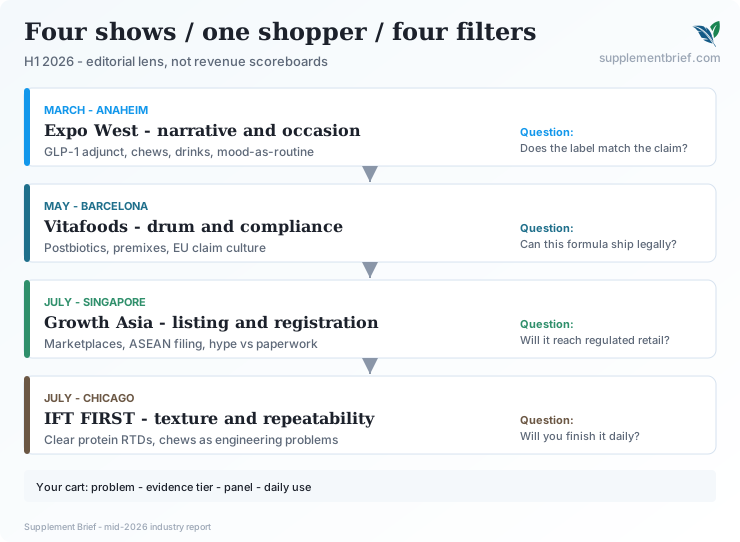
Four shows that shaped H1 2026
Natural Products Expo West 2026 · Anaheim, March 3–6
Merchandising: daily routines, drinks, GLP-1 adjunct stacks — not new molecules.
Anaheim in March is U.S. “natural” at full volume: first-run chews on one aisle, a full GLP-1-adjacent suite on the next. The mood was upbeat, but the “discover the one molecule” era felt finished. Conversation kept returning to when people take products, what they pair them with, and which slice of the day the SKU is supposed to own.
Mood lines. Supplements no longer show up as a standalone “anti-stress gummy.” Brands bundle sleep, gut comfort, hydration, sometimes metabolic copy into morning, midday, and wind-down routines. Underneath it’s often the same adaptogens and aminos as last year; the merchandising changed. A mood SKU earns its price only if you can name one job (falling asleep vs. daytime edge) and see doses on the panel. All-in-one promises without milligrams are still shelf fiction.
Drinks vs. caps. Coffee, matcha, cocoa, tea with collagen or L-theanine keep eating capsule share. The pitch is to upgrade a habit people already have, not invent a new one. Ready-to-drink works when you already live on coffee; it backfires when sugar, caffeine, or dairy irritate a GLP-1-sensitive gut. Grams of protein or fiber on the back matter more than “functional” on the front — collagen drinks are a separate evidence question; see our collagen peptides for skin read if that is why you are buying.
GLP-1 adjuncts. Positioning showed up on nearly every protein and fiber booth; “natural Ozempic” was already awkward by spring 2026. The story is narrower: less food on the plate, so structured protein; slower transit, so soluble fiber; lighter intake, so electrolytes. Many formulas stack several actives with gram declarations. These products are for people on prescription GLP-1s closing gaps, not for chasing extra weight loss. We treat disease claims and “boost your injection” copy as disqualifying. For a full adjunct framework (not fat-loss mimicry) see GLP-1 companion supplements.
Fiber on the floor. Chatter was more specific than many labels: psyllium for viscosity and stool bulk; partially hydrolyzed guar or high-viscosity blends for users who bloat on psyllium; inulin or FOS where fermentation is tolerated. Sachets and chews advertising 3–6 g fiber per serving sat between “hit 25 g from food” and “one heroic scoop.” Start low, and ask your clinician about timing relative to medication if absorption is a concern.
Creatine has left the gym-only aisle: soft chews for focus, tubs for aging, women’s wellness stacks.
Demos we saw often landed roughly 2–5 g creatine monohydrate per chew (verify Supplement Facts).
3–5 g/day monohydrate across servings is the same ingredient as powder.
On the shelf: compare cost per gram of creatine monohydrate: chews and RTDs are often roughly 2–4× powder per gram; you are paying for texture and adherence, not a different compound.
Women’s lines split by life stage (perimenopause, cycle, fertility) instead of one pink multivitamin. Shilajit and tall adaptogen stacks drew crowds and, in side conversations, QA worries about metals and standardization.
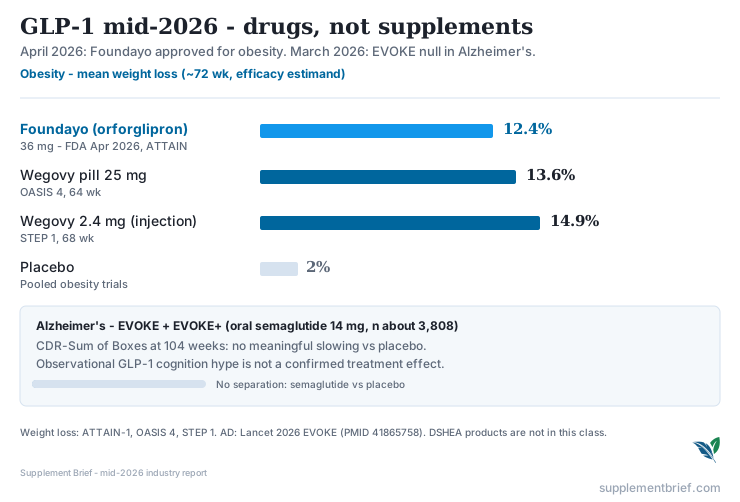
Foundayo and EVOKE. FDA approval of oral GLP-1 Foundayo (orforglipron) and the EVOKE null for semaglutide in Alzheimer’s pushed booth language toward adjunct stacks and away from “GLP-1 in a bottle.” [7] [9] [10]
Vitafoods Europe 2026 · Barcelona, May 5–7
Formulation and claims: what can legally go in the drum.
Barcelona smells like powder totes and espresso with regulatory counsel, fewer bottles staged for Instagram. The ingredient crowd was thick anyway; R&D budgets did not vanish because U.S. hype tired out. [8]
Postbiotics (stable metabolites rather than live cultures baking in a trailer) won shelf-life arguments. Human results still depend on strain and endpoint. A postbiotic is not “probiotics, only stronger.” Ask which metabolite or strain backs the claim you care about: regularity, immune markers, or the fuzzy “gut health” blob.
Premix talk sliced sport, menopause, metabolic, and cognitive segments instead of one universal blend.
In Europe, GLP-1-adjacent copy stops at muscle, micronutrients, and gut support; obesity treatment whispers on a supplement label draw lawyers.
Women’s ingredients and NAD+ sat behind stronger disclaimers than in Anaheim.
For shoppers: the same global ingredients often ship with tighter sentences; you cannot assume U.S. DTC phrasing on a label you import.
Growth Asia Summit 2026 · Singapore, July 8–10
Listing and registration: where social hype meets paperwork.
Marina Bay Sands and a room full of marketplaces, chains, and brands built for scale. Asia adapts U.S. trends; it does not photocopy Anaheim. [14]
Protein for aging households and busy parents; infant nutrition with validation treated as non-negotiable. GLP-1 adjunct logic travels; registration in China, Indonesia, and ASEAN does not. “Healthspan” reads better than “anti-aging” in the briefing decks. Buyers keep asking whether a formula clears filing and earns a major marketplace or pharmacy listing.
Why you should care. If a viral U.S. chew never clears registration in Singapore or the EU, that usually means one of two things for you: the formula leans on claims or actives that serious regulators will not swallow, or you are looking at grey-market dropshipping: same TikTok ad, no chain-of-custody, no recourse when the panel lies. Legitimate brands that plan to scale still show up in these rooms; fly-by-night brands often do not.
IFT FIRST 2026 · Chicago, July 12–15
Food science: nutrient density when intake is small.
Food scientists, not booth actors. The through-line was nutrient density when people eat less — GLP-1 users prominently, not exclusively.
Clear-protein RTDs, one premix stretched across bars, shakes, and chews.
Chews were debated as engineering problems: actives per gram, heat in a parked car, stickiness.
Clear whey demos often hit 20–30 g protein in ~330 ml with less chalk than 2024 RTDs — still audit sweeteners and lactose. On GLP-1, isolate and clear whey are usually easier than concentrate; see protein for GLP-1 users.
Grams and isolate vs. concentrate beat “GLP-1 friendly” logos.
Adjunct nutrition here is arithmetic (protein, fiber, electrolytes) not fat burners. [6] [7]
Where the trends meet
Anaheim sold the narrative; Barcelona mixed the powder; Singapore decided the listing; Chicago asked if anyone would finish the bag. The same shopper hits all four filters in 2026.
GLP-1, format, and fiber. Appetite drops; transit slows. Expo pushes adjunct sachets; Chicago pushes dense RTDs; Barcelona pushes postbiotics. Your puzzle is fiber chemistry × a format you’ll stick with × gut tolerance. Psyllium when constipation leads and viscosity is fine; gentler gums or small inulin doses when gas caps the dose; food still first when appetite allows.
Mood and women’s life-stage SKUs often reuse the same playbook: sleep, stress, hormones in one brand story. Split the claims. Magnesium or L-theanine for sleep lives on a different evidence shelf than adaptogens for “balance”; for magnesium forms and sleep claims, see magnesium compared.
Drinks plus protein on GLP-1 helps only when grams and calories are explicit. Clear protein to stretch a small meal, electrolytes on skimpy-intake days — not coffee sold as a fat burner.
Regulation vs. virality. Shilajit and “natural GLP-1” herbs outrun EU, APAC, and FDA letter cycles on social. A trend can be real on the floor and still unusable where you live.
Before we recommend a product, we walk that path: name the problem, check the evidence tier, read the panel, then ask whether you’ll actually take it.
Bets we would not make into 2027
Not a market forecast: stories we would not stake reputation on through the next Expo cycle after H1 floors and warning-letter weather.
Herbal “GLP-1 mimetics” and berberine-as-Ozempic copy. Oral GLP-1 drugs and steady FDA pressure on disease claims squeeze supplements that imply pharmacologic parity. EVOKE did not rescue “GLP-1 for the brain” on a label. [9] [10] [11]. Adjunct positioning has room; mimicry positioning earns letters, lawsuits, or quiet rewrites. For our berberine evidence read (not a GLP-1 substitute) see berberine vs Ozempic.
Shilajit without documentation. Sampling was loud; QA side chats were louder. Without third-party testing and traceability, this looks like another viral-ingredient arc: sales without trust. DTC may persist; serious retail and EU buyers will narrow the field.
Generative sameness on the label. Decks and SKU titles that all smell like the same template (“holistic synergy,” “daily optimization”) without new doses, delivery, or trials are rename theater. One launch cycle, not a category.
Anonymous mushroom stacks. Lion’s mane and reishi are fine; proprietary towers with no milligrams per species, no erinacine or beta-glucan spec, no lot testing are not. EU and APAC buyers will cull vague blends first.
Label checks (put it back if you see this):
| Walk away | Accept only if |
|---|---|
| “Mushroom blend” / “immune matrix” 500 mg, no species, no extract ratio | Lion’s mane (or reishi) named, mg per species, plus standardization (e.g., erinacines or beta-glucans disclosed — exact % varies by supplier; blank “extract” alone is not enough) |
| “Shilajit” or “fulvic complex” with no heavy-metal test (NSF, USP, Eurofins-style COA on the site) | Shilajit with batch/lot, third-party metals, and mg or % of actives, not only “purified shilajit 300 mg” |
| “Proprietary blend” hiding creatine or fiber dose | Creatine monohydrate or psyllium/PHGG/inulin with grams per serving you can sum to a daily target |
If we misread the field, the correction shows up the old-fashioned way: open panels, human endpoints, and retail listings — not louder influencers.
Threads running through H1 2026
Occasion and format beat single-ingredient hero worship: buy the moment, verify the dose.
Prescription GLP-1s rewrote marketing more than chemistry: protein–fiber–electrolyte adjuncts went mainstream; herbal GLP-1 and brain hype cooled after Foundayo and EVOKE. [9] [10]
Postbiotics and stage-specific women’s formulas filled pipelines while consumer proof stayed patchy. Formulators favored chews and drinks for gram-level dosing, not because gummies vanished, but because adults resist eating a handful to reach a dose.
One revenue number earns its place because it indexes format, not worth: Nutrition Business Journal’s September 2026 report pegs sports nutrition and weight management at an estimated $93.81 billion for 2026, with sports drinks (hydration plus energy) accounting for 68.7% of sales[18]. The trade floors were a preview; the sales mix confirms this is a beverage-first category.
Regulatory copy is part of the product: Anaheim language may not travel unchanged to other markets.
How 2026 builds on 2025
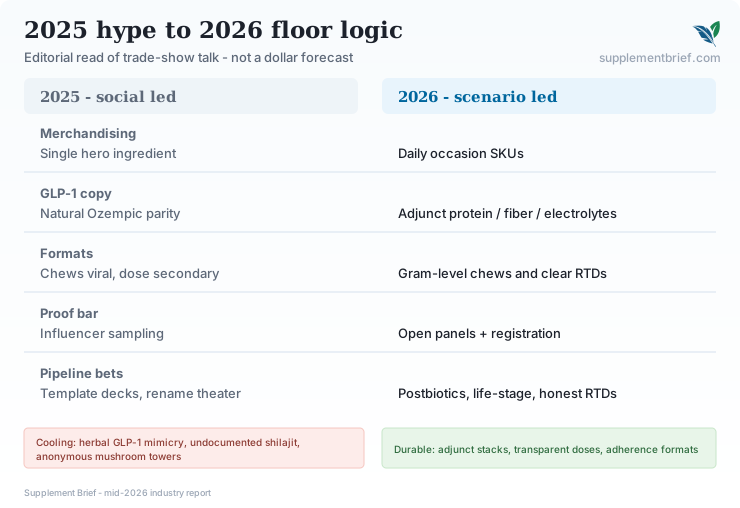
2025 was when chews, gym-adjacent creatine, and social video outran clinical publication for ingredients like shilajit and berberine. 2026 layered scenario SKUs and tighter storytelling. EU, APAC, and FDA letters on disease claims and stimulant alkaloids made loud U.S. DTC harder to export. [11]
Categories that looked durable: postbiotics with human data behind them, transparent life-stage formulas, adjunct stacks without drug claims, clear-protein RTDs with honest panels.
What should you do with this report?
Trade shows are early warning, not proof something works for you. We read Expo for demand, Barcelona for what can be mixed, Singapore for whether it ships, Chicago for whether it still tastes good a year out.
Soft chews and RTDs: when to buy or skip
Use the chart as a label checklist, then read the bullets for GLP-1 gut edge cases, not a product list.
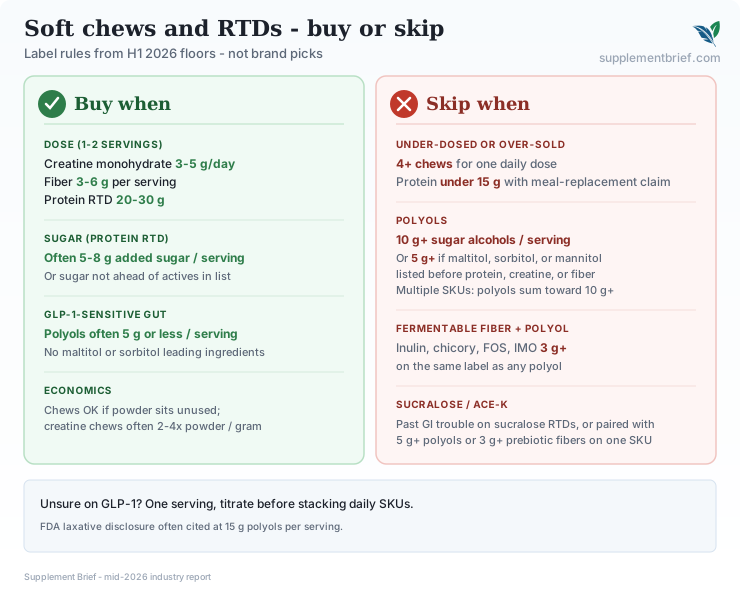
Quick polyol rule
Gut-safe on GLP-1 (label scan)
For GLP-1 users: ≤5 g sugar alcohols per serving. No maltitol or sorbitol in the top three ingredients. Test one serving before stacking the day’s chews and drinks.
Skip
When sweeteners or under-dosing beat the marketing
- Four or more chews for one dose, or ~15 g protein with “meal replacement” copy.
- ≥10 g “Sugar Alcohol” per serving on Supplement Facts, common trouble zone on slow-transit GLP-1 (FDA laxative disclosure starts at 15 g; cramping often shows up lower).
- ≥5 g sugar alcohols with maltitol, sorbitol, or mannitol before protein, creatine, or fiber, or several chews/RTDs that day pushing ~10 g+ polyols combined.
- ~3 g+ inulin, chicory root, FOS, or isomalto-oligosaccharides plus any polyol on one label (typical “fiber chews”).
- Sucralose or acesulfame-K on the same SKU with ≥5 g polyols or ≥3 g of those prebiotic fibers, especially if sweet RTDs already caused nausea or cramping.
On GLP-1 and still unsure? Start with unsweetened powder or RTD, or a single ≤5 g polyol serving with no maltitol/sorbitol in the top three ingredients, then titrate.
-
Budget tight? Plain creatine monohydrate powder or psyllium still wins on cost per gram; pay the chew or RTD premium only for adherence.
-
Soft chews (summary), delivery engineering, not new chemistry. Pass if creatine, fiber, or vitamins on the label do not add up to a serious daily total.
-
GLP-1 adjuncts, for prescription users with low protein, constipation, or hydration shortfalls, not for accelerating fat loss. Match fiber to symptoms; get to 20–30 g protein from food, powder, or a serious RTD before you chase “adjunct” branding.
-
Postbiotics, wait for strain-specific evidence; do not drop a probiotic that already works because of booth buzz.
-
Mood platforms, one problem per bottle; be wary of everything-in-one blends. Seasonal mood is a different lane, see winter blues supplements for saffron and melatonin evidence, not Expo mood matrices.
-
Shilajit and mimetic herbs, third-party tests and open doses, or leave them on the floor (see Bets we would not make into 2027 above).
Watching the industry: stacked formulas tied to daily moments dominated creative work in H1; single-ingredient miracles looked tired. Clinical and regulatory headlines mattered more than botanical TikTok.
The line we kept coming back to
Four shows and a pile of trade PDFs, and one idea kept resurfacing. The business is not hunting the next miracle molecule the way it did at peak berberine-and-shilajit social noise (berberine evidence). It is hunting cleaner ways to deliver ordinary physiology, protein you’ll finish, fiber your gut accepts, electrolytes on light-eating days, creatine in a form you won’t abandon.
That can help, especially on GLP-1, where intake and consistency are the choke points. It does not turn a supplement into a drug, forgive disease claims, or replace meals. Whether a given SKU helps you still comes down to the panel, your clinician if you’re on Rx GLP-1, and daily use.
We do not rank expo samples, but the same themes sent us back through protein, fiber, and electrolyte labels people actually buy on GLP-1.
For a structured take on adjunct stacks (not fat-loss hype) see our GLP-1 companion supplement guide.
Protein tolerance: protein for GLP-1 users.
Lightheadedness and skimpy intake: electrolytes on GLP-1.
FAQ
What supplement trends will not survive 2027?
We would not bet on herbal “GLP-1 mimetic” or berberine-as-Ozempic copy, shilajit without batch metals testing, generative “daily optimization” branding with no new doses, or anonymous mushroom towers with no milligrams per species. Those stories still sell on social; serious retail and EU/APAC buyers are narrowing the field. See Bets we would not make into 2027 in this report.
Do “natural Ozempic” supplements work like GLP-1 drugs?
No. Prescription GLP-1s (semaglutide, tirzepatide, orforglipron/Foundayo) are FDA-regulated drugs, not dietary supplements. Berberine and similar actives are not pharmacologic substitutes; berberine trial evidence does not support “natural Ozempic” marketing. On GLP-1, adjunct products (protein, fiber, electrolytes) are for intake gaps, not extra weight loss or injection replacement. [10] [11]
What supplements help if you are on Ozempic, Wegovy, or Mounjaro?
Trade-show and clinic logic converges on structured protein when intake drops, soluble fiber when transit slows (often psyllium or viscous blends (titrate for bloating), and electrolytes on light-eating or nauseous days) not fat burners or disease claims. Match the product to your symptom; read grams on the label. Framework: GLP-1 companion supplements, protein for GLP-1 users, electrolytes on GLP-1.
Are creatine chews as effective as powder?
Same creatine monohydrate if you reach about 3–5 g/day across servings, verify Supplement Facts, not front-label hype. Chews help when powder sits unused; powder usually wins on cost per gram (chews and RTDs are often roughly 2–4×). Proprietary micro-doses per chew are confectionery with a story. See Soft chews and RTDs: when to buy or skip above.
Are supplement soft chews or RTDs better than capsules?
Only if the panel delivers a meaningful daily total in one or two servings and sweeteners fit your gut, especially on GLP-1, where polyols and stacked prebiotic fibers trigger cramping. Chews often pack more actives per piece than gummies; formulators in 2026 favored chews and RTDs for gram-level dosing. Capsules and powder still win when dose, cost, and tolerance are better. [6] [7]
Is shilajit safe to take?
It can be contaminated with heavy metals if the supplier does not document testing. Expo floor buzz in 2026 outran QA conversations, we would not buy shilajit without batch/lot traceability and third-party metals results (NSF-, USP-, or lab-COA-style), not influencer proof alone. See third-party testing explained and the label table under Label checks.
Are mushroom blend supplements worth buying?
Named species with milligrams per mushroom, disclosed standardization (e.g., erinacines or beta-glucans where relevant), and lot testing can be fine. Walk away from “immune matrix” or 500 mg proprietary towers with no species breakdown; EU and APAC buyers are culling those first; the same label rules apply at retail. Use how to read a supplement label before checkout.
Is it safe to buy viral supplements from TikTok or overseas sellers?
Often risky. If a U.S. viral SKU never clears registration in major markets (Singapore, EU, and others), you may be looking at grey-market dropshipping, same ad creative, weak batch accountability, little recourse if the panel misstates actives. Favor sellers and labels that show registration or independent testing, not hype alone. [14]
Is Foundayo (orforglipron) a dietary supplement?
No. Foundayo is an FDA-approved oral GLP-1 drug (orforglipron), not a supplement. It belongs in a prescribing conversation, not the supplement aisle. Comparison to Ozempic/Wegovy: orforglipron vs semaglutide. [10]
How we built this report
Through July 2026: Expo West, Vitafoods Europe, Growth Asia Summit, IFT FIRST.
We synthesized floor recaps, show programs, and trade press (we did not claim independent on-site lab work).
FDA and Lancet on Foundayo and EVOKE where they shifted marketing language.
No single manufacturer blog as the only source.
Future shows (Newtopia, Vitafoods Asia, SupplySide, CRN, Fi Europe) were out of scope. [17]
Sources
NutraIngredients — supplement delivery formats. nutraingredients.com
Intermountain Nutrition — trends from Expo West 2026. intermountainnutrition.com
Vitafoods Europe 2026 (William Reed / Vitafoods).
Cummings JL et al. EVOKE / EVOKE+. Lancet 2026. PMID 41865758
FDA — Foundayo (orforglipron), April 2026. fda.gov
FDA — warning letters, dietary supplements. fda.gov
Growth Asia Summit 2026. nutraingredients.com
Newtopia Now 2026 (out-of-scope shows reference). newtopianow.com
-
Nutrition Business Journal / New Hope Network. Sports nutrition and weight management industry set to reach $93.81 billion in 2026. September 15, 2026. globenewswire.com. Accessed September 2026.