


Short answer
Two oral GLP-1 options are now approved for weight loss: orforglipron (Foundayo, Eli Lilly, approved April 1, 2026) and oral semaglutide (Wegovy pill, Novo Nordisk, approved December 22, 2025). They sound similar (both are daily GLP-1 pills), but they are different molecules with different efficacy, different dosing rules, and different real-world consequences.
The cleanest way to read the comparison:
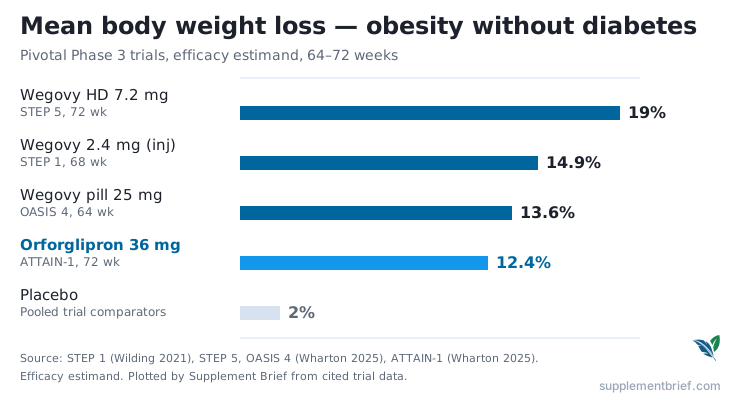
- For weight loss in people without diabetes, injectable Wegovy (semaglutide 2.4 mg) still produces the largest mean loss in the class: about 14.9% over 68 weeks (STEP 1)[4], and up to ~19% with the 7.2 mg HD dose over 72 weeks. Orforglipron’s pivotal ATTAIN-1 trial produced 12.4% mean body weight loss at 72 weeks on the 36 mg dose versus 0.9% on placebo (Wharton et al. 2025, NEJM)[1]. The Wegovy pill (oral semaglutide 25 mg) produced ~13.6% over 64 weeks in OASIS 4[5].
- For people with type 2 diabetes, the only published head-to-head is ACHIEVE-3: orforglipron 9.2% weight loss versus oral semaglutide 5.3% at 52 weeks (Rosenstock et al. 2026, Lancet)[3]. On the blood-sugar endpoint in the same trial, orforglipron lowered HbA1c by 1.71–1.91% versus 1.23–1.47% on the Ozempic pill.
- For dosing flexibility, orforglipron wins clearly: once daily, with or without food and water. Oral semaglutide is taken on an empty stomach: fasting for 30 minutes before food, drink, or other pills, with a strict 4 oz water limit at the dosing moment. If you cannot reliably follow that protocol, oral semaglutide absorbs poorly and the trial-level efficacy does not apply to you.
- For cost without insurance, orforglipron is the cheaper of the two oral options at Lilly’s announced $149/month list price[13], but Wegovy pill pricing is still stabilizing and your insurance may flip the math.
The supplement question does not disappear when you choose either pill. GLP-1 weight loss includes lean mass unless you actively preserve it. GI side effects create the same dehydration and constipation pattern on both. The companion-nutrition layer (protein, electrolytes, fiber, and a muscle-preservation plan) is identical on orforglipron and on semaglutide, and we cover it in the GLP-1 companion framework. Related guides in this cluster are collected under Weight Loss Support.
Reader checkpoint
So what should a reader do first?
Separate two questions. Question one: are you a candidate for a prescription GLP-1, and is the oral route right for you? That is a clinician conversation. Question two: regardless of which GLP-1 you use (or none), what companion nutrition does the body still need? That is the supplement lane, and it does not disappear when a new pill launches.
The verdict
Orforglipron (Foundayo) is a real prescription option for adults with obesity or overweight with at least one weight-related condition who prefer a daily pill over a weekly injection and who value a forgiving dosing protocol. It is not a supplement, it is not a replacement for diet and resistance training, and it is not a reason to stop the protein, electrolyte, and fiber work that GLP-1 users still have to do.
Semaglutide (Wegovy, Ozempic) remains the most evidence-heavy GLP-1 on the market, with the largest placebo-controlled weight-loss trial program (STEP series) and approved indications beyond obesity (type 2 diabetes, cardiovascular risk reduction, fatty liver disease, chronic kidney disease). If you have any of those comorbidities, semaglutide has the approval track record orforglipron does not yet have.
Consider orforglipron if:
- You have obesity or overweight with a weight-related comorbidity, you are open to a prescription GLP-1, and you prefer a daily pill over a weekly injection.
- You cannot reliably follow the Wegovy pill’s empty-stomach protocol (fasting 30 minutes before food, drink, or other pills; 4 oz water limit) and would rather have a regimen that absorbs with or without food.
- You understand that 12.4% mean weight loss is a population average, not a guarantee, and that the trial used the efficacy estimand (the hypothetical effect if everyone stayed on treatment).
- You pay cash for prescriptions and $149/month fits your budget better than current Wegovy pill pricing.
- You are ready to pair the pill with protein intake and resistance training, because GLP-1 weight loss includes lean mass unless you actively preserve it.
Consider semaglutide if:
- You want the largest mean weight loss available in the class and you are open to a weekly injection: Wegovy 2.4 mg (14.9%) and Wegovy HD 7.2 mg (~19%) both beat orforglipron’s 12.4% on the obesity-without-diabetes endpoint.
- You also have type 2 diabetes, cardiovascular disease, fatty liver disease, or chronic kidney disease. Semaglutide carries those indications; orforglipron does not (yet).
- Your insurance covers Wegovy or Ozempic at a copay lower than Foundayo’s $149 list.
- You are comfortable with the Wegovy pill’s empty-stomach dosing protocol, or you prefer a weekly injection over a daily pill.
Skip both if:
Absolute contraindications (do not take either drug):
- You are pregnant or breastfeeding. GLP-1 weight loss during pregnancy is not appropriate, and the embryofetal signal from animal data is the reason. The class warning applies to orforglipron the same way it applies to semaglutide.
- You have a personal or family history of medullary thyroid carcinoma or MEN 2. The class contraindication applies to both drugs.
Relative contraindications (prescriber judgment required, often a reason to skip or to use only with a coordinated plan):
- You have a history of pancreatitis, gallstone disease (cholelithiasis), or gastroparesis.
- You take insulin or sulfonylureas without a coordinated glucose-management plan with your prescriber. Hypoglycemia risk is real when GLP-1s are stacked with these agents.
- You are looking for a supplement. Both are prescription drugs, not nutraceuticals. Any online seller offering “orforglipron” or “semaglutide” outside a licensed pharmacy is selling compounded or unregulated research chemical; the FDA has issued repeated warnings about that channel[16].
- You are shopping for “natural Ozempic.” There is no natural GLP-1 agonist with comparable efficacy, and pretending otherwise is the most expensive mistake in this category. Read the berberine vs Ozempic guide for the full evidence breakdown.
Evidence and key differences at a glance
Evidence grade
| Claim | Evidence grade | Practical reading |
|---|---|---|
| Wegovy injection (semaglutide 2.4 mg) produces ~14.9% mean weight loss in obesity without diabetes | High | STEP 1, 68 weeks, large RCT. Replicated across the STEP series.[4] |
| Wegovy HD (semaglutide 7.2 mg) produces ~19% mean weight loss | High | STEP 5 extension, 72 weeks. The highest approved GLP-1 dose. |
| Orforglipron 36 mg produces 12.4% mean weight loss in obesity without diabetes | High | ATTAIN-1, 72 weeks, 3,127 participants. Pivotal Phase 3 trial.[1] |
| Orforglipron beats oral semaglutide for weight loss in type 2 diabetes | High | ACHIEVE-3 head-to-head: 9.2% vs 5.3% at 52 weeks. The cleanest direct comparison between the two oral GLP-1s.[3] |
| Wegovy pill (oral semaglutide 25 mg) produces ~13.6% mean weight loss in obesity | High | OASIS 4, 64 weeks. Slightly above orforglipron on this endpoint, but with a stricter dosing protocol.[5] |
| Oral semaglutide 25 mg beats orforglipron 36 mg on weight loss in obesity without diabetes (indirect) | Medium | Population-adjusted ITC of OASIS 4 vs ATTAIN-1 (~3 percentage-point edge for oral semaglutide; higher AE discontinuation on orforglipron). Not a head-to-head RCT.[17] |
| Orforglipron lowers HbA1c more than the Ozempic pill in type 2 diabetes | High | ACHIEVE-3: 1.71–1.91% vs 1.23–1.47%.[3] |
| Injectable Ozempic lowers HbA1c more than orforglipron | Medium | No head-to-head. Separate trials: Ozempic injection 1.9–2.2% over 40 weeks vs orforglipron 1.71–1.91% over 52 weeks. Indirect comparison only. |
| Orforglipron reduces high-sensitivity CRP by ~47.7% | Limited | Pre-specified exploratory analysis in ATTAIN-1. Hypothesis-generating, not a claim basis.[1] |
| Orforglipron is cardiovascularly safe relative to insulin glargine in type 2 diabetes at high cardiovascular risk | High | ACHIEVE-4: MACE-4 hazard ratio 0.84 (95% CI 0.59 to 1.20), non-inferiority met. Open-label, Lilly-funded.[20] |
| Berberine is a non-prescription alternative to either pill | Low (negative) | Lei et al. 2026 (JAMA Network Open) was negative for the primary visceral-fat endpoint.[15] Berberine has metabolic-marker effects, not GLP-1-class weight loss. |
The grade is mostly a guardrail for reader expectations. The two oral GLP-1s have strong evidence for weight loss. The differences between them are smaller than the marketing suggests, and the differences between either pill and “natural” alternatives are not small at all.
One evidence gap closed in September 2026. ACHIEVE-4, published in The Lancet, is the first cardiovascular outcomes data for any oral, non-peptide GLP-1: 2,749 adults with type 2 diabetes and established cardiovascular or kidney disease, followed for a median of two years against insulin glargine. Major cardiovascular events occurred in 4.2 percent on orforglipron versus 5.0 percent on insulin (hazard ratio 0.84, 95% CI 0.59 to 1.20), meeting the non-inferiority bar.[20] Read that carefully: it establishes cardiovascular safety against insulin, not cardiovascular benefit of the kind semaglutide demonstrated against placebo in SELECT. Gastrointestinal events remained the drug’s signature, at 62.1 percent versus 14.2 percent on insulin, while clinically significant hypoglycemia ran the other way, 6.8 versus 19.2 percent.[20]
Comparison table
| Orforglipron (Foundayo) | Semaglutide (Ozempic, Wegovy) | |
|---|---|---|
| Manufacturer | Eli Lilly | Novo Nordisk |
| FDA approval | April 1, 2026 (weight loss) | 2017 (Ozempic, type 2 diabetes), 2021 (Wegovy inj, weight loss), Dec 22 2025 (Wegovy pill, weight loss) |
| What it treats | Weight loss (obesity or overweight with comorbidity) | Ozempic: type 2 diabetes (T2D), CV risk reduction, CKD risk reduction. Wegovy: weight loss (not a T2D indication on the Wegovy label), CV risk reduction, fatty liver disease. |
| Mechanism | GLP-1 receptor agonist (small molecule, non-peptide) | GLP-1 receptor agonist (peptide) |
| Formulation | Oral tablet | Oral tablet and subcutaneous injection |
| Dosing flexibility | Once daily, with or without food or water | Injection: once weekly. Pill: once daily, on an empty stomach, 30 min before food/drink/other pills, 4 oz water limit. |
| Weight loss (obesity, no diabetes) | 12.4% at 72 weeks (36 mg, ATTAIN-1) | Wegovy inj 2.4 mg: ~14.9% at 68 weeks (STEP 1). Wegovy inj 7.2 mg HD: ~19% at 72 weeks. Wegovy pill 25 mg: ~13.6% at 64 weeks (OASIS 4). |
| Weight loss (T2D, head-to-head) | 9.2% at 52 weeks (ACHIEVE-3) | Oral semaglutide 5.3% at 52 weeks (same trial). Injectable Ozempic 1 mg: ~7% at 68 weeks (separate trial). |
| HbA1c reduction (T2D) | 1.71–1.91% (ACHIEVE-3) | Ozempic pill: 1.23–1.47%. Ozempic injection: 1.9–2.2% (separate trials). |
| Common side effects | Nausea, vomiting, diarrhea, constipation, dyspepsia | Same, plus injection-site / injection-associated unpleasant skin sensations (burning, tingling), dizziness, stomach-flu-like symptoms |
| Boxed warning | Thyroid tumors (class) | Thyroid tumors (class) |
| Cost without insurance (list) | $149/month (Lilly announced) | Wegovy inj: ~$1,349/month. Wegovy pill: pricing still stabilizing, ~$900–$1,300/month expected. Ozempic inj: ~$1,027/month. Cash-pathway pricing varies by platform. |
| Best framed as | A more forgiving oral GLP-1 with strong weight-loss evidence and the lowest list price in the oral class | The most-studied GLP-1 with the widest approved indications and the largest injection-class weight-loss ceiling |
The uncomfortable shopping question
Are you choosing between two oral GLP-1s because you have decided a pill fits your life, or are you choosing between "any GLP-1" and "no GLP-1"? If it is the second, the comparison below does not matter until you have had the prescription conversation with a clinician.
Efficacy: weight loss, blood sugar, and how they work
Injectable Wegovy still produces the largest mean weight loss in the class. Orforglipron and the Wegovy pill sit below that injection ceiling. The only head-to-head RCT between the two oral GLP-1s is still ACHIEVE-3 in type 2 diabetes, where orforglipron beats oral semaglutide. In obesity without diabetes there is still no direct RCT; the closest published comparison is a 2026 population-adjusted indirect treatment comparison, which favors the Wegovy pill — with caveats that matter.
Whether orforglipron or semaglutide is more effective depends on which form of semaglutide you take and whether you have type 2 diabetes.
Weight loss: obesity without diabetes
In separate placebo-controlled trials:
- Wegovy injection (semaglutide 2.4 mg): ~14.9% mean body weight loss at 68 weeks (STEP 1, Wilding et al. 2021, NEJM)[4].
- Wegovy HD injection (semaglutide 7.2 mg): ~19% at 72 weeks (STEP 5 extension). The highest approved GLP-1 dose on the market.
- Wegovy pill (oral semaglutide 25 mg): ~13.6% at 64 weeks (OASIS 4, Wharton et al. 2025, NEJM)[5].
- Orforglipron 36 mg: 12.4% at 72 weeks (ATTAIN-1, Wharton et al. 2025, NEJM)[1]. 27.3 lbs as the average absolute loss. 59.6% of participants lost at least 10% of body weight on the efficacy estimand (54.6% on the treatment-regimen count); 39.6% lost at least 15% on the same efficacy basis.
An updated meta-analysis of 38 trials in adults without diabetes (25,816 participants) confirms the ordering on a placebo-subtracted basis: about 12.4 percentage points for orforglipron, 14.3 for oral semaglutide, and 19.0 for tirzepatide (Moiz et al., Annals of Internal Medicine, 2026)[18].
- Ozempic injection (semaglutide 1 mg, T2D population): ~7% at 68 weeks.
- Ozempic pill (oral semaglutide, T2D population): 2.6–4.2% at 26 weeks.
Placebo groups typically show around 2% weight loss in these trials. People with type 2 diabetes tend to lose less on GLP-1s than people without diabetes, across the class, a metabolism difference, not a drug-failure difference.
What the data actually support: injectable Wegovy still produces the largest mean weight loss in the class. Orforglipron and the Wegovy pill are close on raw trial means (12.4% vs ~13.6%) and both sit below the injection ceiling. If maximum efficacy is the goal and you accept a weekly injection, Wegovy injection remains the reference standard.
A 2026 population-adjusted indirect treatment comparison (Michalak et al., Diabetes, Obesity and Metabolism)[17] goes one step further without being a head-to-head RCT. Using individual-patient data from OASIS 4 and aggregate ATTAIN-1 data, after adjusting for baseline differences in sex, body weight, and normoglycaemic status, oral semaglutide 25 mg was associated with greater percentage weight loss than orforglipron 36 mg: mean differences of about 3.2 percentage points (treatment-regimen estimand; 95% CI −5.9 to −0.4) and 3.0 percentage points (efficacy estimand; 95% CI −5.8 to −0.3). The same ITC estimated higher odds of discontinuation on orforglipron (any AE OR 4.1; GI AE OR 13.9), with wide confidence intervals. That direction matches the ACHIEVE-3 GI signal, but this is still an anchored indirect comparison across trials of different lengths (64 vs 72 weeks), not a randomized head-to-head in obesity without diabetes. Treat it as the best current cross-trial estimate, not as proof that the Wegovy pill “wins” for every patient.
Weight loss: type 2 diabetes (the only head-to-head)
ACHIEVE-3 (Rosenstock et al. 2026, Lancet)[3] is the cleanest direct comparison between the two oral GLP-1s: 1,698 adults with type 2 diabetes, 52 weeks, orforglipron versus oral semaglutide.
- Orforglipron: 9.2% mean weight loss.
- Oral semaglutide: 5.3%.
That is a 3.9 percentage-point margin on the weight-loss endpoint in the diabetes population. There is still no published head-to-head RCT in obesity without diabetes. Claiming orforglipron “beats” oral semaglutide for that population is reading across trials the wrong way: the closest obesity-without-diabetes comparison we have is the Michalak ITC[17], and it points the other direction, with the indirect-comparison caveats above.
What the ATTAIN-1 numbers actually mean
Orforglipron reached this trial through a phase 1a ascending-dose study in healthy participants[8] and a 36-week phase 2 dose-ranging trial in 272 adults with obesity, where mean weight loss at week 36 ranged from 9.4 to 14.7% across dose cohorts versus 2.3% on placebo[7]. ATTAIN-1[1] enrolled 3,127 adults with obesity or overweight with a weight-related comorbidity, without diabetes. Three doses (6 mg, 12 mg, 36 mg) versus placebo. All three doses met the primary endpoint.
The 36 mg dose produced 12.4% mean loss using the efficacy estimand, the hypothetical effect if everyone stayed on treatment. The treatment-regimen estimand, which counts everyone randomized regardless of adherence, came in at 11.2%. That is the more conservative read, and it is the number to use when you are estimating what happens in a real-world population that does not all stay on the pill.
Two things to notice before you treat 12.4% as a personal forecast. The efficacy estimand excludes people who dropped out for any reason, and the dropout rate was not trivial: 24.4% of participants on the 36 mg arm discontinued treatment overall, with 10.3% discontinuing specifically because of adverse events. If you stay on the pill and tolerate it, your expected loss is closer to the 12.4% number. If you are unsure whether you will tolerate it, the 11.2% number is the one that survives dropouts.
A pooled post hoc analysis of the two ATTAIN trials in 616 adults aged 65 and over found the same dose-response in that group: weight loss at 72 weeks reached about 13% on the highest dose versus 1.6% on placebo in the ATTAIN-1 cohort, with similar results in ATTAIN-2 (Horn et al., Obesity Pillars, 2026)[19].
A 47.7% reduction in high-sensitivity C-reactive protein at the 36 mg dose was a pre-specified exploratory analysis. It is interesting for the cardiometabolic story but it is exploratory — not the basis for an inflammation claim.
The diabetes trial, for context
ATTAIN-2 (Horn et al. 2025, Lancet)[2] ran the same drug in adults with obesity and type 2 diabetes. Mean weight loss at 72 weeks on the 36 mg dose was 10.5% (efficacy estimand), 9.6% (treatment-regimen estimand). If you have type 2 diabetes, your expected loss on orforglipron is closer to 9–10% than to 12%.
Blood sugar control
Only semaglutide is FDA-approved for managing type 2 diabetes. Foundayo is approved for weight loss; the diabetes indication is under investigation. If you need a GLP-1 for blood sugar management specifically, semaglutide is the approved option today.
That said, the head-to-head blood-sugar data we do have favors orforglipron over the Ozempic pill. In ACHIEVE-3[3]:
- Orforglipron lowered HbA1c by 1.71–1.91% depending on dose.
- Ozempic pill lowered HbA1c by 1.23–1.47%.
Injectable Ozempic may lower blood sugar more than orforglipron, although no studies have directly compared them. In separate trials, injectable Ozempic lowered HbA1c by 1.9–2.2% over 40 weeks, depending on dose. That is an indirect comparison across different populations and durations, so treat it as a soft signal, not a head-to-head result.
How they work
Although orforglipron and semaglutide are different molecules (orforglipron is a small molecule, semaglutide is a peptide), both are GLP-1 receptor agonists and work similarly in the body:
- They slow stomach emptying, which promotes fullness sooner and for longer.
- They decrease appetite by targeting areas of the brain involved in appetite regulation, consequently lowering food intake.
- They lower blood sugar by stimulating insulin release while limiting glucagon (a hormone that raises blood sugar).
The reason orforglipron exists as a separate molecule is the peptide problem. Every previously approved GLP-1 (semaglutide, tirzepatide, liraglutide, dulaglutide) is a peptide, and peptides are degraded in the stomach. That is why they have been injections, with the partial exception of Rybelsus (oral semaglutide), which absorbs only with strict fasting and water-restricted dosing. Orforglipron is a non-peptide small molecule that survives oral bioavailability without those restrictions. That is the practical breakthrough, and it is the reason the April 1, 2026 approval generated the coverage it did.
Companion nutrition: what neither pill does for you
This is the part of the article that exists because of a specific mistake people make when a new GLP-1 launches. They assume the pill handles everything. It handles appetite and weight. It does not handle the nutritional consequences of rapid weight loss, and those consequences are the same on orforglipron as they are on semaglutide or tirzepatide.
We call this the companion layer: protein, electrolytes, fiber, and a muscle-preservation plan. Neither pill provides it. You still have to. Below, each component in plain language.
Protein. GLP-1 weight loss includes lean mass. Roughly 25–40% of total weight lost on a GLP-1 without resistance training and without protein targeting is lean tissue. The fix is in protein intake (a common target is 1.2–1.6 g/kg of reference body weight per day) and resistance training, not in the pill. Read the protein-for-GLP-1 guide for the dosing arithmetic and the stomach-tolerance framework. The same logic applies to Foundayo as to Ozempic.
Electrolytes. The GI side-effect profile of orforglipron (nausea, vomiting, diarrhea) is the same dehydration-risk pattern as injectable GLP-1s. Reduced intake plus GI losses plus reduced thirst response equals the electrolyte crash that people report as “GLP-1 fatigue.” Sodium, potassium, and magnesium are the three to watch. Read the electrolytes-on-Ozempic guide. The same logic applies to Foundayo.
Fiber. Constipation was reported in 25.4% of participants on the 36 mg dose in ATTAIN-1. That is not a side effect you can wait out. It responds to fiber intake, fluid intake, and movement. If you start orforglipron or oral semaglutide and your fiber intake is under 25 g/day, that is the first thing to fix before reaching for a stimulant laxative.
Muscle preservation. Not a supplement exactly, but the layer that disappears fastest on any GLP-1. Resistance training two to three times per week, protein at the upper end of the range, and (for people who tolerate it) creatine monohydrate at 3–5 g/day. There is no GLP-1 pill that preserves muscle for you.
Hair loss. Both orforglipron and semaglutide list hair loss in their adverse-event tables. The mechanism is the rapid weight loss, the caloric deficit, and the protein gap that telogen shedding follows, not the drug directly. If you start losing hair two to four months into either pill, read the hair loss after weight loss guide before assuming the drug is the cause. Most post-GLP-1 shedding is telogen effluvium from the deficit, not a permanent drug side effect.
Reader checkpoint
The pill handles appetite. What handles the rest?
Protein, electrolytes, fiber, resistance training, and a realistic hair-loss expectation. None of those are in either pill. The companion-nutrition lane is the same on orforglipron and on semaglutide — the new pill makes it more relevant, not obsolete, because the people losing 12% of body weight in 72 weeks are the people who need it most.
Side effects and who should not take either
Side effects, in real numbers
The safety profile is GLP-1-class, and orforglipron produces more GI events than oral semaglutide in the only head-to-head. One in three patients on the 36 mg dose reported nausea; one in four reported vomiting. The numbers below are from the 36 mg arm of ATTAIN-1, the dose that produced the headline orforglipron result.
| Adverse event | Orforglipron 36 mg | Placebo |
|---|---|---|
| Nausea | 33.7% | 10.4% |
| Constipation | 25.4% | 9.3% |
| Diarrhea | 23.1% | 9.6% |
| Vomiting | 24.0% | 3.5% |
| Dyspepsia | 14.1% | 5.0% |
| Discontinuation due to adverse events | 10.3% | 2.7% |
Read the nausea and vomiting columns twice. One in three patients on the 36 mg dose reported nausea. One in four reported vomiting. These are the rates in a controlled trial with structured dose escalation; real-world use without that scaffolding can run higher. Most events were mild-to-moderate, but “mild-to-moderate nausea for several weeks” is still a thing you have to plan around, not a thing you can ignore.
Semaglutide shares most of these effects. The head-to-head ACHIEVE-3 comparison[3] found orforglipron produced more GI events than oral semaglutide: roughly 59% of orforglipron participants reported any GI event vs 37–45% on oral semaglutide. If you have a history of severe GI reactions to GLP-1s, that is a conversation to have with your prescriber before assuming orforglipron is the more tolerable option just because it is newer.
| Side effect | Orforglipron | Semaglutide |
|---|---|---|
| Nausea | ✅ | ✅ |
| Vomiting | ✅ | ✅ |
| Diarrhea | ✅ | ✅ |
| Constipation | ✅ | ✅ |
| Stomach upset or pain | ✅ | ✅ |
| Headache | ✅ | ✅ |
| Abdominal bloating | ✅ | ✅ |
| Fatigue | ✅ | ✅ |
| Gas | ✅ | ✅ |
| Heartburn | ✅ | ✅ |
| Hair loss | ✅ | ✅ |
| Unpleasant skin sensations (burning, tingling; injection-associated) | — | ✅ |
| Dizziness | — | ✅ |
| Stomach-flu-like symptoms | — | ✅ |
The skin-sensation row is checked for semaglutide because it is reported with the injectable products; it is not a shared oral-pill signal in the comparison above. Both drugs carry a boxed warning for thyroid tumors based on animal studies. Whether GLP-1 receptor agonists carry the same risk in humans is not yet known. People with a personal or family history of medullary thyroid carcinoma or MEN 2 should not take either drug. Both also carry risks of acute pancreatitis, diabetic retinopathy complications, hypoglycemia (especially when combined with insulin), kidney or gallbladder issues, severe GI reactions, allergic reactions, and pulmonary aspiration during general anesthesia. No hepatic safety signal was observed in ATTAIN-1, but that is a 72-week trial in 3,127 people. Rarer hepatic events, idiosyncratic reactions, and long-term effects only surface in post-marketing surveillance of a much larger population. Foundayo has been on the market for three months as of July 2026; the class warnings above apply to it until that surveillance reports otherwise.
Who should not take either pill
Absolute contraindications:
- People with a personal or family history of medullary thyroid carcinoma or MEN 2. The class contraindication applies to both drugs.
- People who are pregnant or breastfeeding. GLP-1 weight loss during pregnancy is not appropriate, and the embryofetal signal from animal data is the reason.
Relative contraindications (discuss with a prescriber; often a reason to avoid or to use only with a coordinated plan):
- People with a history of pancreatitis.
- People with gallstone disease (cholelithiasis) or gastroparesis. GLP-1s slow gastric emptying and are linked to gallbladder events; these histories change the risk conversation.
- People taking insulin or sulfonylureas without a coordinated glucose-management plan. Hypoglycemia risk is real when GLP-1s are stacked with these agents.
- People looking for a supplement. Both are prescription drugs.
- People buying “orforglipron” or “semaglutide” from non-pharmacy online sellers. The FDA has issued repeated warnings about compounded and “research” GLP-1 products[16]. If the seller is not a licensed pharmacy dispensing the FDA-approved product, do not buy.
If any of the absolute items apply, do not take either drug. If a relative item applies, the conversation is not “should I take Foundayo or Wegovy” in isolation. It is “what is the right plan for my situation,” and that conversation is with a clinician, not a buying guide.
Cost across platforms
At list price, orforglipron is the cheapest oral GLP-1 at $149/month[13]; Wegovy injection is ~$1,349/month[14]. But list price is not what most people pay: insurance, savings cards, and platform pricing flip the math. Below is what we know as of July 2026.
Orforglipron (Foundayo)
- LillyDirect list price: $149/month (announced April 2026)[13]. This is the manufacturer’s direct cash price, not the insurance-negotiated price.
- Dose-dependent pricing on some platforms: the 0.8 mg starter dose has been listed at $149, intermediate doses at $199–$299, and the 14.5 mg / 17.2 mg maintenance doses at $299 with the manufacturer refill-offer or $349 without it. Check the platform you actually use before treating any single number as the answer.
- With commercial insurance that covers Foundayo: the manufacturer savings card may reduce cost to as little as $25/month.
- Compounded “orforglipron” sold online is not the same product. The FDA has issued repeated warnings about compounded and “research” GLP-1 products[16]. If a seller is not a licensed pharmacy dispensing the FDA-approved Foundayo, do not buy.
Semaglutide (Wegovy, Ozempic)
- Wegovy injection list price: ~$1,349/month (Novo Nordisk, mid-2026)[14].
- Ozempic injection list price: ~$1,027/month[14].
- Wegovy pill: pricing is still stabilizing after the December 2025 launch. Cash-pathway pricing on platforms like Ro has been reported in the $149–$299/month range for lower doses and $299–$399 for higher doses, but this is platform-specific and offer-dependent.
- With commercial insurance that covers Wegovy or Ozempic: the manufacturer savings card may reduce cost to as low as $25/month.
- Ozempic pill (formerly Rybelsus): cash pricing varies; check your pharmacy.
Price-per-percent math
The useful comparison is the cost of the trial-duration regimen divided by the mean percentage of body weight lost over that duration, not monthly cost. This is a rough number, not a personal forecast, but it is the defensible way to compare options that ran trials of different lengths.
| Option | Monthly cost (approx.) | Trial duration | Trial cost (cost × months) | Mean weight loss | Cost per 1% body weight lost |
|---|---|---|---|---|---|
| Foundayo (orforglipron 36 mg) | $149 | 18 months (72 wks) | $2,682 | 12.4% | ~$216 |
| Wegovy injection (semaglutide 2.4 mg) | ~$1,349 | ~16 months (68 wks) | ~$21,584 | ~14.9% | ~$1,449 |
| Wegovy HD (semaglutide 7.2 mg) | ~$1,349+ | ~18 months (72 wks) | ~$24,282 | ~19% | ~$1,278 |
| Wegovy pill (oral semaglutide 25 mg) | ~$900–$1,300 (estimated) | ~15 months (64 wks) | ~$13,500–$19,500 | ~13.6% | ~$993–$1,434 |
| Berberine (supplement) | ~$12 | 6 months (typical RCT) | ~$72 | ~0% reliable weight loss | undefined — no demonstrated weight loss |
Two things to read carefully. Foundayo’s $216 per 1% number exists because Lilly priced it at $149/month, roughly one-ninth of the injectable list price, not because orforglipron is magically cheaper per unit of effect. That pricing is a market event, not a pharmacological fact. If you have insurance that covers Wegovy injection at a low copay, your personal cost-per-percent on Wegovy could be lower than on Foundayo. Run your own numbers with your own pharmacy benefit before treating the table as a personal answer.
The berberine row says “undefined” because the strongest direct trial was negative for the primary adiposity endpoint. A cost-per-percent calculation requires a demonstrated percentage. Berberine has real uses (LDL, apoB, glucose-marker support). Weight loss is not one of them.
Switching and where else orforglipron fits
Switching between orforglipron and semaglutide
Yes, you can switch under the guidance of a healthcare provider. A provider will determine an appropriate dosage based on your current semaglutide dosage and your tolerance for side effects. Generally, the first dose of the new GLP-1 is started when the next dose of the old one would have been due.
The cleanest switch data we have is Lilly’s ATTAIN-MAINTAIN trial[9], presented in December 2025: people who moved from injectable semaglutide to orforglipron regained an average of only about 0.9 kg (~2 lbs) over the maintenance period. That is a meaningful signal that the switch does not undo the weight loss, but it is data to bring to your prescriber, not a permission slip to self-switch.
Common switching scenarios:
| From | To | Practical note |
|---|---|---|
| Wegovy injection | Orforglipron pill | Best-supported by ATTAIN-MAINTAIN[9]. Start orforglipron when the next weekly injection would have been due. |
| Wegovy pill | Orforglipron pill | Straightforward: both are daily pills. Discuss the dose-escalation schedule with your prescriber; do not match milligram-for-milligram across molecules. |
| Orforglipron pill | Wegovy injection | Common when a patient wants the higher weight-loss ceiling of the 2.4 mg or 7.2 mg injection. Start the injection when the next daily orforglipron dose would have been due. |
| Orforglipron pill | Wegovy pill | Possible but rare, usually only if orforglipron is not tolerated and the patient insists on a pill. The Wegovy pill’s fasting protocol is the constraint. |
| Any GLP-1 | Tirzepatide (Zepbound) | Discussed below. Tirzepatide is a dual GLP-1/GIP agonist with the highest weight-loss ceiling in the approved class. |
Do not switch on your own. GLP-1 dose titration is not symmetric across molecules, and a mismatched switch can produce a severe GI event.
Orforglipron vs tirzepatide
Tirzepatide (Mounjaro, Zepbound) is a dual GLP-1 and GIP receptor agonist. It is not semaglutide, but it belongs in any fair class comparison because it is the most effective approved weight-loss drug in the class.
In the SURMOUNT trials and the head-to-head SURMOUNT-5 against semaglutide[6]:
- Zepbound 15 mg: over 20% mean body weight loss at 72 weeks in people with obesity.
- Wegovy 2.4 mg (in the same head-to-head): nearly 14%.
Tirzepatide beats semaglutide on both weight loss and HbA1c in head-to-head data, and both beat orforglipron on the obesity-without-diabetes endpoint (tirzepatide ~20%, Wegovy ~15%, orforglipron ~12%). The trade-off is that tirzepatide is a weekly injection only: there is no oral tirzepatide approved as of mid-2026. If you wanted a pill specifically, tirzepatide is not in your option set today.
If maximum weight loss is the goal and you accept a weekly injection, tirzepatide is the reference standard, not orforglipron and not semaglutide. The reason to choose orforglipron over tirzepatide is the pill format, not the efficacy ceiling.
Orforglipron vs berberine
Berberine is a supplement with modest metabolic-marker effects (LDL, apoB, some glucose-marker changes) and no demonstrated GLP-1-class weight loss. The Lei et al. 2026 JAMA Network Open trial[15], the strongest direct test of berberine for visceral fat in diabetes-free adults with obesity, was negative for the primary endpoint. Berberine is not a GLP-1 agonist, it does not produce 10%+ weight loss, and it should not be purchased as a cheaper Foundayo alternative.
If you were considering berberine because injections were too expensive or too inconvenient, Foundayo changes that decision. A $149/month oral GLP-1 with 12.4% mean weight loss is not the same purchase as a $12/month botanical. The supplement question for most people now shifts from “what replaces a GLP-1?” to “what supports a GLP-1?” That is the companion-nutrition lane above.
Read the berberine vs Ozempic guide for the full evidence breakdown. The logic transfers directly to orforglipron.
Decision fork
You have obesity or overweight with a comorbidity and you are open to a prescription GLP-1. Make a clinician appointment. Ask about oral versus injectable options, given your tolerance for GI side effects and your ability to follow the Wegovy pill’s empty-stomach protocol. Foundayo is the more forgiving oral; the Wegovy pill is the more studied oral; Wegovy injection is the higher-efficacy injectable; Zepbound injection is the highest-efficacy injectable.
You are already on injectable Wegovy or Zepbound and want to switch to a pill. Lilly’s ATTAIN-MAINTAIN trial[9] supports the switch to orforglipron: people who moved from injectable semaglutide to orforglipron regained an average of only about 0.9 kg (~2 lbs) over the maintenance period. That is data to bring to your prescriber, not a self-switching protocol.
You are supplement-curious and not ready for a prescription. The supplement lane for you is companion nutrition, not berberine-as-Foundayo. Protein, electrolytes, fiber, and (if relevant) creatine for muscle preservation. The new pill makes these things more relevant, not obsolete, because the people losing 12% of body weight in 72 weeks are the people who need them most. Start with the GLP-1 companion supplement framework.
You want muscle preservation on any GLP-1. Resistance training and protein. There is no pill swap that does this for you, including Foundayo. Read the protein-for-GLP-1 guide.
You are losing hair two to four months into either pill. Read the hair loss after weight loss guide before assuming the drug is the cause. Most post-GLP-1 shedding is telogen effluvium from the caloric deficit and the protein gap, not a permanent drug side effect.
Bottom line
Orforglipron and semaglutide work similarly to produce weight loss along with lifestyle changes, but they differ in ways that change the shopping decision:
- What they treat. Orforglipron is approved for weight loss only. Semaglutide is also approved for type 2 diabetes, cardiovascular risk reduction, fatty liver disease, and chronic kidney disease.
- How effective they are for weight loss. Injectable Wegovy (semaglutide) produces ~14.9% (2.4 mg) to ~19% (7.2 mg HD) mean loss, above orforglipron’s 12.4%. The Wegovy pill sits near orforglipron on raw trial means (~13.6%), and a 2026 population-adjusted ITC favors oral semaglutide 25 mg by about three percentage points versus orforglipron 36 mg, still not a head-to-head RCT[17]. In the only oral head-to-head RCT (ACHIEVE-3, T2D population)[3], orforglipron beat the Ozempic pill 9.2% to 5.3%.
- How they’re taken. Orforglipron is a daily pill with no food or water restrictions. Injectable semaglutide is weekly. Oral semaglutide has strict fasting and water-limit requirements that determine whether it absorbs.
- How much they cost. Without insurance, orforglipron at $149/month is the cheapest oral GLP-1 at list price. With insurance, the math can flip. Run your own numbers.
- What they do not do. Neither pill preserves lean mass, replaces electrolytes, treats constipation, or handles the hair-loss pattern that follows rapid weight loss. The companion-nutrition layer is the same on both.
The practical ceiling is not “orforglipron is better than semaglutide” or vice versa. It is: pick the format you will actually stay on, at the dose you will actually tolerate, at the price you can actually pay, and then do the protein, electrolyte, fiber, and resistance-training work that neither pill does for you.
FAQ
Is orforglipron the same as oral semaglutide?
No. Orforglipron (Foundayo) is a small-molecule, non-peptide GLP-1 receptor agonist. Oral semaglutide (Wegovy pill, formerly Rybelsus) is the semaglutide peptide formulated for oral absorption with strict fasting and water restrictions. They are different molecules with different dosing protocols and different efficacy profiles. In ACHIEVE-3[3], orforglipron produced 9.2% weight loss versus 5.3% on oral semaglutide in the type 2 diabetes population. In obesity without diabetes there is still no head-to-head RCT; a 2026 population-adjusted ITC favors oral semaglutide 25 mg over orforglipron 36 mg by about three percentage points[17].
Is orforglipron safer than semaglutide?
There is no evidence that orforglipron is safer than semaglutide. Both share the GLP-1 class boxed warning for thyroid tumors and the same set of serious risks (pancreatitis, gallbladder events, hypoglycemia with insulin, kidney issues). In the ACHIEVE-3 head-to-head[3], orforglipron actually produced more GI events than oral semaglutide (~59% vs 37–45% reporting any GI event), and 62.1 percent of orforglipron patients reported GI events in ACHIEVE-4.[20] "Newer" does not mean "safer." It means "less long-term post-marketing data."
Can I buy orforglipron as a supplement?
No. Foundayo is a prescription drug. Any online seller offering "orforglipron" or retatrutide outside of a licensed pharmacy is selling compounded or unregulated research chemical, and the FDA has issued repeated warnings about this channel[16]. The supplement question for GLP-1 users is companion nutrition, not a non-prescription version of the drug.
What supplements should I take with orforglipron?
The same companion-nutrition stack that applies to any GLP-1: protein (1.2–1.6 g/kg of reference body weight per day), electrolytes (sodium, potassium, magnesium, relevant on days with poor intake or GI losses), fiber (≥25 g/day, mostly from food, to manage constipation), and creatine monohydrate (3–5 g/day) if you tolerate it and are doing resistance training. None of those replace the pill; they handle what the pill does not. Read the GLP-1 companion framework for the full stack.
Can I take orforglipron with berberine?
There is no direct trial of orforglipron plus berberine. The theoretical concern is additive glucose-lowering if you take insulin or sulfonylureas: berberine has mild glucose-marker effects and orforglipron lowers blood sugar. If you are not on insulin or sulfonylureas, the interaction risk is low, but there is no reason to take berberine for weight loss while on orforglipron; the pill handles the weight-loss lane far better than any supplement. If you want berberine for lipid-marker support, discuss it with your prescriber.
Does Foundayo or semaglutide cause hair loss?
Both list hair loss in their adverse-event tables. The mechanism is the rapid weight loss, the caloric deficit, and the protein gap that telogen shedding follows, not the drug directly. Most post-GLP-1 hair loss is telogen effluvium, not permanent androgenetic alopecia. It typically shows up two to four months into treatment and resolves when the caloric deficit eases and protein intake recovers. Read the hair loss after weight loss guide for the diagnostic framework before treating hair loss as a drug side effect.
Is $149/month the real price for Foundayo?
$149/month is Eli Lilly's announced list price. Your actual cost depends on insurance coverage, pharmacy, dose, and any patient-assistance programs. With commercial insurance that covers Foundayo, the manufacturer savings card may reduce cost to as low as $25/month. If you have coverage that brings Wegovy injection to a lower copay than Foundayo's list, the cost-per-percent calculation flips. Run your own numbers with your own pharmacy benefit.
Can I switch from Wegovy or Zepbound injection to Foundayo?
Lilly's ATTAIN-MAINTAIN trial[9] supports the switch: people who moved from injectable semaglutide to orforglipron regained an average of only about 0.9 kg (~2 lbs) over the maintenance period. This is data to bring to your prescriber, not a self-switching protocol. Do not switch on your own: GLP-1 dose titration is not symmetric across molecules.
Is there anything better than semaglutide for weight loss?
Yes — tirzepatide (Zepbound, Mounjaro) is more effective than semaglutide for weight loss in head-to-head data. In SURMOUNT-5[6], Zepbound 15 mg produced over 20% mean body weight loss at 72 weeks versus nearly 14% for Wegovy 2.4 mg. Tirzepatide is a weekly injection only; there is no oral tirzepatide approved as of mid-2026. If maximum efficacy is the goal and you accept an injection, tirzepatide is the reference standard, above both orforglipron and semaglutide.
What does orforglipron not do?
It does not preserve lean mass without resistance training and protein. It does not replace electrolytes lost to GI side effects. It does not treat the constipation it can cause. It does not work as a "natural" alternative for people who want to avoid prescription drugs; there is no non-prescription GLP-1 agonist with comparable efficacy. It is not approved for type 2 diabetes yet (only semaglutide is). The companion-nutrition layer is the same on Foundayo as on any other GLP-1.
Free weekly brief
Want the supplement evidence brief once a week?
Get one hype-free email on evidence changes, safety notes, interaction-base updates, comparison criteria, and tools or dose-registry updates before you buy. No daily sequences, no paid rankings.
Get the free checklistFree. One email a week. Unsubscribe anytime.
How this article was researched
Evidence scan: PubMed, Cochrane, and cited specialty journals (NEJM, Lancet, JAMA Network Open, Diabetes Obesity and Metabolism), June–August 2026. Search terms included “orforglipron ATTAIN-1 weight loss,” “orforglipron phase 3 obesity,” “oral semaglutide OASIS 4,” “orforglipron vs oral semaglutide ACHIEVE-3,” “oral semaglutide versus orforglipron indirect treatment comparison,” “orforglipron adverse events nausea vomiting,” “GLP-1 lean mass muscle loss,” “ATTAIN-MAINTAIN switch injectable orforglipron,” “berberine weight loss RCT Lei 2026,” “tirzepatide vs semaglutide SURMOUNT-5,” and “CagriSema REDEFINE FDA status 2026.”
Priority given to: the pivotal Phase 3 ATTAIN-1 trial (Wharton et al. 2025, NEJM)[1] read in full, the ACHIEVE-3 head-to-head against oral semaglutide[3], the ATTAIN-2 diabetes trial[2], the ATTAIN-MAINTAIN switch data[9], the STEP 1[4] and OASIS 4[5] semaglutide trials, the Michalak et al. 2026 population-adjusted ITC of oral semaglutide 25 mg versus orforglipron 36 mg in obesity without diabetes[17] (treated as Medium evidence, not a substitute for a head-to-head RCT), the SURMOUNT-5 tirzepatide-vs-semaglutide head-to-head[6], and the FDA approval announcements[10][11][12][13]. Pre-specified exploratory analyses (e.g., the 47.7% CRP reduction) treated as hypothesis-generating, not as the basis for a claim.
Pipeline agents not yet approved (CagriSema, retatrutide, survodutide) are described with their current status as of July 2026 and are not recommended for use. The FDA warnings on compounded and “research” GLP-1 products are cited as the reason not to purchase these agents outside of a licensed pharmacy.
Pricing for Foundayo ($149/month) is Eli Lilly’s announced list price as of April 2026[13]. Wegovy injection pricing (~$1,349/month) is the U.S. list price as of mid-2026[14]. Wegovy pill pricing is still stabilizing. Actual patient cost varies with insurance, pharmacy, and patient-assistance programs. The cost-per-percent table is a rough comparison based on trial durations and list prices, not a personal forecast.
Research date: August 2026; updated October 2, 2026 with the ACHIEVE-4 cardiovascular safety publication. Updates planned when a head-to-head obesity RCT between oral semaglutide and orforglipron publishes, ATTAIN-2 long-term extension data, ACHIEVE-1 cardiometabolic outcomes, CagriSema FDA decision (Q4 2026), or retatrutide Phase 3 results publish.
Sources
-
Wharton S, Aronne LJ, Stefanski A, et al. Orforglipron, an Oral Small-Molecule GLP-1 Receptor Agonist for Obesity Treatment (ATTAIN-1). New England Journal of Medicine. 2025;393(18):1796–1806. doi:10.1056/NEJMoa2511774.
-
Horn DB, Ryan DH, Kis SG, et al. Orforglipron, an oral small-molecule GLP-1 receptor agonist, for the treatment of obesity in people with type 2 diabetes (ATTAIN-2): a phase 3, double-blind, randomised, multicentre, placebo-controlled trial. The Lancet. 2026;406(10522):2927-2944. doi:10.1016/S0140-6736(25)02165-8. PMID 41275875.
-
Rosenstock J, Yabe D, Cox D, et al. Efficacy and safety of once-daily oral orforglipron compared with oral semaglutide in adults with type 2 diabetes (ACHIEVE-3): a multinational, multicentre, non-inferiority, open-label, randomised, phase 3 trial. The Lancet. 2026;407(10534):1147-1160. doi:10.1016/S0140-6736(26)00202-3. PMID 41765029.
-
Wilding JPH, Batterham RL, Calanna S, et al. Once-Weekly Semaglutide in Adults with Overweight or Obesity (STEP 1). New England Journal of Medicine. 2021;384(11):989–1002. doi:10.1056/NEJMoa2032183.
-
Wharton S, Lingvay I, Bogdanski P, et al. Oral Semaglutide at a Dose of 25 mg in Adults with Overweight or Obesity (OASIS 4). New England Journal of Medicine. 2025;393(11):1077–1087. doi:10.1056/NEJMoa2500969.
-
Aronne LJ, Horn DB, Le Roux CW, et al. Tirzepatide as Compared with Semaglutide for the Treatment of Obesity (SURMOUNT-5). New England Journal of Medicine. 2025;393(1):26–36. doi:10.1056/NEJMoa2416394.
-
Wharton S, Blevins T, Connery L, et al. Daily Oral GLP-1 Receptor Agonist Orforglipron for Adults with Obesity. New England Journal of Medicine. 2023;389(10):877–888. doi:10.1056/NEJMoa2302392. PMID 37351564.
-
Pratt E, Ma X, Liu R, et al. Orforglipron (LY3502970), a novel, oral non-peptide glucagon-like peptide-1 receptor agonist: A Phase 1a, blinded, placebo-controlled, randomized, single- and multiple-ascending-dose study in healthy participants. Diabetes, Obesity & Metabolism. 2023;25(9):2634-2641. doi:10.1111/dom.15184. PMID 37344954.
-
Eli Lilly and Company. Lilly's orforglipron helped people maintain weight loss after switching from injectable incretins to oral GLP-1 therapy in first-of-its-kind Phase 3 trial. Press release, December 18, 2025. investor.lilly.com. Accessed August 2026.
-
U.S. Food and Drug Administration. Prescribing Information: Foundayo (orforglipron) tablets, for oral use. NDA 220934; approved April 2026, label effective July 2026. DailyMed.
-
U.S. Food and Drug Administration. Prescribing Information: Wegovy (semaglutide) injection. NDA 215256. DailyMed.
-
U.S. Food and Drug Administration. Prescribing Information: Ozempic (semaglutide) injection. NDA 209637. DailyMed.
-
Eli Lilly and Company. FDA approves Lilly's Foundayo™ (orforglipron), the only GLP-1 pill for weight loss that can be taken any time of day without food or water restrictions. Press release, April 1, 2026. investor.lilly.com. Accessed August 2026.
-
Novo Nordisk. Wegovy (semaglutide) official product information and pricing. wegovy.com. Accessed August 2026.
-
Lei L, et al. Berberine and Adiposity in Diabetes-Free Individuals With Obesity and MASLD: A Randomized Clinical Trial. JAMA Network Open. 2026;9(1):e2554152. doi:10.1001/jamanetworkopen.2025.54152. PMID:41543854.
-
U.S. Food and Drug Administration. FDA's Concerns with Unapproved GLP-1 Drugs Used for Weight Loss. Drug Alerts and Statements page. fda.gov. Accessed August 2026.
-
Michalak W, Bøg M, Bendixen T, et al. Oral Semaglutide 25 mg Versus Orforglipron 36 mg in Obesity: A Population-Adjusted Indirect Treatment Comparison. Diabetes, Obesity & Metabolism. 2026;28(8):7247–7256. doi:10.1111/dom.70919. PMID:42225305.
-
Moiz A, Filion KB, Samuels AE, et al. Efficacy and safety of glucagon-like peptide-1 receptor agonists and co-agonists for weight loss among adults without diabetes: an updated systematic review. Annals of Internal Medicine. 2026. doi:10.7326/ANNALS-25-05519. PMID 42673585.
-
Horn DB, Shukla AP, Huang H, et al. Orforglipron for obesity treatment in older patients ≥65 years with or without type 2 diabetes: a post hoc subgroup analysis of the ATTAIN-1 and ATTAIN-2 trials. Obesity Pillars. 2026;19:100301. doi:10.1016/j.obpill.2026.100301. PMID 42577069.
-
Klein KR, Wysham C, Tuttle KR, et al. Cardiovascular safety of orforglipron versus insulin glargine in adults with type 2 diabetes at increased cardiovascular risk (ACHIEVE-4): a phase 3, event-driven, randomised, open-label, non-inferiority, active comparator trial. The Lancet. 2026. Online ahead of print Sep 30. doi:10.1016/S0140-6736(26)01865-9. PMID 42815506.
Evidence watch
Automated PubMed / registry digest for this guide — triaged PMIDs only, not a promise to rewrite on every abstract.
Recent PMIDs in the log
Search queries
- orforglipron obesity randomized trial
- orforglipron versus semaglutide