


The short answer
Constipation is one of the most predictable side effects of Ozempic, Wegovy, Mounjaro, and Zepbound, and the trials put a number on it. In STEP 1, the pivotal semaglutide 2.4 mg trial, 23.4 percent of 1,306 participants on the drug reported constipation over 68 weeks, against 9.5 percent of 655 on placebo.[1] Pooled across STEP 1 to 3, the split holds at 24.2 versus 11.1 percent, median episode 47 days.[2] The tirzepatide label reports 11 to 17 percent across 5 to 15 mg, against 5 percent on placebo.[3]
Read this first
Vomiting, abdominal pain, bloating that will not resolve, or a growing weakness on a GLP-1 drug is a same-day medical conversation, and so is constipation that keeps worsening over days. Real-world data show elevated rates of severe constipation, gastroparesis, and obstruction on these drugs.[4] Supplements are for the common, mild-to-moderate end of this problem, and this article stays inside that boundary.
The supplement answer, briefly. Psyllium is one of the two fiber forms with convincing trial backing, pectin being the other, and the form whose physics suits a gut that is already moving slowly. Magnesium oxide has genuine randomized data, with a catch we will spend a section on: the trial dose sits well above the supplement safety ceiling, which makes it a pharmacy-style laxative decision rather than a wellness supplement. Probiotics have modest, strain-specific evidence that did not survive the best-conducted recent trials. None of the three has been tested in a randomized trial in GLP-1 users; the first controlled fiber-tolerability trial in this population finished in November 2025 with results unpublished, and we have put a public prediction on record about what it will show.[5]
One more framing point. The constipation of GLP-1 therapy usually arrives together with a smaller appetite: less food, less fluid, less incidental fiber. Part of the fix is behavioral and free, before any bottle is opened.[6]
The verdict
- Best evidence-backed use: psyllium, built up gradually to 10 g or more per day with a full glass of water per dose. Relief can begin earlier; the stable, measurable effect is a four-week judgment. In the largest meta-analysis, 66 percent of chronically constipated adults responded to fiber versus 41 percent on control, with the effect localized to psyllium and pectin specifically.[7]
- Most overrated: retail probiotic blends. In the strongest adult meta-analysis, strain mixtures showed no significant stool-frequency effect as a class; the pooled signal was carried by single strains, chiefly one Bifidobacterium lactis lineage sold mostly inside a branded fermented milk.[8]
- Honest gap we cannot fill: no randomized trial of psyllium, magnesium, or any probiotic exists in people taking GLP-1 receptor agonists. Everything below extrapolates from general constipation trials, and keeps saying so.[9]
- Avoid without exception: dry-swallowed bulk fiber in a gut with severely delayed emptying, magnesium salts with impaired kidney function or without a clinician in the loop, and self-treatment of obstructive symptoms. Each has a documented downside worse than constipation.[10]
Why GLP-1 drugs slow the gut
The mechanism is worth understanding, because it dictates which supplements make sense.
GLP-1 is an ileal hormone. When nutrients reach the far end of the small intestine, L-cells release GLP-1 and related peptides, and the gut downshifts: gastric emptying slows, secretion changes, satiety rises. Researchers call the reflex the ileal brake.[11] The drugs imitate the signal, so the brake stays lightly pressed for as long as the medication is on board. In controlled studies, semaglutide delayed first-hour gastric emptying by about a quarter to a third by the paracetamol-absorption method, the delay concentrated early after dosing and fading with continued use; liraglutide and tirzepatide show the same transient pattern.[12]
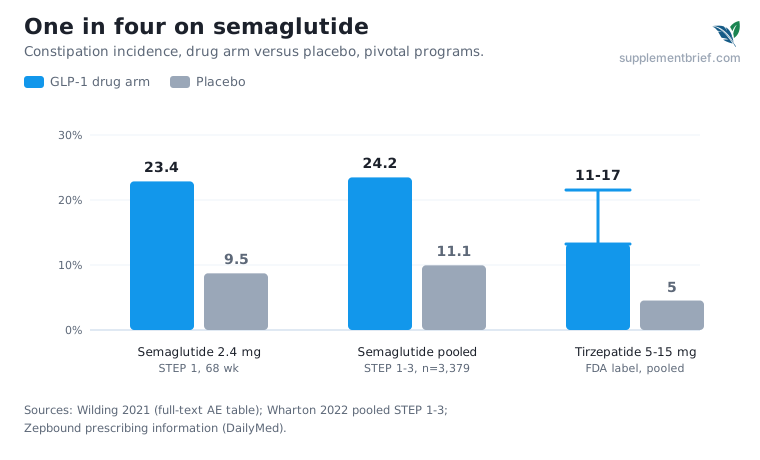
Two nuances keep this honest. First, the measured slowing of gastric emptying is largely transient, yet constipation episodes run a median of 47 days and prevalence plateaus only around week 10.[2] The bowel adapts to the drug faster than the symptom record suggests: the persistent constipation of GLP-1 therapy is a mix of drug effect plus the behavior changes it induces. Second, the class effect is real and ranked: a 2025 network meta-analysis of 39 studies in 33,354 adults without diabetes put the relative risk of constipation at 2.10 for semaglutide, 2.24 for liraglutide, and 3.36 for tirzepatide versus placebo, the tirzepatide interval being the widest of the three (95 percent CI 1.70 to 6.63).[13]
Severity context, because rate tables understate tails. In a matched real-world cohort of 313,342 pairs of adults with type 2 diabetes, severe constipation, gastroparesis, or obstruction occurred at 1.02 versus 0.75 events per 100 person-years on GLP-1 based therapies versus SGLT-2 inhibitors, a hazard ratio of 1.37 (95 percent CI 1.30 to 1.45).[4] Rare, but the kind of rare that belongs in the first screen of an article like this one.
What the search results get wrong
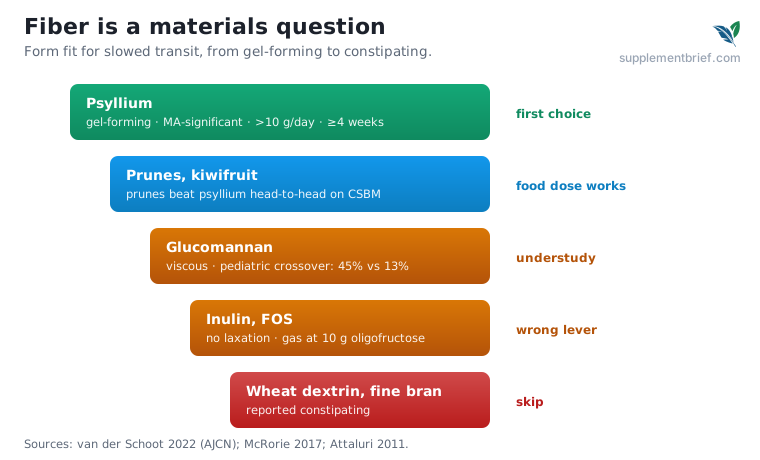
Type “ozempic constipation relief” into a search engine and the results divide into three buckets: lists of ten foods, hydration sermons, and fiber powders with cheerful labels. The food lists are mostly defensible: prunes beat psyllium head-to-head on complete spontaneous bowel movements in a randomized crossover of 40 adults, roughly 50 g twice daily against 11 g of psyllium twice daily,[14] and kiwifruit performed comparably to both in a four-week comparative trial.[15]
What the lists miss is form physics, which is the whole game on a slowed gut. Fiber is a family of materials, and only some of them hold water in a form the colon can use. Gel-forming, fermentation-resistant fibers such as psyllium increase stool water and mass along the whole colon. Readily fermented fibers such as inulin and fructooligosaccharides are consumed by bacteria in the first part of the colon, and the controlled literature assigns them no laxative effect; fine, smooth wheat bran particles and wheat dextrin have been reported to be constipating.[16] A slowed-transit reader who responds to generic advice by adding a scoop of an inulin-based powder can plausibly buy more gas for no stool benefit: in a dosing study, 10 g of oligofructose substantially increased flatulence and bloating in healthy adults, while up to 10 g of native inulin was tolerated.[17]
That is the pattern for all three supplement families here: identify the form the trials actually used, then the dose threshold, then the duration.
Fiber: psyllium first, in the right form
What the trials show
The base of evidence is two meta-analyses from the same King’s College group. The 2022 update pooled 16 randomized trials in 1,251 chronically constipated adults: symptom response 66 percent on fiber versus 41 percent on control (RR 1.48, 95 percent CI 1.17 to 1.88), stool frequency SMD 0.72, consistency SMD 0.32, and flatulence significantly higher on fiber (SMD 0.80).[7] The subgroup analysis did the work most summaries skip: only psyllium and pectin separated from control, and stool frequency improved only above 10 g per day and only past four weeks.[7] The 2016 predecessor reached a similar response split with evidence rated low overall.[18]
Read as absolute numbers, which is our house rule: 25 additional responders per 100 people using fiber over roughly a month, with a gas tax attached. One in four users gets a response placebo would not have produced; the other three still get the flatulence question.
The slow-transit catch, and why psyllium fits it
Here the mechanism section pays off. In a classic dosing study of ispaghula husk, 20 to 30 g per day beat 10 g on symptoms with dose-dependent stool weight gain, while whole-gut transit time did not change.[19] Decades later a wireless-motility-capsule substudy found the same: clinical responses to fiber occurred without measurable change in transit, contractility, or pH.[20] Fiber treats the stool, and the transit takes care of itself as well as it can.
That is precisely the useful property under a GLP-1 brake. The drug slows the conveyor; psyllium compensates by making the payload heavier and wetter, without demanding faster peristalsis and without fermenting away in a bowel that is giving bacteria extra contact time.[16] A September 2026 randomized trial extended the form-physics story to gas: psyllium gel reduced colonic gas production after a fermentable challenge (inulin), and methylcellulose, a cheaper non-fermentable gel-former, did the same.[42] For a slowed-transit reader stacking fiber, the practical read is that gel-forming fibers carry the water-holding benefit without the fermentation gas toll of prebiotic powders.
Dose check
Label dose vs trial floor — browser-only math.
—
Enter label dose
Trial reference
From your label
Enter your label dose — the gauge updates instantly.
Six RCTs in overweight and obese adults. Body weight fell 2.1 kg (95% CI −2.6 to −1.6), BMI 0.8 kg/m² and waist circumference 2.2 cm. 10.8 g/day is the mean dose across those trials, taken just before meals over a mean 4.8 months — the timing is part of the protocol, not a detail.
Educational only — not medical advice. Disclaimer.
Our psyllium dose registry page carries the trial floors and the shelf math: how label doses compare with the studied range.
Glucomannan: the understudy
Glucomannan, the konjac-root viscous fiber, has one well-run pediatric crossover: treatment success 45 percent versus 13 percent on placebo over four weeks, at 100 mg per kg per day up to 5 g, with a built-in fluid rule of 50 mL of water per 500 mg dose.[21] A pediatric meta-analysis pooled a modest frequency gain with no significant consistency or success benefit,[22] and adult data are thin, one trial in constipated athletes aside.[23] We track it because the shelf sells it as a weight-loss fiber at doses below its constipation floor: glucomannan dose entry.
The trial that does not exist yet, and our prediction on it
No published randomized trial tests psyllium, or any isolated fiber supplement, in people on GLP-1 receptor agonists, and a 2026 review in Advances in Nutrition states the gap outright: well-designed trials combining these drugs with well-characterized fibers are needed.[9]
The closest thing finished on November 24, 2025: NCT07012317, a randomized, quadruple-masked crossover in 50 adults on tirzepatide, semaglutide, or liraglutide at weight-management doses, comparing high-fiber bars containing inulin, a psyllium-and-bran blend, or resistant starch type 4 against a low-fiber control, seven days per arm.[5] Read the design carefully, because it is easy to over-claim: the primary outcome is a composite GI symptom score, and the trial excluded people with constipation predating their GLP-1, gastroparesis, and IBS. It is a tolerability study of fiber types in medication users, and it cannot answer whether fiber treats GLP-1 constipation.
We filed a public prediction against its eventual publication: added fibers will not worsen the composite symptom score, differences between fiber types will be small, and no arm will show a large symptomatic improvement; the falsifier is any arm improving the composite by roughly 30 percent or more, or a significant worsening. It sits in our public predictions ledger, dated before results, where hits and misses both stay up.
Practical rules from the above: start at a teaspoon per dose and titrate weekly toward the 10 g threshold; every dose with a full glass of water, the glucomannan trial’s 50 mL per 500 mg ratio being a reasonable floor; judge over four weeks, not four days; tolerate the flatulence signal within reason; do not stack a fermentable prebiotic powder on top, that is the route to bloating with nothing to show for it.[7][16] If you take oral semaglutide (Rybelsus), keep psyllium about two hours apart from the tablet: viscous fiber can slow absorption of pills taken at the same moment, the timing note in our psyllium interaction entry. Injected GLP-1s bypass that particular problem.
Magnesium: the oxide paradox
The trials
Magnesium is the second most common self-medication for this problem, and the trial evidence is real, specific about form, and awkward about dose.
Two Japanese randomized, double-blind, placebo-controlled trials tested magnesium oxide at 1.5 g per day for four weeks. In one, 34 women with mild-to-moderate chronic constipation (17 per arm) met the primary endpoint at 70.6 percent on magnesium oxide versus 25.0 percent on placebo, with spontaneous bowel movements up and Bristol form improved.[24] The other, 90 participants, is the more interesting design: magnesium oxide 68.3 percent, senna 69.2 percent, placebo 11.7 percent, with zero severe treatment-related events.[25] Pooled in a 2023 meta-analysis of mineral and vitamin supplements for constipation, magnesium oxide responded in 68 percent versus 19 percent on control (RR 3.32, 95 percent CI 1.59 to 6.92), with stool frequency up by 3.72 bowel movements per week and Bristol scores up by 1.14 points.[26]
In absolute terms: 49 additional responders per 100 people over a month. On response rates alone, magnesium oxide outperforms fiber. The numbers deserve their asterisks.
The paradox, the forms, and the dose tension
The paradox: magnesium oxide is the worst-absorbed magnesium on the shelf, at roughly 4 percent fractional absorption, versus 9 to 11 percent for chloride, lactate, and aspartate salts; in a 60-day comparative study, oxide showed no systemic advantage over placebo while citrate led on serum and urinary markers.[27] For constipation, that poor absorption is the working mechanism. The unabsorbed fraction stays in the lumen and holds water osmotically. The form with the least bioavailability is the form with the most laxative chemistry per gram, which inverts the usual supplement-shelf logic where absorption is the selling point.
Citrate sits one step over: better absorbed, a recognized cathartic in the bowel-prep literature, but with no randomized chronic-constipation trial to its name; its use here is extrapolation from oxide data plus solubility logic.[26] Glycinate, sold as the gentle form, has no human constipation evidence at all; the single retrievable study is a rat ileum preparation.[28] Magnesium L-threonate is a brain-and-sleep ingredient with zero gastrointestinal endpoint trials: the wrong tool at a premium price.[29]
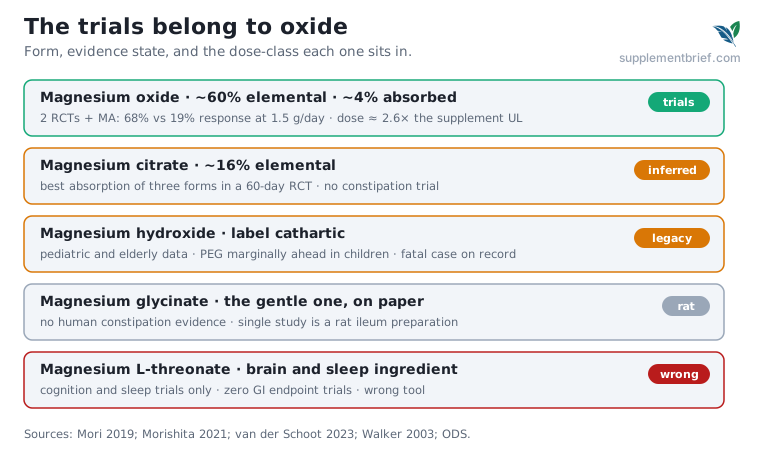
Now the asterisk that matters. The NIH supplemental ceiling is 350 mg of elemental magnesium per day, set because higher doses from salts commonly cause diarrhea; it bounds supplement use, not laxative use.[30] Both positive trials used 1.5 g of magnesium oxide, around 900 mg of elemental magnesium, about 2.6 times that ceiling. The evidence-backed constipation dose is a drug-style laxative dose, the sort a clinician might deliberately choose for a month, and not a daily wellness supplement to run indefinitely: short courses, lowest dose that works, a conversation if it becomes chronic.[31]
The renal line is hard. A case report documents a fatal hypermagnesemia in a 53-year-old treating chronic constipation with magnesium laxatives, serum magnesium 10.8 mg per dL, despite initially normal kidney function; the gut acting as a magnesium reservoir kept absorbing.[32] Reviews and package guidance converge on the same rule from several directions: magnesium salts call for real caution in renal impairment, with serum monitoring if use continues.[31] If your kidney function is reduced, or you are not sure, this ingredient belongs in a prescriber conversation before a shopping cart.
One quiet positioning fact: a multidisciplinary consensus on managing GLP-1 gastrointestinal events recommends fiber, water, physical activity, and stool softeners, with dose reduction as the drug-level lever. Magnesium is not mentioned anywhere in that document.[6] The evidence-backed pharmacy shelf for this problem is led by PEG-based osmotics and senna, both grade A in a systematic review of over-the-counter constipation therapies, with magnesium salts at grade B.[33] We do not sell those, and they are not supplements; a reader deciding between a magnesium bottle and the pharmacy aisle deserves to know which side the strongest evidence is on.
Probiotics: why they are not in our registry
Our dose registry lists 19 ingredients with trial floors. Probiotics are absent, and this section is the justification, because the category is where supplement marketing is loudest relative to evidence.
The pooled picture is modest and uneven. The strongest adult meta-analysis, 30 probiotic trials, found overall response of 57 percent versus 44 percent (RR 1.28) and stool frequency SMD 0.71, with a decisive caveat: the frequency effect was significant for the Bifidobacterium lactis subgroup and nobody else. Mixtures, the format most retail products use, showed no significant effect as a class; heterogeneity and risk of bias were high.[8] The 2014 predecessor found whole-gut transit shortened by about 12 hours and frequency up by 1.3 bowel movements per week, again with strain subgroups carrying the effect.[34]
Then came the null era for the strain with the best mechanistic story. Bifidobacterium lactis HN019 looked strong in a small 2011 industry-linked trial, whole-gut transit falling from 49 to 21 hours at the higher dose.[35] Three increasingly rigorous trials since walked it back: a 28-day dose-ranging trial null on its primary transit endpoint,[36] a 2024 triple-blind trial in 229 adults null on complete spontaneous bowel movements,[37] and a 2025 multicenter trial with the same outcome.[38] The pattern is familiar to anyone who reads this site: early industry-linked promise, then nulls at the endpoint patients actually care about.
The best-replicated positive lineage, B. lactis DN-173 010, has a cleaner record but an awkward product context: its evidence was run mostly in a Danone fermented milk that also carried fructooligosaccharides, with transit and symptom benefits in adults, null results in children, and manufacturer funding throughout.[39] Lactobacillus casei Shirota improved self-reported severity in one trial but shows no significant stool-frequency effect in either major meta-analysis subgroup.[40]
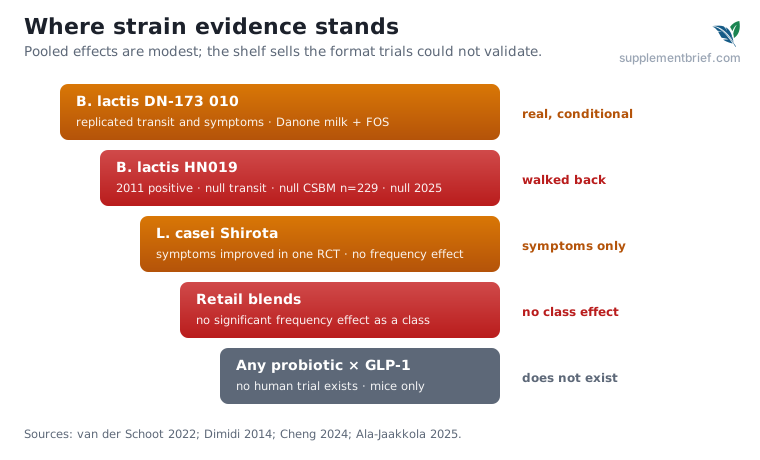
Safety is the one settled question: probiotics have a strong safety record in healthy adults, with risk concentrated in critical illness and immunocompromise.[41] The GLP-1 intersection: no human trial of any probiotic combined with a GLP-1 receptor agonist exists for any gastrointestinal endpoint. What exists is mice.[9]
So the registry exclusion is an efficacy-specificity decision, stated plainly: pooled effects are modest and heterogenous, driven by single industry-studied strains; the largest best-run strain trials were null; the retail blend format has no class-level frequency effect; and nothing has been tested in the population this article is about. A reader trying a specific single-strain product with actual constipation data behind it is not making an irrational choice. We simply cannot write a defensible trial floor for it, and we do not list what we cannot floor.
Safety lines that outrank any supplement choice
Three failure modes matter more than the choice between psyllium and magnesium.
Bulk fiber plus poor hydration plus delayed emptying can form bezoars. The case literature clusters exactly where GLP-1 physiology lives: a small-bowel obstruction from psyllium taken with minimal water in a 48-year-old with no surgical history; an esophageal bezoar in a Parkinson patient with dysmotility; pouch obstruction in a banded-stomach patient.[10] The mitigation is simple and fully supported by the trial protocols: every fiber dose with a real glass of water, and if obstructive symptoms appear, meaning pain, distension, vomiting, fiber stops and the phone comes out.
Magnesium plus impaired renal function is the second hard line, fatal case on record despite initially normal kidneys.[32]
The third line is the drug itself. Constipation severe enough to disrupt life is a dose-conversation with the prescriber, not a supplement escalation: the consensus pathway explicitly includes stepping the GLP-1 dose back.[6] The reader who hides a worsening gut behind fiber and magnesium while the underlying problem compounds is the failure mode this section exists to prevent.
For readers who want the label-reading layer for any of these products, our how to read a supplement label guide covers the syntax; the dose registry covers the floors. The GLP-1-specific companion picture, protein and electrolytes included, is in Best GLP-1 Companion Supplements, and the fluid-and-salts side of the same problem sits in Ozempic Electrolytes.
What you should take away
After reading this, you should be able to answer six questions for yourself.
What is actually known
- Constipation affects roughly one in four semaglutide 2.4 mg users versus one in nine on placebo, and 11 to 17 percent of tirzepatide users versus 5 percent on placebo.[1][3]
- Psyllium and pectin carry the fiber evidence, with a greater-than-10 g, longer-than-four-weeks rule.[7]
- Magnesium oxide has two placebo-controlled trials and a meta-analysis behind a 1.5 g daily month-long course.[26]
What is still unknown
- Everything specific to GLP-1 users: no randomized trial of fiber, magnesium, or probiotics exists in this population.[9]
- The one completed tolerability trial has not published results.[5]
- Our extrapolation is labeled as exactly that.
Where the evidence ends
At the severe end of the symptom range. Obstruction, gastroparesis, and intractable constipation are medical problems with drug-level solutions, including dose step-back, that no supplement article should stand in front of.[4][6]
When a supplement may be a reasonable choice
- Mild-to-moderate constipation in the titration and plateau phases, with fluid already addressed and a month of patience available.
- Psyllium as the first fiber.[7]
- Magnesium oxide as a considered short course with intact kidney function.[24]
When a supplement is definitely not the right choice
- Renal impairment with magnesium.[32]
- Dry or minimal-water bulk fiber with delayed emptying.[10]
- Fermented prebiotic powders bought as fiber.
- Probiotic blends bought as constipation therapy.
- Any supplement used to ride out symptoms that have earned a medical conversation.
Questions to discuss with your clinician
- Whether your constipation pattern justifies a GLP-1 dose conversation.
- Whether a short magnesium oxide or PEG course fits your kidney function and the rest of your list.
- Whether oral semaglutide timing needs coordinating with your fiber.
- Whether your symptoms have crossed into drug-side territory.[6]
How this article was researched
PubMed searches on 15 September 2026, every PMID verified against live records on the research day, trial numbers pulled from full texts and FDA labels where abstracts were silent. Two popular claims were checked and rejected: a widely repeated 5 to 37 percent constipation range, which resolves to a reconstruction from mixed sources including an orforglipron phase 2 program rather than any citable figure, and a supposed Cochrane review of fiber for constipation, which does not exist; the canonical meta-analyses are the two King’s College reviews cited here.[7][18]
FAQ
What helps Ozempic constipation fastest?
Behavior first: fluid up, movement after meals, smaller meals, and a diet adjustment toward foods that carry water and fiber. Psyllium is the evidence-backed daily layer but works on a four-week clock, which makes it the wrong tool for a same-week fix.[7] The fastest evidence-backed options sit in the pharmacy aisle (PEG-based osmotics and senna carry grade A evidence) and belong in a brief conversation with a pharmacist or prescriber rather than a supplement article.[33] Severe symptoms go to a clinician the same day.[4]
Can I take Metamucil on Ozempic or Mounjaro?
Psyllium products are compatible with injected GLP-1s for most people, on three conditions: build toward the studied threshold above 10 g per day, take each dose with a full glass of water, and judge over four weeks rather than four days.[7] The timing conflict applies to oral semaglutide (Rybelsus), where psyllium should sit about two hours away from the tablet; injections bypass that issue. Dry-swallowing bulk fiber on a gut with severely delayed emptying is the one genuinely contraindicated pattern.[10]
Magnesium citrate or oxide for constipation on a GLP-1?
The constipation trials were run on oxide at 1.5 g per day, and its poor absorption is precisely the working mechanism; citrate has the better absorption profile but no chronic-constipation trial, so its use is extrapolation.[24][27] Either way the effective dose region behaves like a laxative course, above the 350 mg supplemental ceiling, and is a poor fit for kidney impairment.[30] This is a pharmacy decision dressed in supplement packaging, and treating it that seriousness is the point.
Do probiotics help with GLP-1 constipation?
No study of any probiotic in people taking GLP-1 drugs exists; the claim has no direct evidence base either way.[9] In general constipation, pooled effects are modest and strain-specific, retail blends showed no class-level stool-frequency benefit in the strongest meta-analysis, and the best-conducted recent strain trials were null.[8][37] Safety in healthy adults is well supported, so a trial of a single-studied-strain product is a low-harm experiment with genuinely uncertain payoff.[41]
Will the constipation improve as my body adjusts to the drug?
Partly and slowly. The measured gastric-emptying delay fades with continued dosing, yet constipation episodes ran a median of 47 days in the pooled semaglutide safety data and prevalence plateaued only around week 10.[2] Practical reading: give any fiber strategy a full month before judging it, and treat a symptom that is still escalating after week 10 as a dose conversation rather than a fiber problem.[6]
When is constipation on a GLP-1 actually dangerous?
Vomiting, severe or worsening abdominal pain, bloating that will not resolve, or a growing weakness warrant same-day medical contact, and so does constipation that keeps worsening over days rather than settling; the real-world record shows elevated rates of severe constipation, gastroparesis, and intestinal obstruction on this drug class, rare but concrete.[4] A few missed days without other symptoms are a reason to tighten behavior and watch, waiting is no longer the plan once symptoms compound. Blood in the stool or new incontinence each have referral pathways outside this article.
Sources
-
Wilding JPH, Batterham RL, Calanna S, et al. Once-Weekly Semaglutide in Adults with Overweight or Obesity. New England Journal of Medicine. 2021;384(11):989-1002. PMID 33567185.
-
Wharton S, Davies M, Dicker D, et al. Gastrointestinal tolerability of once-weekly semaglutide 2.4 mg in adults with overweight or obesity, and the relationship between GI AEs and weight loss: pooled STEP 1-3. Diabetes, Obesity and Metabolism. 2022;24(1):94-105. PMID 34514682.
-
US Food and Drug Administration. Zepbound (tirzepatide) prescribing information, adverse reactions section: pooled SURMOUNT-1 and 2 safety population. DailyMed.
-
Alkabbani W, et al. Severe constipation, gastroparesis, and intestinal obstruction with GLP-1 receptor agonists: matched real-world cohort. Diabetes, Obesity and Metabolism. 2026. PMID 42244136.
-
Midwest Center for Metabolic and Cardiovascular Research (sponsor); General Mills (collaborator). A randomized, double-blind crossover trial to assess gastrointestinal responses to dietary fibers in adults using weight loss medications, NCT07012317. Status: completed 24 November 2025, results not posted. ClinicalTrials.gov.
-
Gorgojo-Martínez JJ, Mezquita-Raya P, Carretero-Gómez J, et al. Clinical recommendations to manage gastrointestinal adverse events in patients treated with GLP-1 receptor agonists: a multidisciplinary expert consensus. Journal of Clinical Medicine. 2022;12(1):145. PMID 36614945.
-
van der Schoot A, Drysdale C, Whelan K, Dimidi E. The effect of fiber supplementation on chronic constipation in adults: an updated systematic review and meta-analysis of randomized controlled trials. American Journal of Clinical Nutrition. 2022;116(4):953-969. PMID 35816465.
-
van der Schoot A, Helander C, Whelan K, Dimidi E. Probiotics and synbiotics in chronic constipation in adults: a systematic review and meta-analysis of randomized controlled trials. Clinical Nutrition. 2022;41(12):2759-2777. PMID 36372047.
-
Wang Y, Liu J, Verbeke K, et al. Dietary fiber and glucagon-like peptide-1 receptor agonists in obesity management. Advances in Nutrition. 2026;17(6):100647. PMID 42106160.
-
Abou Azar S, Wehbe MR, Jamali S, Hallal A. Small bowel obstruction secondary to a Metamucil bezoar: case report and review of the literature. Case Reports in Surgery. 2017;2017:2702896. PMID 29085697.
-
Maljaars PW, Peters HP, Mela DJ, Masclee AA. Ileal brake: a sensible food target for appetite control. A review. Physiology and Behavior. 2008;95(3):271-285. PMID 18692080.
-
Hjerpsted JB, Flint A, Brooks A, et al. Semaglutide improves postprandial glucose and lipid metabolism, and delays first-hour gastric emptying in subjects with obesity. Diabetes, Obesity and Metabolism. 2018;20(3):610-619. PMID 28941314.
-
Ismaiel A, et al. Gastrointestinal adverse events associated with GLP-1 RA in non-diabetic patients with overweight or obesity: a systematic review and network meta-analysis. International Journal of Obesity. 2025;49(10):1946-1957. PMID 40804463.
-
Attaluri A, Donahoe R, Valestin J, Brown K, Rao SSC. Randomised clinical trial: dried plums (prunes) vs. psyllium for constipation. Alimentary Pharmacology and Therapeutics. 2011;33(7):822-828. PMID 21323688.
-
Chey SW, Chey WD, Jackson K, Eswaran S. Exploratory comparative effectiveness trial of green kiwifruit, psyllium, or prunes in US patients with chronic constipation. American Journal of Gastroenterology. 2021;116(6):1304-1312. PMID 34074830.
-
McRorie JW Jr, McKeown NM. Understanding the physics of functional fibers in the gastrointestinal tract: an evidence-based approach to resolving enduring misconceptions. Journal of the Academy of Nutrition and Dietetics. 2017;117(2):251-264. PMID 27863994.
-
Bonnema AL, Kolberg LW, Thomas W, Slavin JL. Gastrointestinal tolerance of chicory inulin products. Journal of the American Dietetic Association. 2010;110(6):865-868. PMID 20497775.
-
Christodoulides S, Dimidi E, Fragkos KC, et al. Systematic review with meta-analysis: effect of fibre supplementation on chronic idiopathic constipation in adults. Alimentary Pharmacology and Therapeutics. 2016;44(2):103-116. PMID 27170558.
-
Kumar A, Kumar N, Vij JC, Sarin SK, Anand BS. Optimum dosage of ispaghula husk in patients with irritable bowel syndrome: correlation of symptom relief with whole gut transit time and stool weight. Gut. 1987;28(2):150-155. PMID 3030900.
-
Coss-Adame E, Arenas-Martínez JS, García-Cedillo MF, et al. Wireless motility capsule analysis in patients with functional constipation treated with agave fructans or psyllium. Neurogastroenterology and Motility. 2024;36(11):e14908. PMID 39223790.
-
Loening-Baucke V, Miele E, Staiano A. Fiber (glucomannan) is beneficial in the treatment of childhood constipation. Pediatrics. 2004;113(3 Pt 1):e259-e264. PMID 14993586.
-
Han Y, Zhang L, Liu XQ, et al. Efficacy of glucomannan for pediatric constipation: a systematic review and meta-analysis. Asia Pacific Journal of Clinical Nutrition. 2017;26(3):471-477. PMID 28429913.
-
Zhu Y, Chen X, Song G. Konjac glucomannan supplementation in athletes with functional constipation: randomized controlled trial. European Journal of Nutrition. 2025;64(8):303. PMID 41117955.
-
Mori S, Tomita T, Fujimura K, et al. A randomized double-blind placebo-controlled trial on the effect of magnesium oxide in patients with chronic constipation. Journal of Neurogastroenterology and Motility. 2019;25(4):563-575. PMID 31587548.
-
Morishita D, Tomita T, Kimura T, et al. Senna versus magnesium oxide for the treatment of chronic constipation: a randomized, placebo-controlled trial. American Journal of Gastroenterology. 2021;116(1):152-161. PMID 32969946.
-
van der Schoot A, Creedon A, Whelan K, Dimidi E. The effect of food, vitamin, or mineral supplements on chronic constipation in adults: a systematic review and meta-analysis of randomized controlled trials. Neurogastroenterology and Motility. 2023;35(11):e14613. PMID 37243443.
-
Walker AF, Marakis G, Christie S, Byng M. Mg citrate found more bioavailable than other Mg preparations in a randomised, double-blind study. Magnesium Research. 2003;16(3):183-191. PMID 14596323.
-
Firoz M, Graber M. Bioavailability of US commercial magnesium preparations. Magnesium Research. 2001;14(4):257-262. PMID 11794633.
-
Slutsky I, Abumaria N, Wu LJ, et al. Enhancement of learning and memory by elevating brain magnesium. Neuron. 2010;65(2):165-177. PMID 20152124.
-
National Institutes of Health, Office of Dietary Supplements. Magnesium: fact sheet for health professionals (upper level and renal risk). ODS.
-
Mori H, Tack J, Suzuki H. Magnesium oxide in constipation: a review of its clinical pharmacology and safety. Nutrients. 2021;13(2):421. PMID 33525523.
-
Bokhari SR, Siriki R, Teran FJ, Batuman V. Fatal hypermagnesemia due to laxative use. American Journal of the Medical Sciences. 2018;355(4):390-395. PMID 29661354.
-
Rao SSC, Brenner DM. Efficacy and safety of over-the-counter therapies for chronic constipation: an updated systematic review (funded by Bayer US). American Journal of Gastroenterology. 2021;116(6):1156-1181. PMID 33767108.
-
Dimidi E, Christodoulides S, Fragkos KC, Scott SM, Whelan K. The effect of probiotics on functional constipation in adults: a systematic review and meta-analysis. American Journal of Clinical Nutrition. 2014;100(4):1075-1084. PMID 25099542.
-
Waller PA, Gopal PK, Leyer GJ, et al. Dose-response effect of Bifidobacterium lactis HN019 on whole gut transit time and functional constipation (industry-linked). Scandinavian Journal of Gastroenterology. 2011;46(9):1057-1064. PMID 21663486.
-
Ibarra A, Latreille-Barbier M, Donazzolo Y, et al. Effects of Bifidobacterium animalis subsp. lactis HN019 on colonic transit time and bowel movements (industry). Gut Microbes. 2018;9(3):236-251. PMID 29227175.
-
Cheng J, et al. Eight-week supplementation with Bifidobacterium lactis HN019 and functional constipation: a randomized clinical trial. JAMA Network Open. 2024;7(10):e2436888. PMID 39356506.
-
Ala-Jaakkola R, et al. Bifidobacterium lactis HN019 and digestive comfort: multicenter randomized trial. Molecular Nutrition and Food Research. 2025;69(17):e70081. PMID 40320938.
-
Agrawal A, Houghton LA, Morris J, et al. Clinical trial: the effects of a fermented milk product containing Bifidobacterium lactis DN-173 010 on abdominal distension and gastrointestinal transit in irritable bowel syndrome with constipation (Danone authors). Alimentary Pharmacology and Therapeutics. 2009;29(1):104-114. PMID 18801055.
-
Koebnick C, Wagner I, Leitzmann P, et al. Probiotic beverage containing Lactobacillus casei Shirota improves gastrointestinal symptoms in patients with chronic constipation (Yakult-affiliated). Canadian Journal of Gastroenterology. 2003;17(11):655-659. PMID 14631461.
-
Didari T, Solki S, Mozaffari S, et al. A systematic review of the safety of probiotics. Expert Opinion on Drug Safety. 2014;13(2):227-239. PMID 24405164.
-
Dellschaft N, et al. Randomised placebo-controlled trial of methylcellulose and psyllium gels on inulin-induced colonic gas. Alimentary Pharmacology and Therapeutics. 2026. PMID 42728685.