



The short answer
Sleep and body weight are connected in a way the supplement aisle cannot copy. When researchers cut people’s sleep short in controlled studies, appetite hormones shift within a night or two, late-night snacking rises, and weight creeps up. When researchers help habitual short sleepers sleep about an hour longer, objectively measured intake drops by around 270 calories a day.[1]
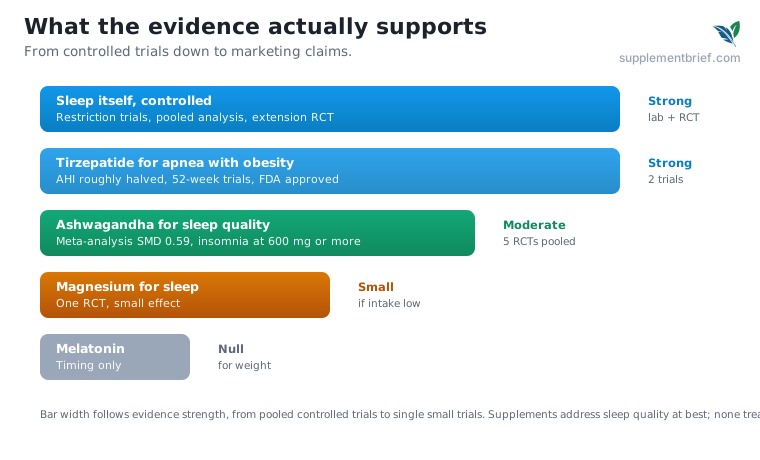
None of that involves a bottle. The working hierarchy runs: fix sleep timing and duration first, treat suspected sleep apnea with a physician, and only then consider a supplement for sleep quality. Melatonin can help you fall asleep a few minutes faster and works best for jet lag and shift work; it does nothing measurable for body weight in adults. Magnesium has one decent trial behind it and a 2026 review that declines to call it a routine insomnia treatment. Ashwagandha has the strongest supplement evidence for sleep quality, and none of it is about weight.
This article walks through the lab studies that established the sleep-weight link, the sleep-extension trials that tested the reverse, each supplement with its actual numbers, and the sleep apnea section where weight and breathing meet, including the new medication angle.
The verdict
- Best evidence-backed move: extend sleep if you habitually sleep under 6.5 hours. In a randomized trial, one session of individualized sleep-hygiene counseling added 1.2 hours per night and cut intake by 270 kcal/day, measured objectively, with no prescribed diet.[1]
- Most overrated: melatonin as a body-weight tool. A meta-analysis of 28 randomized trials found no effect on body weight, BMI, or waist circumference in adults.[2] Its real uses are narrower: sleep-onset timing, jet lag, shift work.
- Honest gap: sleep extension improves sleep and lowered intake in short-term trials, but six weeks of extension did not improve insulin sensitivity, and a 2026 review concludes sleep-focused interventions are not yet proven as a mandatory component of weight-management programs.[3][4]
- Skip without evaluation: assuming snoring and daytime exhaustion are just “bad sleep.” Obesity and obstructive sleep apnea feed each other, apnea is treated by a clinician, and no supplement treats it.[5]
Why short sleep pushes weight up
The cleanest evidence comes from studies that did the unethical thing for a few nights on purpose: they shortened people’s sleep in a lab and watched what happened.
In a small nine-person crossover study, one night completely without sleep left morning ghrelin, a hormone that signals hunger, running about 22% higher, roughly doubled hunger ratings, and left leptin, the fat-cell signal of fullness, statistically unchanged.[6] A single night like that is a demonstration of mechanism, not a forecast for any reader. After two nights restricted to four hours in bed, in twelve healthy young men, leptin falls 18%, ghrelin rises 28%, and reported hunger climbs 24%, with the strongest pull toward high-carbohydrate, calorie-dense foods.[7] Brain imaging explains the pull: one sleepless night shifts activity away from the frontal regions that evaluate food choices and toward the amygdala’s reward response, increasing desire specifically for high-calorie items.[8]
Longer restriction studies show where this leads. In sixteen adults studied inpatient for two weeks, five nights of five-hour sleep opportunity raised after-dinner snacking by 42%, and participants gained weight while being fed ad libitum.[9] A 2026 pooled analysis of randomized restriction trials put a number on the whole package: shaving about 78 minutes off habitual sleep added 0.45 kg of body weight and raised leptin, the opposite of what a person trying to lose weight wants.[10]
Dieting while short on sleep has its own twist. In a two-week controlled trial, ten overweight adults cut the same calories while sleeping 8.5 or 5.5 hours. The short-sleep group lost 55% less fat and 60% more lean mass.[11] The scale moved, but the wrong tissue paid for it.
At the population level, an umbrella review covering 18 meta-analyses found short sleep associated with a 30% higher risk of overweight and obesity in adults, with a stronger signal in children.[12] Causality is genuinely two-sided in that data: Mendelian-randomization studies split, some supporting a causal role of short sleep in obesity, some finding none.[13] The lab experiments above are the reason we still treat the direction as real even where statistics argue.
Can you sleep your way to lower intake?
If restriction raises intake, extension should lower it. The best test recruited 80 adults aged 21 to 40 who were overweight and habitually slept less than 6.5 hours. One group received a single individualized sleep-hygiene counseling session targeting 8.5 hours in bed; the other changed nothing. Over two weeks, the counseled group slept 1.2 hours longer per night and ate 270 fewer calories per day, measured by doubly labeled water rather than food diaries. Expenditure did not change, which leaves a real daily deficit without a diet.[1]
The ceiling on that excitement is equally documented. Six weeks of extending sleep by about an hour in adults with overweight improved sleep health but did not improve insulin sensitivity or glycemic control.[3] A 2026 overview of the field concludes there is still insufficient evidence to make sleep-focused interventions a mandatory element of clinical weight management.[4] And sleep regularity deserves the same attention as duration: a 2025 systematic review links irregular sleep timing to higher BMI and insulin resistance.[14]
The practical reading: sleeping adequately is scaffolding for everything else, and for a habitually short sleeper the cheapest intervention may be an earlier bedtime, not a purchase.
Sleep supplements, checked one by one
Melatonin: a timing tool with a weight-loss myth attached
What melatonin actually does is shift the circadian clock. The strongest meta-analytic support exists for sleep-onset latency and jet lag: about 5 to 7 minutes faster sleep onset in pooled analyses, with a clear effect in eastward jet lag.[15][16] A 2024 dose-response review of 26 trials found efficacy peaking at 4 mg taken about three hours before the desired bedtime, a schedule most bottle labels get wrong; the specific dose is chosen individually, starting from fractions of a milligram for shifting sleep timing, depending on why it is being taken.[17] For chronic insomnia in adults, two large meta-analyses are blunt: melatonin did not meaningfully improve sleep outcomes.[15][18]
The weight-loss claim is a null. Across 28 randomized trials and 1,543 adults, melatonin changed nothing measurable in body weight, BMI, or waist circumference.[2] A 2026 meta-analysis in women with overweight found a small BMI improvement but no significant change in body weight or waist, a pattern that reads as noise rather than effect.[19] The niche signals, antipsychotic-associated weight gain and early-chronotype shift workers with circadian misalignment, do not transfer to a general reader.[20]
One safety detail matters more than efficacy marketing: when researchers chemically analyzed 25 melatonin gummy products, 22 of 25 were mislabeled, containing anywhere from 74% to 347% of the melatonin on the label, and one contained none at all.[21] Higher pharmacologic doses appear tolerable in pooled safety data,[22] but a product that cannot be dosed accurately cannot be used accurately. Melatonin in any form, chewable tablets included, is an adult decision here; this article does not cover children.
Magnesium: one decent trial, a diet-dependent maybe
Our magnesium forms guide covers the chemistry; the sleep question gets a short answer here. The single best trial, randomized and double-blind, assigned 155 adults with poor sleep to 250 mg elemental magnesium as bisglycinate or placebo for seven weeks. Insomnia severity improved more with magnesium, but the effect was small, Cohen’s d around 0.2, and concentrated in participants whose dietary magnesium was low to begin with.[23]
A 2026 systematic review of 12 trials then declined the headline: current evidence does not support oral magnesium as a routine insomnia treatment, with certainty graded low to very low.[24] If your diet is genuinely sparse in magnesium, correcting that has a plausible small sleep benefit; if it is not, the trial and the review agree you should not expect one. The dose registry page shows what shelf products actually contain against studied doses.
Ashwagandha: the strongest supplement evidence here, still modest
Ashwagandha is the one ingredient in this aisle with meta-analytic sleep-quality effects. A pooled analysis of five trials, 400 participants, found a standardized mean difference of −0.59 on sleep outcomes, with stronger effects in diagnosed insomnia, at 600 mg per day or more, and at eight weeks or longer.[25] A 2024 meta-analysis of anxiety and insomnia trials reached the same direction.[26] The anchor trial, double-blind, randomized 60 adults with insomnia to 300 mg of KSM-66 root extract twice daily; sleep onset and quality improved over ten weeks.[27]
Two cautions travel with that evidence. Most of the trials use extract supplied by the ingredient’s brand owner, which does not invalidate the data but sets the confidence level.[27][28] And the mechanism being calm rather than calories is exactly why ashwagandha shows up here under sleep quality, not weight; our dose registry entry carries the studied doses.
Sleep apnea: where weight and breathing meet
Obstructive sleep apnea is the loop closing on itself. Fat around the airway and abdomen makes nighttime collapse more likely; fragmented, oxygen-starved sleep makes the next day hungrier and more tired, which makes weight harder to control. Nearly one billion adults aged 30 to 69 are estimated to have at least mild apnea,[5] and in clinic populations at least 70% of apnea patients have obesity.[29]
The weight direction is quantified from four decades of cohort follow-up: a 10% weight gain predicted a 32% increase in the apnea-hypopnea index and a six-fold increase in the odds of developing moderate-to-severe sleep-disordered breathing.[30] The classic therapy, CPAP, works when used, but 46% to 83% of patients are non-adherent by the standard four-hour definition.[31]
That gap is why the medication news matters. Tirzepatide became the first FDA-approved drug for obstructive sleep apnea on December 20, 2024, for adults with obesity and moderate-to-severe apnea.[32] In the two double-blind one-year trials, 469 participants in total, tirzepatide cut the apnea-hypopnea index by 25.3 events per hour in participants not using CPAP and by 29.3 in those using it, roughly halving severity, alongside 18 to 20% weight loss.[33] Liraglutide had shown a smaller version of the same effect years earlier, 12.2 versus 6.1 events per hour against placebo in a manufacturer-funded trial of 359 adults over 32 weeks, at 5.7% weight loss.[34] No semaglutide apnea trial exists. Stopping the drug returns the weight, as the withdrawal phase of the maintenance trial showed when 670 participants were rerandomized to continue or stop.[35]
Where supplements sit in this section is fixed: none of them treat apnea. Weight loss itself is part of apnea therapy, physician-supervised, and a medication decision belongs with a prescriber. What a supplement article can honestly say is that if you snore, gasp, or fight daytime sleepiness, the evidence-based next step is a sleep evaluation, not a shopping cart.
GLP-1 medications and sleep quality
Readers on GLP-1 companion nutrition ask whether the injections change sleep itself. Nobody has run the trial. No randomized study with a sleep-quality endpoint exists for semaglutide or tirzepatide as of September 2026.
The scraps point in both directions. A small uncontrolled real-world study of 78 patients found PSQI sleep scores improving markedly three months after starting GLP-1 therapy,[36] which is promising and unblinded. A database analysis of nearly 119,000 matched pairs found a small relative increase in hypersomnolence diagnoses, about 21% higher hazard, on an absolute base so low it sums to a fraction of a percent.[37] Pharmacovigilance registries flag insomnia signals for one drug in the class, dulaglutide, not the weight-loss names.[38]
What is solid is indirect: the class reduces apnea severity through weight, as above, and apnea is the mechanism by which obesity destroys sleep architecture. Also see our guides on constipation on GLP-1 and electrolytes for the adjacent nights-and-mornings questions.
What we still do not know
Whether extending sleep produces sustained weight loss beyond a few weeks is untested in large long trials; the intake signals are strong, the outcome trials are short. Whether the appetite-hormone shifts translate identically in women, older adults, and people with obesity is underexplored; the classic restriction studies were small and mostly young and male. Whether any sleep supplement changes body weight through any pathway has been answered with a consistent no for melatonin and never properly asked for magnesium and ashwagandha. And the sleep-quality effects of GLP-1 medications await an actual randomized endpoint.
What to take away
Read this first
Sleep is a lever on appetite and intake, and the supplement aisle has no product that pulls it. Fix duration and timing first, get evaluated if sleep is broken despite enough hours, and treat supplements as small players in sleep quality, never in weight.
The one-night effect is real and cheap to prevent
Ghrelin rises and food choices worsen after a single short night.[6][8] Protecting a fixed bedtime is a metabolic decision, not just a comfort preference.
An hour more of sleep moved intake by 270 calories
The extension trial’s counseling session cost nothing and produced an objective daily deficit.[1] Habitual short sleepers have the most to gain, and the clearest way to see it for themselves is not a two-week experiment with a promised result: over two weeks of more sufficient sleep, they can watch whether appetite and hunger actually change.
Melatonin answers timing problems, not weight problems
Jet lag, shift work, and delayed sleep onset with correctly timed low doses are its territory;[16][17] body weight is not, and gummy labels frequently misstate the dose inside.[21]
Magnesium and ashwagandha are sleep-quality maybe-and-probably
Magnesium helps modestly if intake is low;[23] ashwagandha carries the best meta-analytic sleep-quality signal at 600 mg over eight weeks or more, with industry-supplied trials as the caveat.[25][27]
Snoring with daytime exhaustion is a medical question first
Apnea and obesity drive each other, tirzepatide is now approved for the combination, and the entry point is a sleep evaluation, not a supplement.[32][33]
How we researched this
Every number above was traced to the cited primary source or meta-analysis on PubMed, with the FDA announcement verified against the agency’s own release. Citation details live in the sources list, and our methodology explains the general process.
FAQ
Does melatonin help you lose weight?
No trial evidence supports it for adults. A meta-analysis of 28 randomized trials found no effect on body weight, BMI, or waist circumference.[2] Melatonin can help with sleep timing, jet lag, and shift work; those effects do not translate into fat loss.
How many hours of sleep help with weight control?
The extension evidence targets people sleeping under 6.5 hours and moves them toward 8.5 hours in bed, adding about 1.2 hours of measured sleep.[1] Most restriction studies cut sleep to 4 or 5 hours to show harm; there is no evidence that sleeping beyond your need adds benefit.
Can sleeping less make you gain weight?
In controlled studies, yes: short sleep raises ghrelin, lowers leptin, increases late-night snacking, and a pooled analysis of restriction trials measured 0.45 kg gained from sleeping about 78 minutes less.[7][9][10] In long-term observational data the association holds but causality is partly contested.[13]
Is magnesium good for sleep?
Does ashwagandha improve sleep?
It has the best supplement evidence for sleep quality: pooled effects around a standardized mean difference of −0.59, strongest at 600 mg per day or more for eight weeks or longer in diagnosed insomnia.[25] Trials mostly used brand-supplied extract, which tempers confidence.
Do GLP-1 medications like Ozempic affect sleep?
No randomized sleep-quality data exist for the class. Real-world observations are mixed: one small uncontrolled study found better sleep scores,[36] while a large database analysis found a small absolute increase in hypersomnolence diagnoses.[37] Indirectly, the class improves sleep-disordered breathing through weight loss, with tirzepatide approved for moderate-to-severe apnea in adults with obesity.[33]
Sources
-
Tasali E, Wroblewski K, Kahn E, Kilkus J, Schoeller DA. Effect of Sleep Extension on Objectively Assessed Energy Intake Among Adults With Overweight in Real-life Settings: A Randomized Clinical Trial. JAMA Internal Medicine. 2022;182(4):365-374. doi:10.1001/jamainternmed.2021.8098. PMID 35129580.
-
Vajdi M, Moeinolsadat S, Noshadi N, et al. Effect of melatonin supplementation on body composition and blood pressure in adults: A systematic review and dose-response meta-analysis of randomized controlled trials. Heliyon. 2024;10(14):e34604. doi:10.1016/j.heliyon.2024.e34604. PMID 39113944.
-
Beals JW, et al. Sleep Extension Improves Sleep Health but Not Insulin Sensitivity in People With Overweight or Obesity Who Maintain Habitual Short Sleep Schedules. Diabetes Care. 2026;49(5):740-745. doi:10.2337/dc25-2083. PMID 41564347.
-
Hall WL. Optimal sleep: a key element in maintaining a healthy bodyweight. Proceedings of the Nutrition Society. 2026;85(1):40-58. doi:10.1017/S0029665125000072. PMID 39910991.
-
Benjafield AV, Ayas NT, Eastwood PR, et al. Estimation of the global prevalence and burden of obstructive sleep apnoea: a literature-based analysis. Lancet Respiratory Medicine. 2019;7(8):687-698. doi:10.1016/S2213-2600(19)30198-5. PMID 31300334.
-
Schmid SM, Hallschmid M, Jauch-Chara K, et al. A single night of sleep deprivation increases ghrelin levels and feelings of hunger in normal-weight healthy individuals. Journal of Sleep Research. 2008;17(3):331-334. doi:10.1111/j.1365-2869.2008.00662.x. PMID 18564298.
-
Spiegel K, Tasali E, Penev P, Van Cauter E. Brief communication: Sleep curtailment in healthy young men is associated with decreased leptin levels, elevated ghrelin levels, and increased hunger and appetite. Annals of Internal Medicine. 2004;141(11):846-850. doi:10.7326/0003-4819-141-11-200412070-00008. PMID 15583226.
-
Greer SM, Goldstein AN, Walker MP. The impact of sleep deprivation on food desire in the human brain. Nature Communications. 2013;4:2259. doi:10.1038/ncomms3259. PMID 23922121.
-
Markwald RR, Melanson EL, Smith MR, et al. Impact of insufficient sleep on total daily energy expenditure, food intake, and weight gain. Proceedings of the National Academy of Sciences. 2013;110(14):5695-5700. doi:10.1073/pnas.1216951110. PMID 23479616.
-
Zuraikat FM, et al. Prolonged Short Sleep and Its Effect on Body Weight and Composition: A Pooled Analysis of Randomized Trials. Annals of Internal Medicine. 2026;179(8):1085-1093. doi:10.7326/ANNALS-25-01660. PMID 42407080.
-
Nedeltcheva AV, Kilkus JM, Imperial J, Schoeller DA, Penev PD. Insufficient sleep undermines dietary efforts to reduce adiposity. Annals of Internal Medicine. 2010;153(7):435-441. doi:10.7326/0003-4819-153-7-201010050-00006. PMID 20921542.
-
Benfica MA, Ribeiro TC, Silva KSO, et al. Relationship Between Sleep Duration and Overweight/Obesity: A Comprehensive Overview of Meta-Analyses. Clinical Obesity. 2026;16(1):e70051. doi:10.1111/cob.70051. PMID 41235934.
-
Yang C, et al. Associations of sleep with cardiometabolic risk factors and cardiovascular diseases: an umbrella review of observational and mendelian randomization studies. Sleep Medicine Reviews. 2024;77:101965. doi:10.1016/j.smrv.2024.101965. PMID 39137553.
-
Kalkanis A, et al. Sleep regularity as an important component of sleep hygiene: a systematic review. Sleep Medicine Reviews. 2025;84:102203. doi:10.1016/j.smrv.2025.102203. PMID 41259946.
-
Choi K, et al. Efficacy of melatonin for chronic insomnia: Systematic reviews and meta-analyses. Sleep Medicine Reviews. 2022;66:101692. doi:10.1016/j.smrv.2022.101692. PMID 36179487.
-
Chan V, Wang L, Allman-Farinelli M. Efficacy of Functional Foods and Dietary Supplements in Alleviating Air Travel Symptoms: A Systematic Review and Meta-Analysis. Nutrients. 2021;13(3):961. doi:10.3390/nu13030961. PMID 33809656.
-
Cruz-Sanabria F, et al. Optimizing the Time and Dose of Melatonin as a Sleep-Promoting Drug: A Systematic Review of RCTs and Dose-Response Meta-Analysis. Journal of Pineal Research. 2024;76(5):e12985. doi:10.1111/jpi.12985. PMID 38888087.
-
De Crescenzo F, et al. Comparative effects of pharmacological interventions for the acute and long-term management of insomnia disorder in adults: a systematic review and network meta-analysis. Lancet. 2022;400(10347):170-184. doi:10.1016/S0140-6736(22)00878-9. PMID 35843245.
-
Li J, et al. The effects of melatonin supplementation on obesity and glycemic indices in women with overweight and obesity: a systematic review and meta-analysis of randomized controlled trials. Diabetology & Metabolic Syndrome. 2026;18(1). doi:10.1186/s13098-026-02177-1. PMID 42129844.
-
Marqueze EC, et al. Exogenous melatonin decreases circadian misalignment and body weight among early types. Journal of Pineal Research. 2021;71(2):e12750. doi:10.1111/jpi.12750. PMID 34091954.
-
Cohen PA, Avula B, Wang YH, et al. Quantity of Melatonin and CBD in Melatonin Gummies Sold in the US. JAMA. 2023;329(16):1401-1402. doi:10.1001/jama.2023.2296. PMID 37097362.
-
Menczel Schrire Z, et al. Safety of higher doses of melatonin in adults: A systematic review and meta-analysis. Journal of Pineal Research. 2022;72(2):e12782. doi:10.1111/jpi.12782. PMID 34923676.
-
Schuster J, Cycelskij I, Lopresti A, Hahn A. Magnesium Bisglycinate Supplementation in Healthy Adults Reporting Poor Sleep: A Randomized, Placebo-Controlled Trial. Nature and Science of Sleep. 2025;17:2027-2040. doi:10.2147/NSS.S524348. PMID 40918053.
-
Lopresti AL, Smith SJ, Drummond PD. Magnesium Supplementation for Sleep in Adults: A Systematic Review of Randomized Controlled Trials. Journal of Dietary Supplements. 2026;23(5):553-581. doi:10.1080/19390211.2026.2719670. PMID 42661485.
-
Cheah KL, Norhayati MN, Husniati Yaacob L, Abdul Rahman R. Effect of Ashwagandha (Withania somnifera) extract on sleep: A systematic review and meta-analysis. PLoS One. 2021;16(9):e0257843. doi:10.1371/journal.pone.0257843. PMID 34559859.
-
Fatima K, Malik J, et al. Safety and efficacy of Withania somnifera for anxiety and insomnia: A systematic review and meta-analysis of randomized clinical trials. Human Psychopharmacology. 2024;39(6):e2911. doi:10.1002/hup.2911. PMID 39083548.
-
Langade D, Kanchi S, Salve J, Debnath K, Ambegaokar D. Efficacy and Safety of Ashwagandha (Withania somnifera) Root Extract in Insomnia and Anxiety: A Double-blind, Randomized, Placebo-controlled Study. Cureus. 2019;11(9):e5797. doi:10.7759/cureus.5797. PMID 31728244.
-
Salve J, Pate S, Debnath K, Langade D. Adaptogenic and Anxiolytic Effects of Ashwagandha Root Extract in Healthy Adults: A Double-blind, Randomized, Placebo-controlled Study. Cureus. 2019;11(12):e6466. doi:10.7759/cureus.6466. PMID 32021735.
-
Tuomilehto H, Seppä J, Uusitupa M. Obesity and obstructive sleep apnea: clinical significance of weight loss. Sleep Medicine Reviews. 2013;17(5):321-329. doi:10.1016/j.smrv.2012.08.002. PMID 23079209.
-
Peppard PE, Young T, Palta M, Dempsey J, Skatrud J. Longitudinal study of moderate weight change and sleep-disordered breathing. JAMA. 2000;284(23):3015-3021. doi:10.1001/jama.284.23.3015. PMID 11122588.
-
Weaver TE, Grunstein RR. Adherence to continuous positive airway pressure therapy: the challenge to effective treatment. Proceedings of the American Thoracic Society. 2008;5(2):173-178. doi:10.1513/pats.200708-119MG. PMID 18250209.
-
U.S. Food and Drug Administration. FDA Approves First Medication for Obstructive Sleep Apnea. News release, December 20, 2024. fda.gov. Accessed September 2026.
-
Malhotra A, Grunstein RR, Fietze I, et al. Tirzepatide for the Treatment of Obstructive Sleep Apnea and Obesity. New England Journal of Medicine. 2024;391(13):1193-1205. ClinicalTrials.gov NCT05412004. doi:10.1056/NEJMoa2404881. PMID 38912654.
-
Blackman A, Foster GD, Zammit G, et al. Effect of liraglutide 3.0 mg in individuals with obesity and moderate or severe obstructive sleep apnea: the SCALE Sleep Apnea randomized clinical trial. International Journal of Obesity. 2016;40(8):1310-1319. doi:10.1038/ijo.2016.52. PMID 27005405.
-
Aronne LJ, Sattar N, Horn DB, et al. Continued Treatment With Tirzepatide for Maintenance of Weight Reduction in Adults With Obesity: The SURMOUNT-4 Randomized Clinical Trial. JAMA. 2024;331(1):38-48. doi:10.1001/jama.2023.24945. PMID 38078870.
-
Kır Y, et al. Prospective changes in sleep quality and depressive symptom burden following initiation of GLP-1-based therapies in patients with obesity: a real-world study. Journal of Endocrinological Investigation. 2026. Online ahead of print Aug 18. doi:10.1007/s40618-026-03024-w. PMID 42611111.
-
Kamel-Abusalha L, et al. Association of GLP-1 Receptor Agonist Use with Hypersomnolence: A Real-world Cohort Analysis. Journal of Diabetes and Metabolic Disorders. 2026;25(1):117. doi:10.1007/s40200-026-01929-0. PMID 41867417.
-
Katranski J, et al. Psychiatric adverse events linked to glucagon-like peptide 1 analogues: a disproportionality analysis in American, Canadian and Australian adverse event databases. International Journal of Clinical Pharmacy. 2025;47(6):1739-1747. doi:10.1007/s11096-025-01943-x. PMID 40522403.