


Short answer
Metformin is first-line for type 2 diabetes and prediabetes, but long-term use can lower B12 absorption. This guide does not replace metformin or prescribe treatment. It covers testing and repletion if you and your clinician agree supplementation is appropriate.
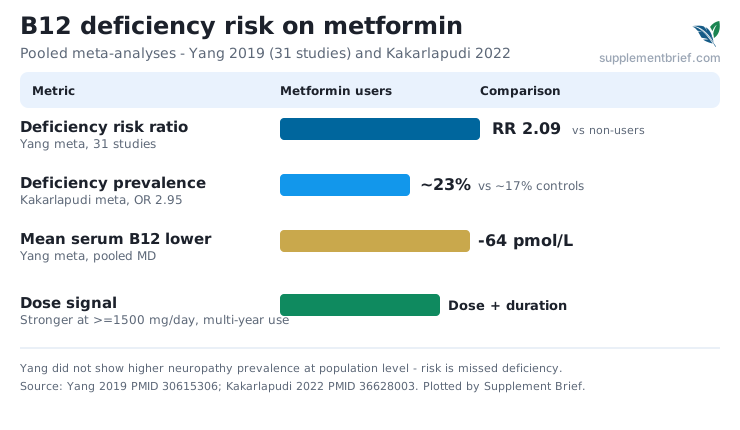
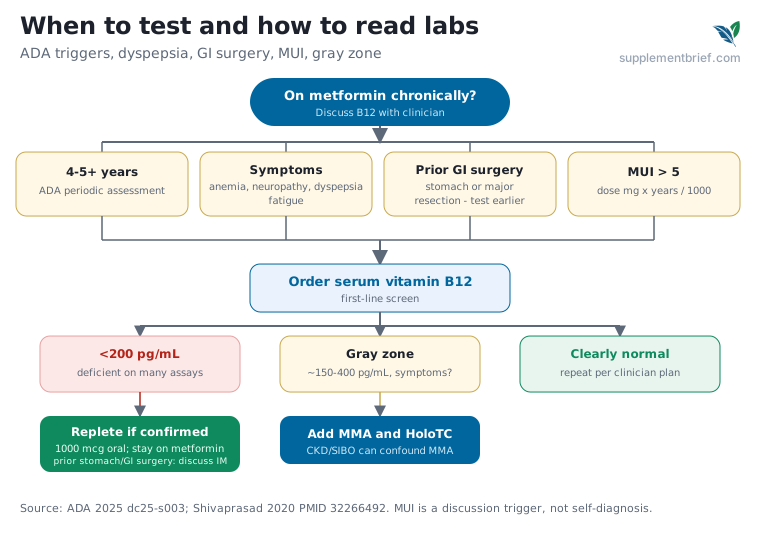
Meta-analyses in 31 studies found deficiency risk roughly doubles with metformin, rising with dose and duration (Yang et al.[1]). ADA advises periodic B12 assessment on chronic metformin, especially after about four to five years, or sooner if anemia, peripheral neuropathy, dyspeptic symptoms, or a history of stomach or other major GI surgery appears (ADA[8]).
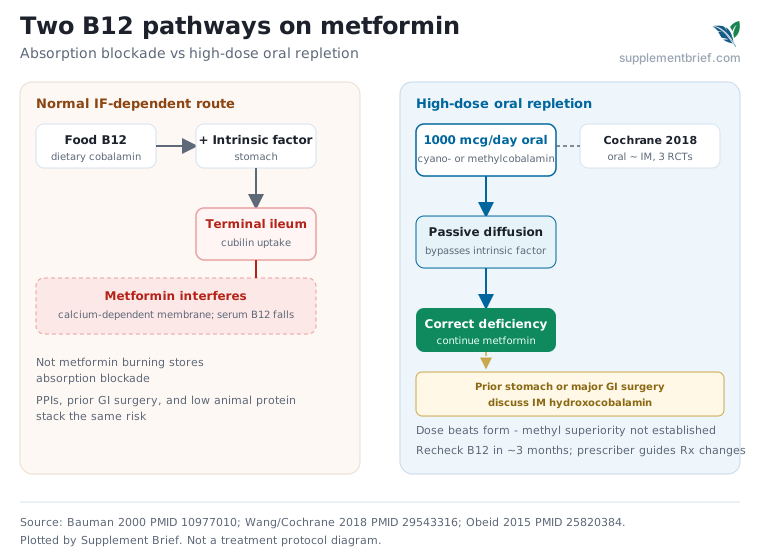
For repletion, dose beats form. Oral 1000 mcg (1 mg) cyanocobalamin or methylcobalamin daily can correct deficiency because a small fraction of a large dose absorbs by passive diffusion, bypassing intrinsic factor (Wang et al.[5]). In metformin users, daily sublingual methylcobalamin matched a single IM hydroxocobalamin injection at six months in one RCT (Parry-Strong et al.[4]).
On GLP-1 plus metformin, the B12 question remains. See our GLP-1 companion supplement framework for combo context. Readers comparing berberine vs Ozempic should note berberine is not metformin. For GLP-1 dehydration fatigue, see electrolytes on Ozempic.
Reader checkpoint
Form shopping or lab answer?
Labels cannot diagnose deficiency. Serum B12 (± MMA) comes first; form selection follows once repletion is confirmed. Do not stop metformin to try a supplement.
The verdict
Metformin-associated B12 depletion is a documented drug–nutrient interaction, not a reason to stop metformin on your own.
Best evidence-backed use:
- Periodic B12 assessment after years on metformin, or sooner with anemia, neuropathy, dyspeptic symptoms, high MUI, PPI use, vegan diet, prior stomach or major GI surgery, or age 65+ (ADA[8]; Shivaprasad et al.[11]).
- If deficiency is confirmed: oral cyanocobalamin or methylcobalamin 1000 mcg daily, recheck in about three months, continue metformin unless your prescriber changes diabetes therapy.
Most overrated:
- Methylcobalamin-only products marketed for metformin neuropathy (Obeid et al.[7]).
- Sublingual or injection upsells when high-dose oral already works (Wang et al.[5]; Parry-Strong et al.[4]).
- Daily multivitamins with 6–25 mcg B12 as stand-in for therapeutic repletion.
Honest gap we cannot fill:
- Yang et al. did not prove higher neuropathy prevalence among metformin users at the population level (Yang et al.[1]). We cannot tell from labs alone whether your foot numbness is B12, diabetes, or both.
Avoid without exception:
- Stopping metformin without prescriber guidance to fix B12.
- Treating neuropathy with supplements before B12 and glucose review.
- Biotin-heavy gummies that can distort thyroid or cardiac labs; see our label-reading checklist.
Mechanism and evidence grade
Food B12 binds intrinsic factor in the stomach; the complex absorbs in the terminal ileum via calcium-dependent cubilin receptors (Bauman et al.[3]). Metformin interferes with ileal uptake, partly via membrane calcium, so serum B12 falls even with adequate intake. Metformin may also shift gut bacteria that compete for luminal B12 in mechanistic work (Chen et al.[13]). Meaningful depletion clusters after years of use and at higher doses (Yang et al.[1]).
This is absorption blockade, not metformin burning through stores. A rat study found lower plasma B12 with altered tissue distribution; serum B12 may not fully reflect delivery (Greibe et al.[12]). PPIs and low animal-protein diets stack the same risk.
| Claim | Evidence grade | Practical reading |
|---|---|---|
| Metformin lowers serum B12 and raises deficiency risk | High | Meta-analysis RR ~2.09 vs non-users (Yang et al.[1]). |
| Effect increases with dose and duration | High | Stronger signal at ≥1500 mg/day and multi-year use (Yang et al.[1]). |
| Screen after long-term metformin (ADA) | High | Periodic assessment; higher risk after ~4–5 years (ADA[8]). |
| Oral 1000 mcg/day repletes deficiency | Medium–High | Cochrane 2018 update (3 RCTs, n=153); metformin RCT n=34 (Wang et al.[5]; Parry-Strong et al.[4]). |
| Methylcobalamin superior to cyanocobalamin | Low | Insufficient comparative RCT evidence (Obeid et al.[7]). |
| Sublingual superior to high-dose oral | Low | Metformin RCT: sublingual vs single IM equivalent at 6 mo; Cochrane: high-dose oral ≈ IM (Parry-Strong et al.[4]; Wang et al.[5]). |
| Calcium co-supplementation prevents deficiency | Low | Mechanistic n=21; not standard care (Bauman et al.[3]). |
| Metformin directly causes neuropathy at population level | Low | Yang meta did not show higher neuropathy prevalence overall (Yang et al.[1]). |
Prevalence, screening, and labs
Pooled data from 31 studies found metformin users had about twice the deficiency risk and mean serum B12 roughly 64 pmol/L lower than non-users (Yang et al.[1]). A 2022 meta-analysis reported deficiency in about 23% of metformin-treated patients versus 17% of controls (OR 2.95) (Kakarlapudi et al.[2]). Cohort data also show higher deficiency rates with higher metformin doses (Al-Fawaeir et al.[9]). Cutoffs vary by lab, which is why borderline results often need MMA.
The newest population-level check reads much lower, and the reason is instructive. A Danish register-based study of 3,958 adults found confirmed deficiency (B12 at or below 250 pmol/L plus elevated methylmalonic acid) in 2.3 percent of current metformin users versus 1.3 percent of non-users, an adjusted prevalence ratio of 1.56 (95 percent CI 0.92 to 2.63) that crossed the null, and its authors concluded routine screening may be redundant (Laugesen et al.[15]). Strict definitions find less deficiency: the older meta-analysis figures mostly relied on B12 levels alone, while the Danish study demanded biochemical confirmation, which shrinks the estimate toward the population floor. Read together, the two pictures set the honest range: metformin use doubles-to-triples the relative odds in pooled data, while the absolute number of confirmed cases per year in a general clinic is small. That is the arithmetic behind a symptom-and-duration-triggered check rather than blanket annual screening.
| Signal | What it suggests |
|---|---|
| ≥4–5 years on metformin | ADA suggests periodic B12 assessment (ADA[8]). |
| Dose ≥1500 mg/day | Higher risk in meta-analyses (Yang et al.[1]). |
| Anemia, peripheral neuropathy, or dyspeptic symptoms | Test B12 even if duration is shorter (ADA[8]). |
| Prior stomach or major GI surgery | Test earlier than the usual 4–5 year window; oral repletion may not be enough (ADA[8]). |
| Vegan diet, PPI use, age 65+ | Adds independent deficiency risk. |
| MUI > 5 | Metformin Usage Index above 5; higher deficiency odds (Shivaprasad et al.[11]). |
MUI = (daily metformin dose in mg × years on metformin) ÷ 1000. Example: 2000 mg/day for 3 years → MUI 6. Values above about 5 correlate with higher deficiency risk in cohort data. Use it as a clinician discussion trigger, not self-diagnosis (Shivaprasad et al.[11]).
Metformin MUI calculator
Metformin Usage Index from daily dose and years on drug — cohort screening context for B12.
MUI
—
Waiting for inputs
Formula
MUI = (dose × years) ÷ 1000
Your regimen
Enter daily dose and years on metformin.
Educational only — does not diagnose B12 deficiency.
Confirm with labs. Disclaimer.
Which labs to order
| Test | Typical use |
|---|---|
| Serum vitamin B12 | First-line screen; many labs flag <148 pmol/L (<200 pg/mL) as deficient. |
| Holotranscobalamin (HoloTC) | Active B12 fraction; may fall before total B12. Optional where available. |
| Methylmalonic acid (MMA) | Functional marker when B12 is borderline; many labs treat >0.4 µmol/L as supporting deficiency when kidneys are healthy. |
| Homocysteine | Can rise in B12 (and folate) deficiency; less specific alone. |
Serum B12 in the gray zone (roughly 150–400 pg/mL on some assays) can look normal while symptoms persist. MMA or HoloTC helps more than repeating total B12 alone. In chronic kidney disease or SIBO, MMA can be falsely elevated; interpret with clinical context. High homocysteine with normal MMA may point to folate; folate without B12 can mask anemia while neurologic deficiency progresses.
B12 on metformin
A short guided check: when to discuss testing, how to read your level, and what clinicians usually ask about B12 form.
Start
- Does not prescribe treatment
- Does not claim metformin causes neuropathy at population level
- MUI is a discussion trigger, not self-diagnosis
Your metformin exposure
We use this to estimate cumulative exposure (MUI). Count continuous years only.
MUI: —
Any of these right now?
Check all that apply — or choose none.
Stomach or bowel surgery
Had stomach or bowel resection? After gastrectomy — including for cancer — B12 deficiency is common. Discuss screening with your clinician.
Other risk factors
Vegan diet without B12, daily PPI use, or age 65+?
Discuss B12 testing
Worth discussing B12 with your clinician
Based on your answers, screening may make sense earlier than a “wait and see” approach.
First step: serum B12. MMA, HoloTC, and treatment decisions belong with your clinician.
Routine window (ADA)
Periodic screening is usually after ~4–5 years
You reported under 4 years on metformin, MUI ≤ 5, and no other triggers. ADA usually considers periodic B12 assessment after ~4–5 years of continuous use. Still ask your clinician when to schedule a first test if you are unsure.
Your serum B12 (pg/mL)
Pick the range that matches your lab report.
Select your B12 range above before answering this.
Chronic kidney disease?
Low / deficient B12
Discuss repletion with your clinician
With confirmed deficiency or a level below 200 pg/mL, clinicians often discuss 1000 mcg/day oral cyanocobalamin or methylcobalamin. Do not stop metformin on your own. Recheck in about three months per your clinician’s plan.
After stomach or bowel resection, oral repletion may not be enough — discuss IM B12 with your clinician.
Borderline level
200–300 pg/mL — often needs more labs
Borderline B12. MMA and/or HoloTC often help, especially with symptoms. Your clinician decides — not this guide.
With CKD, interpret MMA cautiously — false positives are possible.
Likely normal
Repeat on your clinician’s schedule
Above 300 pg/mL is likely normal on many assays. Repeat per your clinician’s plan; do not delay if new symptoms appear (anemia, numbness, dyspepsia).
B12 form
Dose beats form
- Cyanocobalamin and methylcobalamin at 1000 mcg/day are both acceptable if your clinician agrees.
- Methyl “for neuropathy” on the label is usually marketing — superiority is not established.
- Sublingual is optional; a swallowed tablet is often enough.
- IM B12 only per your clinician: oral failure, severe malabsorption, GI resection, or symptoms despite normalized labs.
Calcium note
Mechanism, not protocol
A small study (n=21) showed calcium reversed metformin-associated holotranscobalamin depression (Bauman et al.[3]). Not ADA standard care. Discuss with your clinician if you have kidney stones, hypercalcemia, or heart disease.
Neuropathy or B12 deficiency?
Diabetic neuropathy and B12 neuropathy overlap: numb toes, burning feet, gait unsteadiness, brain fog, fatigue. Dyspeptic symptoms—nausea, appetite loss, abdominal discomfort—can also appear with B12 deficiency and are easy to blame on metformin alone. Metformin does not automatically mean B12 is the cause. Yang et al. did not show higher neuropathy prevalence overall (Yang et al.[1]). The risk is missed diagnosis: treatable deficiency labeled “just diabetes” can progress (Bell[6]; Alvarez et al.[10]). Neurologic damage may not fully reverse after repletion.
Clues that B12 deserves priority in the workup (not proof on their own): numbness in hands and feet at once; brisk knee reflexes with absent ankle reflexes; balance problems out of proportion to known diabetic neuropathy; glossitis or anemia alongside nerve symptoms; persistent dyspeptic symptoms without another clear cause.
When deficiency is confirmed and neuropathy persists, one year of oral 1000 mcg/day methylcobalamin improved nerve metrics in a metformin-treated RCT (n=90), but the trial did not compare forms (Didangelos et al.[14]).
New, worsening, or asymmetric neuropathy warrants glucose, medication, and B12 review together, not supplements alone. Urgent care if weakness, confusion, severe anemia, or sudden balance change.
Forms, dose, and repletion
Cells convert any supplemental cobalamin to active methyl- and adenosylcobalamin regardless of label wording (Obeid et al.[7]). No robust RCT proof that methyl- or adenosylcobalamin outperform cyanocobalamin for deficiency correction.
| Form | What it is | Evidence note |
|---|---|---|
| Cyanocobalamin | Stable synthetic; most trial data | Standard in Cochrane oral-B12 analyses (Wang et al.[5]). |
| Methylcobalamin | Active coenzyme on labels | Neuropathy marketing; superiority not established (Obeid et al.[7]). |
| Hydroxocobalamin | Common in injections | IM in deficiency protocols; oral data less central. |
Typical repletion: oral 1000 mcg cyanocobalamin or methylcobalamin daily; recheck B12 in about three months; continue metformin unless your prescriber changes diabetes therapy. High-dose oral works via passive absorption without intrinsic factor (Wang et al.[5]). In metformin users, daily sublingual 1000 mcg methylcobalamin matched a single IM hydroxocobalamin injection at six months in one RCT (n=34) (Parry-Strong et al.[4]). Some protocols use up to 2000 mcg/day orally; that is a prescriber decision. Injection fits oral failure, severe malabsorption, persistent neuro symptoms despite normalized labs, or a history of stomach or major GI surgery where high-dose oral may not be reliable.
| Phase | Typical approach | Notes |
|---|---|---|
| Confirmed deficiency | Oral 1000 mcg/day | Cyano- or methylcobalamin; continue metformin unless prescriber changes Rx. |
| 8–12 weeks | Repeat B12 ± MMA | Assess symptoms and lab normalization. |
| Maintenance | Clinician-guided | Daily oral or less frequent dosing after repletion. |
| Oral failure / persistent neuro / major GI surgery | IM hydroxocobalamin | Especially after stomach surgery; prescriber protocol only. |
For metformin users, dose and repletion duration drive outcomes, not the suffix on the bottle. Third-party testing (USP, NSF) verifies labeled micrograms. See third-party certification explained and magnesium forms compared for the same “form literacy” pattern on a different nutrient.
Repletion trials used 1000 mcg/day — the vitamin B12 registry entry vs multivitamin labels.
Bottom line
Test first, replete with 1000 mcg oral if deficient, stay on metformin unless your prescriber says otherwise. Generic cyanocobalamin is inexpensive and evidence-backed. Premium methyl neuropathy labels are usually marketing unless your clinician specifies otherwise.
What this article does not cover
This article does not cover metformin dose adjustment, diabetes medication switches, or prescription B12 injection protocols. Those are prescriber decisions. It does not treat prediabetes, type 2 diabetes, or PCOS itself, and it does not claim B12 supplements prevent neuropathy.
If you take metformin for PCOS rather than diabetes, note that metformin there is typically an adjunct for insulin resistance, not a first-line therapy on its own. Combined oral contraceptives are more often the primary treatment. The B12-monitoring principles here still apply if you are on metformin long-term, but the indication context differs from type 2 diabetes.
We do not equate berberine with metformin for B12 monitoring. Human B12 data for berberine are thin compared with metformin meta-analyses.
We reason in public, surface the evidence, and let readers draw their own conclusions. We do not prescribe, we do not tell readers what to do with their medications, and we do not present editorial reasoning as a substitute for individualized clinical advice.
What you should take away
After reading this, you should be able to answer six questions for yourself.
What is actually known
- Long-term metformin roughly doubles B12 deficiency risk in meta-analyses (Yang et al.[1]; Kakarlapudi et al.[2]).
- ADA recommends periodic B12 assessment on chronic metformin, especially after about four to five years, or when anemia, neuropathy, dyspeptic symptoms, or prior stomach or major GI surgery makes earlier testing reasonable (ADA[8]).
- Oral 1000 mcg/day cyanocobalamin or methylcobalamin can replete deficiency via passive diffusion while metformin continues (Wang et al.[5]; Parry-Strong et al.[4]).
What is still unknown
- Whether routine preventive B12 without confirmed deficiency improves outcomes in all long-term metformin users.
- Whether methylcobalamin outperforms cyanocobalamin when dose is matched (Obeid et al.[7]).
- How often missed B12 deficiency drives neuropathy symptoms versus diabetes alone at the individual level.
Where the evidence ends
Evidence ends at observational risk data, repletion trials, and guideline screening language. It does not extend to universal supplement protocols, microbiome-based prevention products, or replacing clinician-ordered injection schedules. Rat and mechanistic microbiome studies inform biology but are not treatment protocols (Greibe et al.[12]; Chen et al.[13]).
When a supplement may be a reasonable choice
- You and your clinician confirmed B12 deficiency (serum B12 low or gray-zone with elevated MMA) while staying on metformin.
- You need adjunct oral repletion at 1000 mcg/day with recheck in about three months.
- You want a USP- or NSF-verified cyanocobalamin or methylcobalamin product at therapeutic dose, not a multivitamin dose.
When a supplement is definitely not the right choice
- You have neuropathy, anemia, or cognitive symptoms but have never had B12 or MMA checked.
- You plan to stop metformin without prescriber guidance to “fix B12 naturally.”
- You are buying methyl-only or sublingual upsells despite confirmed deficiency that responds to standard oral dosing.
- You rely on biotin-heavy gummies while monitoring thyroid or cardiac labs.
Questions to discuss with your clinician
- What is my MUI, and does it suggest earlier testing?
- When did I last have B12 checked, and was MMA needed?
- Could my foot numbness be B12 deficiency instead of (or in addition to) diabetic neuropathy?
- If I am deficient, is oral 1000 mcg/day appropriate for me, or do I need injections—especially with prior stomach or GI surgery?
- Do my PPI, vegan diet, kidney disease, or age change how we interpret MMA?
- Should I recheck B12 on a schedule while staying on metformin?
FAQ
Does metformin cause permanent nerve damage?
Can I take B12 at the same time as metformin?
There is no widely cited contraindication. Many clinicians treat deficiency with daily oral B12 while continuing metformin. Dose timing is a convenience issue more than a proven absorption requirement.
Is methylcobalamin required for metformin users?
No. Cyanocobalamin and methylcobalamin both appear in repletion trials. Comparative superiority of methyl forms is not established in systematic reviews (Obeid et al.[7]).
Does stopping metformin fix B12 levels?
Absorption often improves off metformin, but deficiency may persist until repleted. Do not stop diabetes medication without prescriber guidance. If metformin continues, oral high-dose B12 remains the usual correction strategy.
Should everyone on metformin take B12 preventively?
Guidelines emphasize testing, not universal pills. ADA recommends periodic assessment on long-term metformin, especially after about four to five years, or when anemia, neuropathy, or dyspeptic symptoms appear. Prior stomach or major GI surgery is another reason to test earlier (ADA[8]).
My B12 is in the normal range but I still feel tired. What now?
Normal total B12 can miss functional deficiency in the gray zone (roughly 150–400 pg/mL on some assays). Many clinicians add MMA or HoloTC if symptoms fit. Fatigue on metformin has many causes, including glucose control, sleep, and GLP-1-related dehydration, not only B12.
How this article was researched
Evidence scan: PubMed, Cochrane Library, and ADA Standards of Care, July 2026. Search terms included “metformin vitamin B12 deficiency meta-analysis,” “metformin usage index,” “metformin B12 neuropathy,” “holotranscobalamin methylmalonic acid gray zone,” “oral cyanocobalamin high dose passive diffusion,” and “methylcobalamin versus cyanocobalamin systematic review.”
Priority given to meta-analyses quantifying deficiency risk, MUI cohort data, mechanistic studies of ileal absorption, Cochrane and RCT data on oral repletion, and ADA 2025 screening language. Population-level neuropathy claims were limited to what Yang et al. actually reported. Mechanistic microbiome and rat distribution studies were cited for context only, not as repletion protocols.
Research date: July 2026.
Sources
-
Yang W, Cai X, Wu H, Ji L. Associations between metformin use and vitamin B12 levels, anemia, and neuropathy in patients with diabetes: a meta-analysis. Journal of Diabetes. 2019;11(9):729-743. doi:10.1111/1753-0407.12900. PMID:30615306.
-
Kakarlapudi Y, Kondabolu SK, Tehseen Z, et al. Effect of metformin on vitamin B12 deficiency in patients with type 2 diabetes mellitus and factors associated with it: a meta-analysis. Cureus. 2022;14(12):e32277. doi:10.7759/cureus.32277. PMID:36628003.
-
Bauman WA, Shaw S, Jayatilleke E, Spungen AM, Herbert V. Increased intake of calcium reverses vitamin B12 malabsorption induced by metformin. Diabetes Care. 2000;23(9):1227-1231. doi:10.2337/diacare.23.9.1227. PMID:10977010.
-
Parry-Strong A, Langdana F, Haeusler S, Weatherall M, Krebs J. Sublingual vitamin B12 compared to intramuscular injection in patients with type 2 diabetes treated with metformin: a randomised trial. New Zealand Medical Journal. 2016;129(1436):67-75. PMID:27355231.
-
Wang H, Li L, Qin LL, Song Y, Vidal-Alaball J, Liu TH. Oral vitamin B12 versus intramuscular vitamin B12 for vitamin B12 deficiency. Cochrane Database of Systematic Reviews. 2018;(3):CD004655. doi:10.1002/14651858.CD004655.pub3. PMID:29543316.
-
Bell DS. Metformin-induced vitamin B12 deficiency presenting as a peripheral neuropathy. Southern Medical Journal. 2010;103(3):265-267. doi:10.1097/smj.0b013e3181ce0e4d. PMID:20134380.
-
Obeid R, Fedosov SN, Nexo E. Cobalamin coenzyme forms are not likely to be superior to cyano- and hydroxyl-cobalamin in prevention or treatment of cobalamin deficiency. Molecular Nutrition & Food Research. 2015;59(7):1364-1372. doi:10.1002/mnfr.201500019. PMID:25820384.
-
American Diabetes Association. Prevention or delay of diabetes and associated comorbidities: Standards of Care in Diabetes—2025. Diabetes Care. 2025;48(Suppl 1). doi:10.2337/dc25-s003. (Vitamin B12 monitoring with long-term metformin; higher risk after ~4–5 years; test if anemia or peripheral neuropathy.)
-
Al-Fawaeir S, Al-Odat I. Influence of metformin intake on serum vitamin B12 levels in patients with type 2 diabetes mellitus. PLOS ONE. 2022;17(12):e0279740. doi:10.1371/journal.pone.0279740. PMID:36584077.
-
Alvarez M, Prieto AE, Portilla N, et al. Metformin-induced vitamin B12 deficiency: An underdiagnosed cause of diabetic neuropathy. World Journal of Diabetes. 2025;16(7):107514. doi:10.4239/wjd.v16.i7.107514. PMID:40697600.
-
Shivaprasad C, Gautham K, Ramdas B, Gopaldatta KS, Nishchitha K. Metformin usage index and assessment of vitamin B12 deficiency among metformin and non-metformin users with type 2 diabetes mellitus. Acta Diabetologica. 2020;57(9):1073-1080. doi:10.1007/s00592-020-01526-4. PMID:32266492.
-
Greibe E, Miller JW, Foutouhi SH, Green R, Nexo E. Metformin increases liver accumulation of vitamin B12—an experimental study in rats. Biochimie. 2013;95(5):1062-1065. doi:10.1016/j.biochi.2013.02.002. PMID:23402786.
-
Chen M, Shu Y, Li Q, Kang Z, Liu T, Zhou H, Huang W, Zhang W. Bacteroides ovatus accelerates metformin-induced vitamin B12 deficiency in type 2 diabetes patients by accumulating cobalamin. npj Biofilms and Microbiomes. 2023;9:51. doi:10.1038/s41522-023-00419-y. PMID:37488134.
-
Didangelos T, Karlafti E, Kotzakioulafi E, et al. Vitamin B12 supplementation in diabetic neuropathy: a 1-year, randomized, double-blind, placebo-controlled trial. Nutrients. 2021;13(2):395. doi:10.3390/nu13020395. PMID:33513879.
- Laugesen K, Abildgaard AM, Hoffmann-Lücke E, et al. Metformin and vitamin B12 deficiency: a prevalence study. Endocrine Practice. 2026. PMID 42567282.
Evidence watch
Automated PubMed / registry digest for this guide — triaged PMIDs only, not a promise to rewrite on every abstract.
Recent PMIDs in the log
Search queries
- metformin vitamin B12 deficiency
- metformin B12 supplementation randomized trial