

Short answer
If you landed here from a Reddit thread about losing your erection on Zoloft, Lexapro, or venlafaxine — this is the article we wish we could make shorter. The plain version is that the supplement evidence for antidepressant-induced sexual dysfunction (AISD) is thin, mostly small Iranian trials for saffron, an Italian pilot for L-citrulline in mild general ED (not AISD), and a couple of women-only maca trials that get routinely mis-cited as evidence for men.
What we are not going to do: pretend a “natural stack” can override a serotonergic block in your brain. What we are going to do: walk through what was actually studied, in whom, with what dose, and what the effect size was, so you can decide whether trying a supplement is reasonable for your specific case, or whether you should skip the supplement aisle and go straight to your psychiatrist.
The realistic promise is narrow. Saffron has two small randomized trials in AISD (one in men, one in women) showing improvement in erectile function and arousal respectively, with no effect on libido. L-citrulline has one small single-blind trial in mild general ED (n=24) and zero AISD-specific trials. Maca has zero male-specific AISD trials. Yohimbine, tribulus, and ginkgo have either negative randomized trials for AISD or no AISD trials at all, plus real safety concerns for anyone on antidepressants.
The real question is not “which supplement restores erections on SSRIs?” It is more specific: is there a supplement worth trying while you talk to your prescribing clinician about dose adjustment, augmentation, or switching?
Reader checkpoint
Do not stop your antidepressant to try a supplement.
SSRI and SNRI discontinuation (especially venlafaxine and paroxetine) can produce severe withdrawal symptoms. The supplement question is asked on top of your current treatment, not instead of it. If sexual side effects are intolerable, the highest-leverage call is to your prescriber, not the supplement aisle.
The verdict
Best evidence-backed use: saffron extract at 30 mg/day as an add-on for SSRI-induced erectile dysfunction, based on one small randomized controlled trial in men (Modabbernia 2012, n=30)[1]. The effect is on erectile function and intercourse satisfaction, not on libido. Independent replication is limited; the same research group ran a parallel trial in women with similar results for arousal. This is promising but not conclusive.
Most overrated supplement for AISD: L-citrulline. It has real biochemistry behind it (nitric oxide pathway) and one small positive trial in mild general ED, but it acts on vascular physiology, not on the central serotonergic block that causes SSRI-induced ED. It may help a subset of men where vascular comorbidity contributes. It will not “unblock” what the SSRI is doing in the brain. For why NO precursors usually miss SSRI-induced ED (and how they differ from saffron) see our nitric oxide pathway overview.
Evidence gap we cannot fill: maca. Three trials cite maca for SSRI-induced sexual dysfunction (Dording 2008[9], Dording 2015[10], Lentz 2018). All three were in women or mostly women. There is no male-specific randomized trial of maca for AISD. Anyone telling you “maca works for SSRI-induced ED in men” is extrapolating from women on SSRIs/SNRIs.
Avoid without exception: yohimbine if you have any anxiety, panic, or PTSD history (the SSRI combination is risky), ginkgo biloba (three randomized controlled trials for AISD, all negative, plus bleeding risk with SSRIs[19]), and “natural male enhancement” supplements sold on marketplaces (FDA repeatedly finds hidden sildenafil and tadalafil in these products).
Why SSRI-induced ED happens: the central block
To understand why most supplements are structurally limited here, you need a working picture of the mechanism.
SSRIs and SNRIs work by raising synaptic serotonin. Serotonin is also a regulator of sexual function, not just a “mood chemical”, and at higher synaptic levels it suppresses the dopamine and noradrenaline signaling that drives sexual arousal and erection. The effect is largely central (in the brain), not peripheral (in the blood vessels). This is why a supplement that improves vascular nitric oxide can feel like it is doing nothing; the brain is not sending the signal in the first place.
The receptors most implicated are 5-HT2 and 5-HT3. Stimulation of these receptors inhibits dopamine release in the mesolimbic pathway and noradrenaline release in pathways involved in arousal. This is also why the strongest medical strategies for AISD involve either reducing the serotonergic load (dose reduction, switching to a less serotonergic agent like bupropion or mirtazapine) or adding a dopaminergic agent; both of which are prescription decisions made with a psychiatrist, not supplement decisions.
The implication for supplements is structural: a supplement can try to do one of two things, and only those two things:
- Modulate the dopaminergic or noradrenergic system to partially counterbalance the serotonergic suppression (the saffron angle, though the mechanism is more complex than “dopamine booster,” see below).
- Improve vascular nitric oxide production so that whatever signal the brain does send is more easily executed peripherally (the L-citrulline angle).
Both are partial fixes. Neither overrides a serotonergic block. This is why useful AISD content has to talk about clinician-managed strategies alongside supplements, and why this article refers you back to your psychiatrist for anything prescription-related.
Options people search for
What men actually search for, and what the evidence says
The five supplements most commonly searched for SSRI-induced ED are saffron, L-citrulline (often as a “natural Viagra” substitute), maca, ginkgo biloba, and yohimbine. Tribulus terrestris shows up as a “testosterone booster” and we will deal with it under red flags.
We will take each in order of evidence strength, not in order of marketing popularity.
Saffron: the most promising, with caveats
What the trials actually show
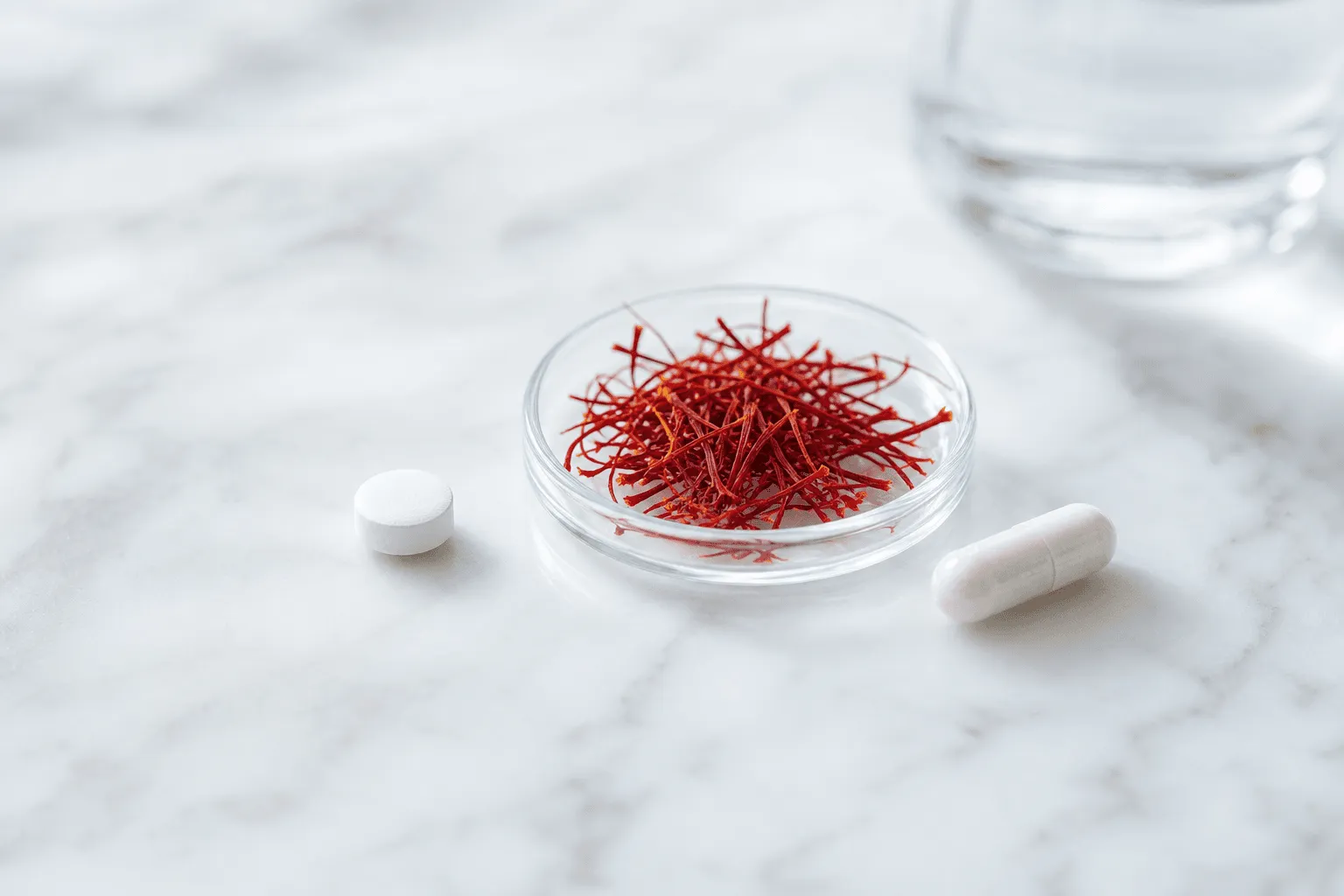
There are two randomized, double-blind, placebo-controlled trials of saffron extract for antidepressant-induced sexual dysfunction. Both come from the same Iranian research group (Akhondzadeh and colleagues), both used 30 mg/day of saffron extract for 4 weeks as an add-on to ongoing fluoxetine.
In men (Modabbernia 2012, PMID 22552758)[1]: 30 men with fluoxetine-induced sexual dysfunction were randomized to saffron 30 mg/day or placebo for 4 weeks. Erectile function improved significantly (p<0.001), as did intercourse satisfaction (p=0.001). Libido did not improve (p=0.517). This is a critical detail that gets lost in marketing summaries: saffron is not a “libido booster” in this trial. It improved the erectile and satisfaction side, not desire.
In women (Kashani 2013, PMID 23280545)[2]: 34 women on fluoxetine 40 mg were randomized to saffron 30 mg/day or placebo for 4 weeks. Arousal, lubrication, and pain domains improved. Desire did not improve (p=0.196), the same null result for libido as in the men’s trial.
The signal is real. Two small randomized trials with consistent direction of effect on the arousal/erectile side, with a consistent null on libido, is more than most AISD supplements have. But the caveats are real:
- Both trials are small (n=30 and n=34)
- Both are from the same research group; independent replication is limited
- Neither trial specifies saffron extract standardization (crocin/safranal percentage) in the PubMed abstract, so the exact extract used cannot be matched to a current commercial product from the abstract alone
- The mechanism is not what most blogs claim (see below)
What saffron is not
Some wellness blogs describe saffron as a “mild dopamine reuptake inhibitor.” A direct PubMed search for “crocin dopamine transporter reuptake” returns zero results. The closest mechanistic work is an animal study (Mohammadi 2023, PMID 37506574)[3] in which saffron carotenoids reversed stress-induced depressive and anxiety behaviour in rats, with changes in hippocampal BDNF, ERK, CREB, and NMDA-NR2B signalling markers. That points to serotonergic and glutamatergic pathways rather than a dopaminergic one — but it is a rat model, not human pharmacology, and it does not establish that saffron binds the serotonin transporter where fluoxetine does.
This matters because it changes what you should expect. If saffron were a dopamine reuptake inhibitor, you would expect a libido effect. It is not, and the trials show no libido effect. What it appears to do is modulate serotonergic and glutamatergic signaling in a way that, in the two small AISD trials, improved the arousal/erectile side. The “dopamine booster” framing is marketing shorthand, not mechanism.
Counter-evidence you should know
A larger randomized trial of saffron for general (not AISD) ED found no benefit over placebo. Safarinejad 2010 (PMID 20520621, n=346 men with general ED)[4] tested saffron 60 mg/day for 12 weeks and found no improvement in IIEF scores versus placebo. The “yes” evidence comes from n=30 men in AISD; the “no” evidence comes from n=346 men in general ED. The two findings are not contradictory (different populations, different durations, different doses) but the asymmetry of evidence size should temper enthusiasm.
A 2025 network meta-analysis of AISD treatments (de Aquino, PMID 39985829)[5] included 11 randomized trials in women only and found that bupropion SR, not saffron, was the most effective intervention, with low GRADE certainty. Saffron was mentioned but data was too sparse for a separate meta-analysis. This is a hint that the medical literature sees saffron as promising-but-preliminary, not as established.
Practical saffron take
If you want to try saffron as an add-on while continuing your SSRI, the studied protocol is 30 mg/day of saffron extract for at least 4 weeks. The trial extract was not standardization-specified in the abstract, so we cannot give a precise crocin percentage to look for. Modern commercial extracts (Affron, standardized to ≥3.09% safranal, typically dosed at 28 mg/day) are not the same extract used in the AISD trials. They may or may not have equivalent effect.
Safety in the AISD trials was comparable to placebo. There are no formal drug-drug-interaction studies of saffron plus SSRIs, but in the trials saffron was administered concurrently with fluoxetine without an increase in adverse events.
Run your label dose against the saffron trial floor in the clinical dose registry.
Verdict
The most promising AISD supplement we found, with two small positive randomized trials in the specific condition, but with same-group authorship, no specified standardization, and a negative larger trial in general ED. Worth a 4-week trial if you and your clinician agree it is reasonable. Do not expect a libido effect.
L-citrulline: vascular support, not a central unblocker
What the trial actually shows
The single randomized trial of L-citrulline for erectile dysfunction is Cormio 2011 (PMID 21195829)[6]. It is a single-blind, placebo-controlled, cross-over pilot in 24 men with mild ED (erection hardness score 3 at baseline). The dose was 1.5 g/day for 1 month. The primary outcome was the Erection Hardness Score.
Effect size: 12 of 24 men (50%) improved from EHS 3 to EHS 4 on citrulline, versus 2 of 24 (8.3%) on placebo (p<0.01). Number of intercourse events per month rose from 1.37 at baseline to 2.3 on citrulline (p<0.01).
This is a real effect, but the methodological caveats are significant:
- Single-blind (participants knew, only outcome assessors were blinded)
- n=24, no dropouts reported
- Cross-over without washout period between placebo and citrulline phases
- 1 month duration per phase
- Population was mild general ED, not AISD
There are no randomized trials of L-citrulline specifically in AISD. The closest is Torkaman 2024 (PMID 38745327)[8], a triple-blind RCT of L-arginine (not citrulline) 2 g/day for 4 weeks in 32 women with SSRI-induced sexual dysfunction. Within-group scores for lubrication and orgasm improved; the between-group comparison versus placebo was not significant. This is a negative trial for the arginine/AISD question.
Bioavailability: why citrulline over arginine
The biochemistry here is solid. L-arginine undergoes extensive presystemic metabolism by intestinal and hepatic arginase, which is why oral arginine has low and variable systemic availability. L-citrulline bypasses this presystemic elimination and is converted to arginine in the kidneys via argininosuccinate synthase. The result is that oral citrulline raises plasma arginine more effectively than equimolar oral arginine.
The reference pharmacokinetic study is Schwedhelm 2008 (PMID 17662090)[7], a double-blind, randomized, placebo-controlled, six-way cross-over trial in 20 healthy volunteers. Citrulline at 1.5, 3, and 6 g/day raised arginine AUC dose-dependently and more effectively than equivalent arginine doses. Urinary nitrate and cGMP (downstream markers of NO signaling) increased significantly on the higher citrulline doses. Flow-mediated dilation did not change significantly, but the volunteers were healthy with normal baseline endothelial function.
The dose-response appears linear up to about 10 g/day, with saturation of renal conversion to arginine around 15 g/day (Moinard 2008, PMID 17953788). Practical dosing in trials has ranged from 1.5 g/day (Cormio) to 800 mg/day in combination products (Shirai 2018, PMID 30150102; Shirai 2021, PMID 33151048); the lower dose was always in combination with resveratrol and PDE5 inhibitors, not as monotherapy.
Why it will not solve SSRI-induced ED by itself
L-citrulline increases nitric oxide production. NO relaxes vascular smooth muscle in the corpora cavernosa and allows blood inflow. This is the same pathway that PDE5 inhibitors (sildenafil, tadalafil) amplify — they just do it by preventing cGMP breakdown rather than by increasing NO production.
The mechanism of SSRI-induced ED is central, not primarily vascular: the serotonergic system is suppressing the dopaminergic and noradrenergic signals that initiate the cascade leading to NO release. You can have all the L-citrulline you want; if the brain is not sending the signal, the vessels do not receive the instruction.
This is not a theoretical concern. In the AISD network meta-analysis (PMID 33843553), L-arginine and L-citrulline were not even represented as separate arms because the evidence base was too thin. Pycnogenol and sildenafil had data; citrulline did not.
L-citrulline for the subset where it might help
There is a subset of men on SSRIs where vascular comorbidity contributes to the ED picture: older men, men with metabolic syndrome, men with hypertension, men who smoke. In those cases, improving NO production may partially improve erectile function even if the central serotonergic block remains. The Cormio trial population was mild ED, average age 56, which is consistent with this. Mild ED in middle-aged men often has a vascular component.
If you are 28, on sertraline for anxiety, with no vascular risk factors, and your ED started the week you started the SSRI, L-citrulline is unlikely to help much. If you are 58, on fluoxetine for depression, with borderline blood pressure and a family history of cardiovascular disease, there is more of a mechanistic rationale, but the evidence is still extrapolation from general ED, not AISD-specific trials.
Safety with PDE5 inhibitors and nitrates
The major safety concern with L-citrulline and L-arginine is the same as with PDE5 inhibitors: do not combine with nitrates. The additive NO pathway activation can produce life-threatening hypotension. If you are on any nitrate medication (nitroglycerin, isosorbide, or recreational “poppers”), citrulline and arginine are contraindicated.
Combination with PDE5 inhibitors (sildenafil, tadalafil, vardenafil) is a theoretical concern for additive hypotension. In the actual RCTs that combined L-arginine with PDE5 inhibitors (El-Wakeel 2020, PMID 31267684; Gallo 2020, PMID 32192966), serious hypotension was not reported, but gastritis was more common in the combination arm. If you are combining these, monitor blood pressure and tell your prescribing clinician.
There are no specific SSRI + citrulline interaction concerns in the literature. The Torkaman 2024 trial[8] of arginine in women on SSRIs reported only minimal side effects.
Practical L-citrulline take
The studied monotherapy dose for mild ED is 1.5 g/day (Cormio). Higher doses (3-6 g/day) are pharmacokinetically reasonable and well tolerated up to about 10 g/day, but the clinical trial for general ED only studied 1.5 g/day. Onset is not immediate: the Cormio trial saw effects over 1 month, not minutes. Chronic daily dosing is the model, not on-demand use before sex.
The L-citrulline dose reference maps Supplement Facts to the Cormio 1.5 g/day floor.
Bottom line
Real biochemistry, one small positive trial in mild general ED, no AISD-specific trials, structurally limited by being a vascular intervention for a central problem. Worth trying if you have a vascular component to your ED on top of the SSRI effect; not the supplement to reach for if your ED is purely central and SSRI-induced.
Maca: the evidence gap we keep flagging
This is the section where most AISD articles get a critical fact wrong.
The commonly cited trials for maca and SSRI-induced sexual dysfunction are:
- Dording 2008 (PMID 18801111)[9]: a dose-finding pilot comparing 1.5 g/day against 3.0 g/day of maca in 20 remitted depressed outpatients on SSRIs — 17 of the 20 were women. Only the 3.0 g/day arm improved significantly on ASEX and MGH-SFQ; 1.5 g/day did not. Ten subjects completed, sixteen were analysable. It was essentially a women’s trial with three male participants.
- Dording 2015 (PMID 25954318)[10]: a 12-week placebo-controlled trial of 3.0 g/day in 45 female outpatients on SSRIs or SNRIs. Remission rates favoured maca but stayed low in absolute terms (9.5% vs 4.8% by ASEX ≤ 10; 30% vs 20% by MGH-SFQ ≤ 12), and the benefit clustered in postmenopausal women.
- Lentz 2018: maca for SSRI-induced sexual dysfunction. Women.
There is no male-specific randomized trial of maca for AISD. When a blog says “maca 3 g/day improves sexual function in SSRI-induced dysfunction,” the cited evidence is a trial in women on SSRIs/SNRIs. Extrapolating that to a recommendation for men is a category error.
What maca evidence does exist for men
There is one randomized trial of maca in men with mild general ED (not AISD): Zenico 2009 (PMID 19260845), 2.4 g/day of gelatinized maca for 12 weeks in 50 men. Subjective perception of sexual wellbeing improved, but objective sexual function measures did not change significantly. Even in this non-AISD trial, the effect is on subjective wellbeing, not on erectile function.
There is also a trial in healthy men (Gonzales et al., PMID 12472620) showing that maca does not affect testosterone or estrogen levels, confirming that maca is not a hormonal supplement. Its mechanism is hypothesized to be via macamides inhibiting fatty acid amide hydrolase (FAAH), which would affect endocannabinoid signaling, plus adaptogenic effects on the HPA axis. This is plausible but not well-established in humans.
A narrative review published September 1, 2026 reads the wider maca literature consistently with the two trials above: men-only studies report improvements in libido and associated subjective measures, women-only studies are mixed, and most human trials used roughly 3 g/day of maca powder or an equivalent preparation (Bloomer, Journal of Dietary Supplements, 2026[25]). Nothing in it changes the gap this section exists to flag: there is still no male-specific randomized trial of maca for antidepressant-induced sexual dysfunction.
Why we keep flagging this
Most AISD content currently ranking for “maca SSRI ED” cites the Dording trials as evidence that “maca 3 g/day improves sexual function in patients with SSRI-induced dysfunction” without specifying that the participants were women. This is a systematic blind spot in how sexual dysfunction literature gets summarized online: the sex of trial participants, the outcome measures used (IIEF for men vs. FSFI for women), and the clinical implications are different, and a recommendation grounded in women’s trials does not transfer to men.
If someone is going to recommend maca to a man on sertraline for SSRI-induced ED, they need to state plainly that the evidence comes from women on SSRIs/SNRIs and that there is no male-specific trial. That limit is the point of this section.
Practical maca take
If you still want to try maca despite the evidence gap, the studied protocol is 1.5-3 g/day of gelatinized maca (the form used in the Dording trials, easier to digest than raw maca because the glucosinolates that cause bloating are partially degraded by gelatinization). Maca does not affect testosterone, so do not take it expecting a hormonal effect. Do not expect a libido effect specifically, even in the women’s trials, the effect on desire was modest and inconsistent.
Check capsule grams against the maca registry entry (studied range 1.5–3 g/day gelatinised powder).
Where it lands
We cannot recommend maca for SSRI-induced ED in men based on the available evidence, because the available evidence is in women. We do not know whether maca works in men, and we will not pretend otherwise. If a male-specific trial publishes, we will update this section.
Red flags: supplements to avoid on antidepressants
Yohimbine
Yohimbine is an alpha-2 adrenergic antagonist. It increases sympathetic outflow and norepinephrine spillover: a 1991 study in healthy volunteers (PMID 1847020)[23] documented a 73% increase in muscle sympathetic nerve activity and a 125% increase in norepinephrine spillover. This is why yohimbine has historically been used as a pharmacological panic challenge in PTSD research: it reliably provokes anxiety and fear responses.
For AISD specifically, the evidence is weak. The only randomized controlled trial of yohimbine for SSRI-induced sexual dysfunction (Michelson 2002, PMID 11886692)[11] was in women and found no significant benefit over placebo. A 2006 meta-analysis (Taylor et al., Am J Psychiatry 163:1504) concluded that yohimbine did not show significant advantage over placebo for AISD. The older open-label studies from the 1990s (Hollander 1992, PMID 1535072)[12] were positive but small and uncontrolled.
The safety profile is the real concern. Yohimbine is contraindicated in:
- PTSD, panic disorder, generalized anxiety disorder: provokes anxiety and panic
- Hypertension, coronary artery disease, arrhythmias: raises blood pressure and heart rate
- Bipolar disorder, manic episodes, schizophrenia: case reports of manic symptoms
- Benign prostatic hyperplasia: antagonizes alpha-2 receptors in the prostate
- Concurrent use with TCAs, MAOIs, or other sympathomimetics: additive sympathomimetic effect
If you are on an SSRI or SNRI for depression with any anxious features (which describes a substantial proportion of people on SSRIs) yohimbine is contraindicated in your case. If you are on an SNRI (venlafaxine, duloxetine), the combination is particularly concerning because both agents raise norepinephrine signaling.
The regulatory status confirms the concern. FDA classified yohimbe as an “unsafe herb” in 1997. Yohimbine is banned as an over-the-counter supplement in the UK, Australia, Canada, and most of the EU. In the US it remains available but with poor dose labeling — a 2016 analysis (Cohen et al.) found that only 4.1% of yohimbine products on the market accurately labeled their dose.
Skip
Do not take yohimbine if you are on an antidepressant. The evidence for AISD is weak, the safety profile is dangerous for the population most likely to be on antidepressants (people with anxiety or mood disorders), and the regulatory status is uniformly cautious.
Tribulus terrestris
Tribulus is marketed as a testosterone booster. The best human evidence says it does not raise testosterone in men. Neychev and Mitev 2005 (PMID 15994038)[16] gave 20 mg/kg or 10 mg/kg of Tribulus terrestris to 21 healthy young men for 4 weeks; testosterone, androstenedione, and LH did not change. A 2014 systematic review (Pokrywka et al., PMID 24559105)[17] confirmed that Tribulus does not raise testosterone in humans. The “testosterone booster” claims trace back to animal studies in castrated rats and rabbits, which do not translate to human male endocrinology.
For ED or AISD specifically, there are no randomized controlled trials of Tribulus in AISD. A 2025 systematic review (Santos et al., Nutrients 17:1275) found 10 trials of Tribulus for male sexual dysfunction with mixed results and uniformly low methodological quality (50% scored low on the Jadad scale). None of these were in AISD populations.
The safety concern with Tribulus is hepatotoxicity. There are multiple case reports of severe liver injury associated with Tribulus supplementation, including a 2024 case (PMID 38328764)[22] of a 46-year-old man who developed bilirubin of 48 mg/dL and creatinine of 7.1 after 2 months of Tribulus use, requiring plasmapheresis, and a 2010 case (PMID 20667992) of severe nephrotoxicity, hepatotoxicity, and seizures after just 2 days. The mechanism is unclear but likely idiosyncratic cholestatic injury.
For someone on an antidepressant (many of which are themselves metabolized by the liver) adding a supplement with documented hepatotoxicity risk and no AISD evidence is not a reasonable trade.
Practical take
Tribulus does not raise testosterone in men, has no AISD-specific trial evidence, and carries rare but serious hepatotoxicity risk. The marketing position ("natural testosterone booster") is unsupported by human evidence.
Ginkgo biloba
Ginkgo biloba was proposed for AISD in the late 1990s based on an open-label study (Cohen and Bartlik 1998, PMID 9611693)[13] in 63 patients, mostly on SSRIs, claiming an 84% response rate. The trial was unblinded, unrandomized, and small. The claimed effect sizes have not replicated in any subsequent controlled trial.
Three randomized controlled trials followed:
- Kang 2002 (PMID 12404672)[14]: double-blind RCT, 37 patients on fluoxetine or paroxetine, ginkgo 120-240 mg/day vs placebo for 8 weeks. No significant difference from placebo at weeks 2, 4, or 8.
- Ashton 2000 (PMID 10784488): open-label, 22 patients (9 men, 13 women), ginkgo 900 mg/day for 1 month. Only 3 of 22 improved, and 0 of 9 men improved.
- Wheatley 2004 (PMID 15378664)[15]: triple-blind RCT (investigator, patient, and statisticist all blinded), ginkgo 240 mg/day vs placebo for 12 weeks. No significant difference, with spectacular individual responses in both groups indicating a placebo effect.
A 2006 meta-analysis (Taylor et al.) concluded that ginkgo did not show significant advantage over placebo for AISD. The 1998 open-label finding is widely considered an artifact of unblinded observation.
The safety concern with ginkgo is bleeding. Ginkgolides antagonize platelet-activating factor, and SSRIs independently impair platelet function through serotonergic mechanisms. The combination is additive, and our interaction base tracks the same mechanism against anticoagulants and antiplatelets: see the warfarin + ginkgo and antiplatelet + ginkgo profiles. A 2015 study in the VA population (Stoddard et al., PMID 26958257)[18] found that ginkgo combined with warfarin increased bleeding risk by 38% (HR 1.38, 95% CI 1.20-1.58). Spontaneous bleeding and intracranial hemorrhage case reports exist (Matthews 1998, PMID 9633781[20]; Bent 2005, PMID 16050865[21]).
If you are on an SSRI, particularly if you are older, take NSAIDs regularly, or have any bleeding risk factors, ginkgo adds bleeding risk without AISD benefit. This is a clean “no” based on three negative RCTs plus a real safety concern.
Skip
Three randomized controlled trials for AISD, all negative. Adds bleeding risk on top of SSRI-related platelet effects. There is no good reason to take ginkgo for SSRI-induced ED.
A safety warning that applies to all “natural male enhancement” supplements
The FDA maintains a public database of “tainted sexual enhancement products”[24] — supplements marketed as natural or herbal that laboratory testing revealed to contain undeclared sildenafil, tadalafil, or analogs thereof. Recent examples include products with names like “Hard AF!”, “BIG GUYS Male Energy”, “DYNAMITE Male Sexual Enhancement”, “JACK’D Sexual Enhancement Liquid”, and “Herb Viagra Male Sexual Stimulant.” The list is long and grows regularly.
This is not a theoretical concern. These products are sold on marketplaces as “natural” or “herbal” alternatives to prescription ED drugs. They contain the prescription drugs, unlabeled, at unknown doses, sometimes combined with each other (sildenafil plus tadalafil). For someone on an antidepressant, particularly someone who might also be on a nitrate medication for a cardiovascular condition, or who does not know they have cardiovascular risk: taking an unlabeled PDE5 inhibitor can cause life-threatening hypotension.
The practical implication: if you are going to try a supplement for SSRI-induced ED, buy single-ingredient products from brands that publish third-party testing (USP, NSF, ConsumerLab, or Labdoor verification). Avoid any product marketed with “instant results,” “natural Viagra,” or before/after promises. The louder the marketing, the higher the probability of adulteration.
A note on what this article does not cover
This article does not cover the prescription strategies for AISD: dose reduction, switching to a less serotonergic antidepressant (bupropion, mirtazapine), adding a dopaminergic agent (bupropion augmentation), or PDE5 inhibitor prescription. These are documented in the medical literature and are typically more effective than any supplement. They also require a prescribing clinician’s involvement, which is exactly the point.
If your sexual side effects are severe enough to be intolerable, the highest-leverage call you can make is to your prescribing clinician — to discuss whether a dose adjustment, a medication switch, or an augmentation strategy is appropriate for your case. The supplement question is what you do in parallel, or while you wait for that appointment, or if you have already optimized your prescription strategy and want to add something on top.
We reason in public, surface the evidence, and let readers draw their own conclusions. We do not prescribe, we do not tell readers what to do with their medications, and we do not present editorial reasoning as a substitute for individualized clinical advice.
What you should take away
For the full label-reading framework before buying any supplement mentioned below, see our 90-second supplement label checklist.
After reading this, you should be able to answer six questions for yourself.
What is actually known
- Saffron extract at 30 mg/day has two small positive randomized trials for AISD: one in men (improved erectile function, not libido), one in women (improved arousal, not desire). Same research group, no independent replication, no specified extract standardization in abstracts.
- L-citrulline at 1.5 g/day has one small positive single-blind trial in mild general ED (not AISD). Biochemistry is solid; vascular mechanism is real; AISD-specific evidence does not exist.
- Maca has zero male-specific AISD trials. The commonly cited maca AISD trials were in women on SSRIs/SNRIs.
- Yohimbine, ginkgo, and tribulus have either negative AISD RCTs or no AISD RCTs at all, plus real safety concerns for anyone on antidepressants.
What is still unknown
- Whether saffron’s effect replicates in independent, larger trials, in men on SSRIs other than fluoxetine, and with specified extract standardization.
- Whether L-citrulline does anything in AISD specifically: there is no AISD trial.
- Whether maca has any effect in men with AISD: there is no male AISD trial.
- The actual mechanism of saffron’s effect in AISD (the dopamine reuptake story is not supported by primary literature).
Where the evidence ends
The evidence ends at small, short-duration trials from a limited number of research groups. It does not extend to large multi-center RCTs, to long-term safety data, to combinations of these supplements, or to AISD populations on the full range of antidepressants. If you are on venlafaxine, duloxetine, paroxetine, escitalopram, or any other specific agent, the evidence base for supplements in your specific case is extrapolation.
When a supplement may be a reasonable choice
- You are on an SSRI with mild-to-moderate AISD, your prescriber is aware, you have already discussed prescription strategies, and you want to add something with the best available evidence: saffron 30 mg/day for a 4-week trial is the most evidence-supported option.
- You are on an SSRI with mild ED and have a vascular comorbidity component (older age, borderline blood pressure, metabolic risk factors): L-citrulline 1.5-3 g/day has a mechanistic rationale and one positive trial in general ED.
- You are willing to track outcomes honestly (a validated questionnaire like IIEF-5 or SHIM before and after 4-6 weeks) and stop the supplement if there is no measurable improvement.
When a supplement is definitely not the right choice
- You are on an SNRI (venlafaxine, duloxetine) and considering yohimbine: contraindicated due to additive sympathomimetic effect.
- You have any anxiety, panic, or PTSD history and considering yohimbine: contraindicated due to provocation effect.
- You are on a nitrate medication (nitroglycerin, isosorbide) and considering L-citrulline, L-arginine, or any “natural male enhancement” product, contraindicated due to life-threatening hypotension risk.
- You are on warfarin and considering ginkgo: high-risk combination due to additive bleeding (HR 1.38 in the VA cohort above), a clinician’s explicit decision only.
- You are on a DOAC (apixaban, rivaroxaban, dabigatran) or regular NSAIDs and considering ginkgo: moderate risk, avoid unless your clinician says otherwise.
- You are buying a “natural male enhancement” supplement from a marketplace with no third-party testing, high probability of hidden prescription drugs.
- You are considering stopping your antidepressant to try a supplement instead, the supplement question is “in addition to,” not “instead of.”
Questions to discuss with your prescribing clinician
- Whether a dose adjustment of your current antidepressant might reduce sexual side effects while maintaining mood benefit.
- Whether switching to a less serotonergic agent (bupropion, mirtazapine) is appropriate for your case.
- Whether adding a dopaminergic medication (bupropion augmentation) is an option, this has stronger AISD evidence than any supplement.
- Whether a PDE5 inhibitor prescription is appropriate if your cardiovascular risk profile allows it.
- Whether any supplements you are considering interact with your current medications (particularly relevant if you are on nitrates, anticoagulants, or other serotonergic agents).
- Whether your AISD might benefit from a combined approach, prescription optimization plus a targeted supplement trial.
FAQ
Can supplements cure SSRI-induced ED?
No. The mechanism of SSRI-induced ED is central (serotonergic suppression of dopaminergic and noradrenergic signaling), and supplements cannot override that block. The best-supported supplement, saffron, showed improvement in erectile function in one small trial, not a return to baseline, and not a cure. If sexual side effects are intolerable, the highest-leverage call is to your prescribing clinician to discuss dose adjustment, switching, or augmentation.
Does maca work for SSRI-induced ED in men?
We do not know. The commonly cited maca trials for antidepressant-induced sexual dysfunction (Dording 2008 and 2015) were in women or mostly women. There is no male-specific randomized trial of maca for AISD. Anyone claiming maca works for men with SSRI-induced ED is extrapolating from women on SSRIs/SNRIs.
Is L-citrulline safer than Viagra?
This is the wrong comparison. Sildenafil (Viagra) is a prescription PDE5 inhibitor with a large safety database; L-citrulline is a supplement with one small positive trial in mild general ED. They work on related pathways (NO/cGMP) but at different points. L-citrulline is generally well tolerated at studied doses, but it is not "natural Viagra", it does not have on-demand onset, and it is contraindicated with nitrates for the same reason PDE5 inhibitors are. The right question is which is appropriate for your case, with your clinician.
How long does saffron take to work for SSRI-induced ED?
The Modabbernia 2012 trial assessed outcomes at 4 weeks. There is no published data on whether effects appear earlier. Plan for a 4-week trial at 30 mg/day before judging whether saffron is doing anything for you. Track with a validated questionnaire (SHIM/IIEF-5) before and after, not with subjective impression.
Can I take L-citrulline with my SSRI?
There are no specific SSRI + L-citrulline interaction concerns in the published literature, and the one RCT of L-arginine (a related compound) in women on SSRIs reported only minimal side effects. The major interaction concern with L-citrulline is with nitrates and PDE5 inhibitors, not with antidepressants. Tell your prescribing clinician you are taking it, particularly if you are also on blood pressure medication.
Are "natural male enhancement" supplements safe?
The FDA maintains a public database of "tainted sexual enhancement products", supplements marketed as natural that laboratory testing revealed to contain undeclared sildenafil, tadalafil, or analogs. These can cause life-threatening hypotension in people on nitrates or with unrecognized cardiovascular risk. Buy single-ingredient products with third-party testing (USP, NSF, ConsumerLab, or Labdoor) and avoid any product marketed with "instant results" or "natural Viagra" claims.
Free weekly brief
Want the supplement evidence brief once a week?
Get one hype-free email on evidence changes, safety notes, interaction-base updates, comparison criteria, and tools or dose-registry updates before you buy. No daily sequences, no paid rankings.
Get the free checklistFree. One email a week. Unsubscribe anytime.
How this article was researched
Evidence scan: PubMed, July 2026. Search terms included “saffron antidepressant-induced sexual dysfunction,” “saffron SSRI erectile dysfunction,” “L-citrulline erectile dysfunction,” “L-arginine SSRI sexual dysfunction,” “maca SSRI sexual dysfunction,” “yohimbine SSRI sexual dysfunction,” “tribulus terrestris testosterone,” “ginkgo biloba SSRI sexual dysfunction,” “antidepressant-induced sexual dysfunction network meta-analysis,” and “FDA tainted sexual enhancement products.”
Each cited study was verified against PubMed by PMID. Several commonly cited studies in this niche could not be located in PubMed under the names used in popular summaries (including “Nothobaghei 2015” and “Kashani 2017” for saffron) and were rejected in favor of verified alternatives (Modabbernia 2012, Kashani 2013). Where popular summaries cite maca trials without specifying that the participants were women, the article explicitly flags the sex of trial participants and the implications for male readers.
A key distinction maintained throughout: trials in general ED and trials in AISD are not interchangeable. Where trials were in general ED (Cormio 2011 for citrulline; Safarinejad 2010 for saffron; Zenico 2009 for maca), the article says so and does not extrapolate to AISD. Where trials were in AISD but in women (Dording 2015 for maca; Kashani 2013 for saffron; Torkaman 2024 for arginine), the article says so and does not extrapolate to men.
Counter-evidence is reported rather than omitted: the Safarinejad 2010 negative trial of saffron for general ED (n=346) is reported alongside the Modabbernia 2012 positive trial for AISD (n=30), with the asymmetry of evidence size noted. The three negative RCTs of ginkgo for AISD (Kang 2002, Ashton 2000, Wheatley 2004) are reported alongside the original positive open-label study that did not replicate.
Research date: July 2026. Updates planned when new AISD trials, network meta-analyses, or FDA safety communications publish.
Sources
-
Modabbernia A, Sohrabi H, Nasehi AA, et al. Effect of saffron on fluoxetine-induced sexual impairment in men: randomized double-blind placebo-controlled trial. Psychopharmacology. 2012;223(4):381-388. doi:10.1007/s00213-012-2729-6. PMID 22552758.
-
Kashani L, Raisi F, Saroukhani S, et al. Saffron for treatment of fluoxetine-induced sexual dysfunction in women: randomized double-blind placebo-controlled study. Human Psychopharmacology. 2013;28(1):54-60. doi:10.1002/hup.2282. PMID 23280545.
-
Mohammadi S, Naseri M, Faridi N, et al. Saffron carotenoids reversed the UCMS-induced depression and anxiety in rats: behavioral and biochemical parameters, and hippocampal BDNF/ERK/CREB and NR2B signaling markers (animal study). Phytomedicine. 2023;119:154989. doi:10.1016/j.phymed.2023.154989. PMID 37506574.
-
Safarinejad MR, Shafiei N, Safarinejad S. An open label, randomized, fixed-dose, crossover study comparing efficacy and safety of sildenafil citrate and saffron (Crocus sativus Linn.) for treating erectile dysfunction in men naive to treatment. International Journal of Impotence Research. 2010;22(4):240-250. doi:10.1038/ijir.2010.10. PMID 20520621.
-
de Aquino ACQ, Sarmento ACA, Gonçalves AK, et al. Pharmacological treatment of antidepressant-induced sexual dysfunction in women: a systematic review and meta-analysis of randomized clinical trials. Clinics (São Paulo). 2025;80:100602. doi:10.1016/j.clinsp.2025.100602. PMID 39985829.
-
Cormio L, De Siati M, Lorusso F, Selvaggio O, Mirabella L, Sanguedolce F, Carrieri G. L-Citrulline ameliorates erection hardness in men with mild erectile dysfunction: a pilot study. Urology. 2011;77(1):119-122. doi:10.1016/j.urology.2010.08.028. PMID 21195829.
-
Schwedhelm E, Maas R, Freese R, Jung D, Lukacs Z, Jambrecina A, et al. Pharmacokinetic and pharmacodynamic properties of oral L-citrulline and L-arginine: impact on nitric oxide bioavailability. British Journal of Clinical Pharmacology. 2008;65(1):51-59. doi:10.1111/j.1365-2125.2007.02990.x. PMID 17662090.
-
Torkaman P, Meybodi AM, Kheradmand A, Eiliaei S, Ardakani MT. Effect of l-arginine compared to placebo on sexual function in women with major depressive disorder: a randomized controlled trial. BMC Psychiatry. 2024;24(1):358. doi:10.1186/s12888-024-05781-5. PMID 38745327. Triple-blind RCT; l-arginine 1 g twice daily vs placebo for four weeks, both antidepressant-treated groups.
-
Dording CM, Fisher L, Papakostas G, Farabaugh A, Sonawalla S, Fava M, Mischoulon D. A double-blind, randomized, pilot dose-finding study of maca root (L. meyenii) for the management of SSRI-induced sexual dysfunction. CNS Neuroscience & Therapeutics. 2008;14(3):182-191. doi:10.1111/j.1755-5949.2008.00052.x. PMID 18801111.
-
Dording CM, Schettler PJ, Dalton ED, et al. A double-blind placebo-controlled pilot trial of maca root (Lepidium meyenii) as treatment for antidepressant-induced sexual dysfunction in women. Evidence-Based Complementary and Alternative Medicine. 2015;2015:949036. doi:10.1155/2015/949036. PMID 25954318.
-
Michelson D, Kociban K, Tamura R, Morrison MF. Mirtazapine, yohimbine or olanzapine augmentation therapy for serotonin reuptake-associated female sexual dysfunction: a randomized, placebo controlled trial. Journal of Psychiatric Research. 2002;36(3):147-152. doi:10.1016/S0022-3956(01)00060-7. PMID 11886692.
-
Hollander E, McCarley A. Yohimbine treatment of sexual side effects induced by serotonin reuptake blockers. Journal of Clinical Psychiatry. 1992;53(6):207-209. PMID 1535072.
-
Cohen AJ, Bartlik B. Ginkgo biloba for antidepressant-induced sexual dysfunction. Journal of Sex & Marital Therapy. 1998;24(2):139-143. doi:10.1080/00926239808404927. PMID 9611693.
-
Kang BJ, Lee SJ, Kim MD, Cho MJ. A placebo-controlled, double-blind trial of Ginkgo biloba for antidepressant-induced sexual dysfunction. Human Psychopharmacology. 2002;17(6):279-284. doi:10.1002/hup.409. PMID 12404672.
-
Wheatley D. Triple-blind, placebo-controlled trial of Ginkgo biloba in sexual dysfunction due to antidepressant drugs. Human Psychopharmacology. 2004;19(8):545-548. doi:10.1002/hup.627. PMID 15378664.
-
Neychev VK, Mitev VI. The aphrodisiac herb Tribulus terrestris does not influence the androgen production in young men. Journal of Ethnopharmacology. 2005;101(1-3):319-323. doi:10.1016/j.jep.2005.05.017. PMID 15994038.
-
Pokrywka A, Obmiński Z, Malczewska-Lenczowska J, et al. Insights into supplements with Tribulus terrestris used by athletes. Journal of Human Kinetics. 2014;41:99-105. doi:10.2478/hukin-2014-0037. PMID 25114736.
-
Stoddard GJ, Archer M, Shane-McWhorter L, et al. Ginkgo and warfarin interaction in a large Veterans Administration population. AMIA Annual Symposium Proceedings. 2015;2015:1174-1183. PMID 26958257.
-
Bone KM. Potential interaction of Ginkgo biloba leaf with antiplatelet or anticoagulant drugs: what is the evidence? Molecular Nutrition & Food Research. 2008;52(7):764-771. doi:10.1002/mnfr.200700098. PMID 18214851.
-
Matthews MK. Association of Ginkgo biloba with intracranial hemorrhage. Neurology. 1998;50(6):1933-1934. doi:10.1212/wnl.50.6.1933. PMID 9633781.
-
Bent S, Goldberg H, Padula A, Avins AL. Spontaneous bleeding associated with Ginkgo biloba: a case report and systematic review of the literature. Journal of General Internal Medicine. 2005;20(7):657-661. doi:10.1007/s11606-005-0114-4. PMID 16050865.
-
Mohy-Ud-Din N, Jonassaint N. Severe liver and renal injury from Tribulus terrestris. ACG Case Reports Journal. 2024;11(2):e01267. doi:10.14309/crj.0000000000001267. PMID 38328764.
-
Grossman E, Rea RF, Hoffman A, Goldstein DS. Yohimbine increases sympathetic nerve activity and norepinephrine spillover in normal volunteers. American Journal of Physiology. 1991;260(1 Pt 2):R142-R147. doi:10.1152/ajpregu.1991.260.1.R142. PMID 1847020.
-
U.S. Food and Drug Administration. Sexual Enhancement and Energy Product Notifications, medication health fraud database. fda.gov. Accessed August 2026.
-
Bloomer RJ. Effects of Maca (Lepidium meyenii) on sexual health and libido: a review. Journal of Dietary Supplements. 2026;23(5):582-601. doi:10.1080/19390211.2026.2727026. PMID 42680584.